


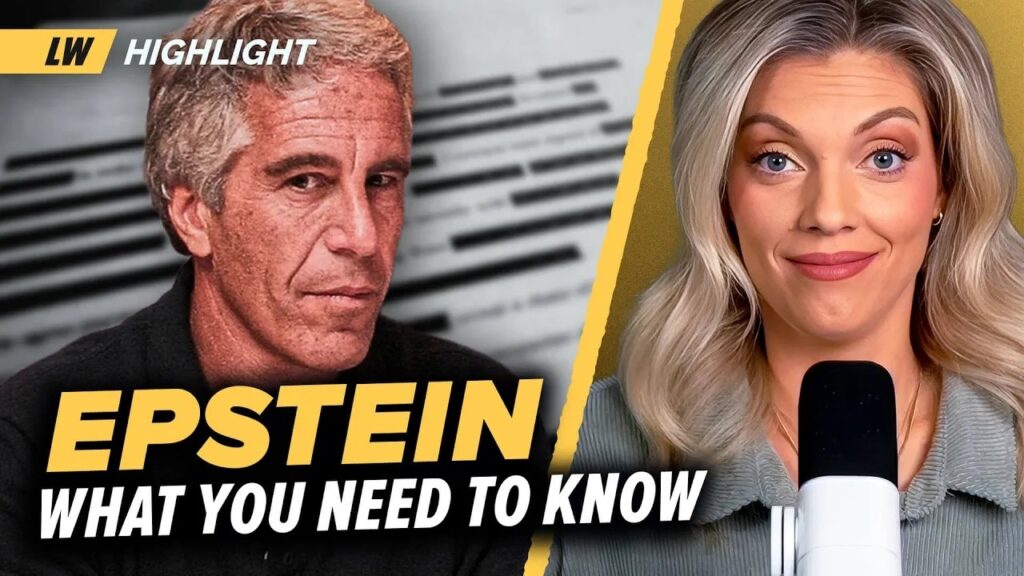
On BlazeTV, host Liz Wheeler chews through the latest Epstein Files release with the gusto of a true-crime podcaster who found an extra cup of coffee. She points out the biggest takeaways and calls out what’s being overhyped or misreported by dishonest media players.
The piece outlines which documents actually move the needle, which allegations remain unproven, and why timelines and chain-of-custody matter more than clickbait. It wraps up with practical tips for interpreting future drops and a wink that public skepticism should be as strong as the coffee she probably needed to get through the files.

Overview of the New Epstein Files Release
The new batch of Epstein files landed in the public sphere like a box of old family photos: some incriminating, some confusing, and a few that made people squint and ask, “Who is that in the background?” The release purports to include a trove of court papers, exhibits, flight logs, affidavits, and other records that were previously sealed or scattered across different dockets. Together, they form a patchwork of documentation that promises more context about Epstein’s network, civil litigation against him and his estate, and the institutional response to allegations surrounding his activities.
Scope and contents of the newly released batch of documents
This batch contains a variety of materials: deposition transcripts, redacted affidavits, flight logs that list passengers and dates, financial records indicating payments and transfers, internal communications from law firms and perhaps institutions, and civil suit exhibits such as photographs and sworn statements. It is not a single file that solves the whole mystery; rather, it is a messy archive of claim and counterclaim, procedural filings, and snippets of evidentiary material that require careful sifting.
Timeline of the release: when and how the files became public
The documents surfaced through a staggered process: some were unsealed by court order, others released via Freedom of Information Act requests, and still more were published by media outlets and independent researchers over a period of weeks. The cadence of the release mattered almost as much as the content; batch drops created cycles of intense attention followed by quieter periods of parsing and critique. Observers noted that the timing of certain disclosures prompted speculation about strategic leaks, though the legal mechanics—motions to unseal, appeals, and FOIA processing—were often the mundane engines behind public availability.
Immediate public and institutional reactions to the release
The reactions ranged from righteous outrage to weary skepticism. Advocacy groups and survivor organizations highlighted material they saw as corroborative of long-standing allegations, while others cautioned against jumping to conclusions based on redacted snippets. Political operatives smelled opportunity, journalists saw a fresh beat, and academics offered cautious methodological notes. Institutions named or implicated in the records released statements promising cooperation or disputing interpretations. In short, the release set off the predictable carnival of interpretation—some tents full of earnest inquiry, others peddling sensationalism.
Who Is Liz Wheeler and Why Her Analysis Matters
Liz Wheeler is a conservative commentator and host who presents on BlazeTV, a platform known for right-leaning commentary and opinion programming. She is often brisk, pointed, and unapologetically partisan in her analysis—qualities that matter in two ways: they sharpen her message for a particular audience, and they invite critics to check her claims closely.
Brief profile of Liz Wheeler and BlazeTV as presenter and platform
Wheeler rose to prominence as a pundit who blends legalistic framing with cultural commentary. BlazeTV functions as a boutique for conservative opinion: it amplifies skeptical takes on mainstream media narratives and elevates defenders of traditional institutions or critics of progressive orthodoxy. As host, she packages investigations and reactions into tight, media-friendly segments designed for social sharing and friction-filled debate.
Her stated expertise, audience, and editorial perspective
She frames herself as a fact-focused analyst with a lawyerly knack for parsing documents—an appealing posture when the public is faced with dense legalese. Her audience tends to be politically conservative, media-skeptical, and hungry for narratives that challenge perceived establishment cover-ups. Editorially, she privileges claims that support institutional accountability while often viewing mainstream outlets with suspicion, which colors how she emphasizes certain revelations over others.
Why her breakdown of the files attracts attention and generates debate
When Wheeler speaks, her audience listens, and others tune in to see what rhetorical flourishes she will deploy. Her breakdowns attract attention because she condenses complex material into clear, provocative takeaways that can be repeated on social platforms. That format is efficient for mobilizing viewers but also invites debate: critics argue she sometimes simplifies nuance, while supporters appreciate a digestible roadmap through legalese. In short, she is part translator, part provocateur—an effective combination in the modern attention economy.
Summary of the Most Important Takeaways According to Liz Wheeler
Wheeler’s reading of the files is a curated tour of what she views as the meaningful pieces—and what she thinks the media is misreporting for clicks. Her narrative aims to separate the needle from the haystack, though others may quibble about where the needle ended up.
Central claims and conclusions Wheeler highlights from the release
She emphasizes that certain flight logs and financial records corroborate movements and payments that align with prior allegations, suggesting a network of enabling behavior rather than isolated acts. Wheeler also points to internal communications and redactions that she argues raise questions about the scope of prior investigations and the adequacy of prosecutorial decisions. Her central contention is that the documents reveal institutional blind spots and, in some cases, suspiciously opaque settlements or agreements.
Distinction Wheeler draws between what is significant and what is overhyped
Wheeler is careful to warn her viewers not to be seduced by mere name-dropping. She differentiates between documents that show direct involvement or materially relevant actions and ancillary mentions that prove little more than contemporaneous proximity. She argues that the truly significant materials are those that create patterns—repeated correlations between flight logs, statements alleging misconduct, and financial transactions—not standalone ink on a page.
Examples Wheeler uses to illustrate the key takeaways
To illustrate her points, she highlights a few flight logs that align with plaintiff testimony dates, a set of invoices suggesting large transfers to intermediaries, and an internal memo whose redactions she characterizes as oddly specific. Each example is presented as a needle: one that, when threaded with others, she claims forms a visible seam through the fabric of prior explanations.
Documents and Evidence in the Release
The new batch is eclectic. Understanding the strengths and weaknesses of each document type is crucial for evaluating their probative value, a point Wheeler repeatedly emphasizes—often with the sternness of a teacher trying to make students care about discovery rules.
Types of documents included: depositions, flight logs, affidavits, emails, financial records
The docket contains deposition transcripts where witnesses answer sworn questions, flight logs listing passengers and dates, sworn affidavits from alleged victims or witnesses, email chains among law firms or investigators, and banking documents showing transfers, payments, or trust activity. Each of these has a different evidentiary weight: a sworn deposition can be powerful, but so can a corroborative email chain or an unexplained financial transfer.
Common redactions and their impact on interpretation
Redactions are prolific. Names, dates, and specific language are often blacked out for privacy or ongoing legal reasons, which can leave readers filling in gaps. Wheeler argues that redactions themselves can be telling—either protective of legitimate privacy concerns or, she suggests, a shield for politically sensitive details. The reality is grimmer: redactions make definitive interpretation hard and invite speculation, which can amplify misreadings if not approached cautiously.
How Wheeler evaluates the reliability and probative value of different document types
Wheeler tends to give higher weight to documents that can be cross-referenced—flight logs that match depositions, or financial transfers that align with known events. She urges skepticism toward documents that stand alone without corroboration, and she prizes contemporaneous records over retrospective recollections. In doing so, she mixes forensic common sense with a rhetorical strategy: emphasize the stuff that looks least like spin and more like a paper trail.
Key Individuals Named in the Files
Names in the documents run the gamut from the obviously central to the fleetingly peripheral. How those names are handled matters enormously—and Wheeler stresses that mention is not conviction.
Core figures with established legal status (Jeffrey Epstein, Ghislaine Maxwell) and what the files add
Jeffrey Epstein and Ghislaine Maxwell, already central in public and legal narratives, appear throughout as expected. The files provide additional context about their movements, communications, and the civil suits that followed. For Maxwell, the documents add layers to the civil discovery that preceded her criminal trial; for Epstein, they flesh out an estate’s legal entanglements after his death. None of the newly released papers fundamentally rewrites what is already publicly known about their legal status, but they do deepen the documentary record that scholars and journalists will mine.
Other named associates, witnesses, and persons of interest — how names appear and what that does/does not prove
Other names appear in ways that range from peripheral mentions to recurrent references. Wheeler cautions that appearance in a log or an invoice does not equate to criminal culpability; it can indicate business relationships, social acquaintances, or even clerical errors. Her point—useful but easy to weaponize—is that patterns of association can raise legitimate questions, but names alone are not verdicts.
Cautions about drawing conclusions from mentions or proximity in documents
Wheeler repeatedly cautions against conflating proximity with participation. A credit card charge, a guest list entry, or an association in a legal filing can have innocuous explanations. Responsible interpretation, she says, requires triangulation: do multiple independent records and credible witness statements converge on the same inference? If not, the safest claim is uncertainty, not accusation.
Victim Accounts and Survivor Considerations
The human stakes of these files are never merely documentary; they are intimate testimonies of harm. Wheeler’s coverage acknowledges survivors, though her approach blends amplification with critique of how victims’ words are used in public debate.
How the files relate to survivor testimonies and prior public allegations
Many of the documents correspond to or elaborate on previously reported survivor accounts—depositions memorialize testimony, affidavits reaffirm accusations, and some records corroborate timelines. Wheeler emphasizes those overlaps as evidence that some allegations have consistent, if contested, documentary support. At the same time, she warns that inconsistencies and retractions—which are not uncommon in trauma narratives—do not automatically invalidate core allegations.
Ethical responsibilities around reporting survivor statements and identities
Wheeler, as do many commentators, stresses the need to handle survivor accounts with sensitivity: respect privacy, avoid gratuitous naming, and steer clear of blaming victims for inconsistencies that may be trauma-related. Ethically, the press and pundits should prioritize survivor dignity and avoid sensationalizing details that serve only to titillate or distract.
Wheeler’s treatment of victim narratives: amplification, skepticism, and context
She walks a line that can feel tightrope-like: amplify survivor voices to ensure they are heard, but subject public claims to scrutiny so that reporting does not become mere advocacy or, conversely, reflexive disbelief. This mixed posture invites praise for nuance and criticism from those who think she tilts too skeptical—especially when victims are marginalized or already doubted.
Legal and Judicial Implications
The release nudges at unresolved legal questions: what was litigated, what was settled, and what remains sealed. Wheeler’s analysis raises procedural concerns and opines on possible next steps, though the law tends to move more slowly than public outrage.
What the records reveal about prior civil suits, settlements, and plea deals
The documents sketch the outlines of several civil suits and settlements, including the mechanisms by which claims were resolved—some through financial settlement, others through dismissals. They also provide context for prior plea arrangements, including the controversial non-prosecution agreement that once loomed over Epstein’s earlier case. Wheeler draws attention to the ways settlements can limit public knowledge and, in her view, shield broader accountability.
Questions about sealed files, non-prosecution agreements, and prosecutorial choices
Redactions and sealed filings raise questions about prosecutorial discretion: Why were certain materials sealed? Were nondisclosure agreements used to silence witnesses or shield institutions? Wheeler suggests these are not purely technical questions but reflect on the fairness and transparency of the justice system. Legal experts, she notes, disagree on how much room there is to reopen matters purely on the basis of newly public civil filings.
Potential new legal avenues: reopened investigations, civil claims, and statute of limitations issues
Where documents suggest unanswered questions, they might prompt renewed civil claims against estates or institutions, or spur congressional or departmental inquiries. Statutes of limitation will limit criminal avenues in many jurisdictions, but civil claims or discovery-driven probes could still be viable. Wheeler urges advocacy for further legal scrutiny while acknowledging the practical constraints of time and evidentiary burdens.
Media Coverage: Accurate Reporting Versus Misreporting
If the files are a forest, media coverage has been a mix of careful cartography and opportunistic leaf-peeping. Wheeler’s litany of media sins is predictable: selective quoting, sensational headlinecraft, and omission of qualifying context.
Examples of what Wheeler identifies as dishonest or misleading media narratives
She points to cases where outlets ran headlines implying direct, criminal involvement based on tenuous references, or where excerpts were presented without the surrounding document that alters their meaning. She singles out instances of name-stacking—printing long lists of people connected by proximity without clarifying the nature of their involvement—as particularly irresponsible.
How selective quoting, omission, or framing can distort the files’ content
Selective quoting can create a story arc that the full documents do not support. Omitting contemporaneous corroboration or alternative explanations can turn an ambiguous line in a log into the deed of the century. Wheeler argues that framing matters: does a report present a document as evidence or as a claim? Conflating the two transforms journalism into advocacy.
Guidelines Wheeler suggests for responsible reporting and common pitfalls to avoid
Her guidelines are straightforward: report the provenance of documents, differentiate allegations from proven facts, avoid sensational headlines that outstrip the text, and prioritize corroboration. Common pitfalls she flags include treating redactions as guilty evidence, overemphasizing name mentions, and echoing partisan spin without independent verification.
Political and Establishment Connections Highlighted
The files feed a powerful human impulse: curiosity about how wealth and influence intersect with misconduct. Wheeler teases out political and establishment connections but urges caution in interpreting them.
Allegations of connections between Epstein-associated names and political figures
Some documents reference people who have occupied public or private spheres of influence. Wheeler highlights those mentions as deserving scrutiny, especially where patterns of access or financial linkage emerge. She tends to view these connections as evidence that powerful networks can enable terrible behavior, rather than definitive proof that named political figures committed crimes.
How Wheeler contextualizes these connections versus how other outlets frame them
Wheeler frames the connections as red flags prompting investigation, rather than as slam-dunk indictments. She criticizes outlets that leap from association to accusation, arguing that such leaps fuel partisan narratives more than they advance accountability. Other outlets, she says, sometimes prioritize shock value, creating circular headlines that amplify suspicion without building cases.
Risks of partisan spin and how to separate verified links from insinuation
Partisan spin is a primary risk: both sides see a dossier and find a hero or villain. Wheeler recommends separating verified documentary links—financial transfers, travel records, sworn statements—from insinuation driven by conjecture or political motive. Verification requires time, cross-referencing, and independent corroboration—none of which are particularly satisfying in a 24-hour news cycle, but all of which matter.
Conclusion
The new Epstein files are not a tidy reveal; they are a scattering of documents that, together, demand careful reading and cautious inference. Liz Wheeler’s analysis is valuable insofar as it highlights potential lines of inquiry, demands accountability, and warns against some common media traps—but it also reflects an editorial posture that favors skeptical scrutiny over unreserved credulity.
Concise synthesis of the most consequential points from the new release and Wheeler’s analysis
The most consequential takeaways are procedural and corroborative rather than revolutionary: documents that align with prior testimony, redactions that raise transparency questions, and records that sketch possible patterns of enabling. Wheeler’s strength is in pointing to these threads and urging viewers to follow them, while her weakness—per critics—is a tendency to favor interpretations that fit a skeptical, media-critical narrative.
Final assessment of what the files do and do not show, and why careful reporting matters
The files expand the documentary record but do not, on their own, close disputed questions or convict new parties. They demand careful, corroborative reporting because their fragments can be easily misread. Responsible coverage balances survivors’ dignity with rigorous verification, distinguishes allegations from proven facts, and resists the rush to partisan closure.
Call to action: follow credible reporting, support survivors, and demand transparency from institutions involved
Readers are invited to follow credible, corroborative reporting rather than clickbait; to support survivors with empathy and respect for their privacy; and to press institutions for transparency where legal and ethical norms permit. If anything good comes from the new release, it will be the slow, painstaking work of turning inked pages into accountability—done not with theatrical certainty, but with meticulous care.
BlazeTV Host Liz Wheeler breaks down the latest Epstein Files release and points out the most important takeaways. What is actually a big deal and what is being misreported by dishonest forces in the media?
**** SUBSCRIBE to Liz Wheeler’s YouTube Channel (@lizwheeler) to watch all of her live shows and videos: / @lizwheeler ****
► Watch MORE BlazeTV YouTube Videos: / @blazetv
► Join BlazeTV and Watch LIVE Shows Daily!
► Visit the ‘Blaze News’ Website (No Annoying Ads!):
► Sign-Up for our NEWSLETTER:
Connect with us on Social Media:
/ theblazetv
/ blazemedia
