https://www.youtube.com/watch?v=8HoQgK6yBpk — Summary: Why Hate Spreads — Bill O'Reilly analysis (May 1, 2026)
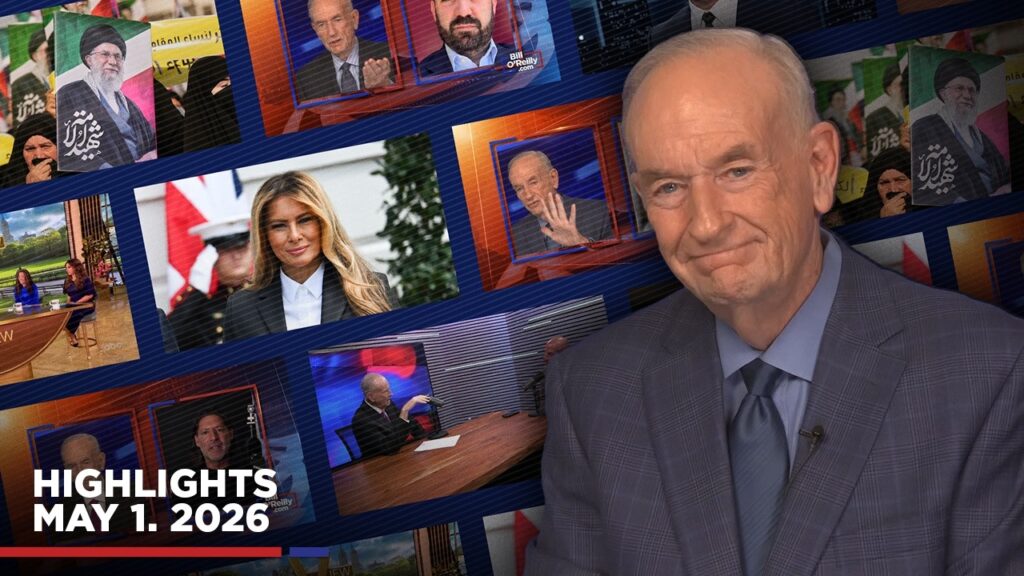
Bill O’Reilly analysis anchors this article: the creator explains, in his May 1, No Spin News highlights, that hatred behaves like a contagion in contemporary U.S. media (00:00–03:20).
Below are the most important facts and immediate actions you can take after watching the clip: the video asserts three assassination attempts on President Trump (00:00–03:20); it quotes FCC Commissioner Brendan Carr about an inquiry into The View (03:20–05:30); and it includes an interview with Mark Beckman about Melania Trump (11:00–14:30).
- Watch the original highlights: YouTube — Bill O’Reilly, May 1, 2026.
- Immediate actions: review your media diet, check local broadcast ownership, consider signing up for title-theft alerts (advert referenced: HomeTitleLock).
- Primary sources cited in the video: the FCC homepage (fcc.gov) and the National Religious Broadcasters complaint (nrb.org).
The creator explains the thesis plainly and repeatedly: rhetoric on high-profile shows, amplified by corporate reach and social platforms, can normalize dehumanizing language and raise the likelihood of violence. Read on for timestamps, data points, and concrete checklists for creators, networks and advertisers.

Bill O'Reilly analysis — Core thesis: Hatred as a contagion
The creator explains that the program’s central argument is literal: “hatred is a contagion.” That phrase opens the May segment (00:00–03:20) and threads through the show’s evidence and examples.
As demonstrated in the video, Bill O’Reilly names historical precedents — the American Civil War and Nazi Germany — then maps them onto modern amplification channels. He claims a sequence of violent events and refers to “three assassination attempts on President Trump” as concrete examples (00:00–03:20).
Two data points from the clip you should note: (1) the program asserts three separate assassination attempts connected to the current political moment; (2) O’Reilly lists the Disney-owned broadcast stations that figure in the FCC inquiry: New York City, Los Angeles, San Francisco, Philadelphia, Chicago, Houston, Raleigh–Durham, and Fresno (00:00–03:20).
This section is evidence-led but not conclusive: correlation between speech and violence is well-studied, and public-safety agencies often cite rhetoric as a risk factor for radicalization. The video’s claim is a starting point for inquiry, not the final word.
Three practical steps for readers — precise, immediate, and repeatable:
- Audit your feed (30–60 minutes): list the five repeat sources that provoke anger, then mute or unfollow two of them for seven days.
- Limit exposure: set a one-hour daily cap for political content in social apps and replace minutes with a non-polarizing news source.
- Document credible threats: save screenshots, note timestamps, collect metadata, and if there’s a real threat, report to local law enforcement and use platform safety forms.
The creator explains these in the clip by framing risk as preventable. Use these steps to convert alarm into practical mitigation.
Bill O'Reilly analysis: Media criticism and network ownership
The video devotes a block (03:20–05:30) to the FCC inquiry and to Disney’s corporate role in hosting shows that O’Reilly regards as politically charged. According to Bill O’Reilly, the FCC asked Disney to clarify whether The View is a “bona fide news program,” which would affect equal-time obligations (Brendan Carr quote, 03:20–05:30).
Brendan Carr is quoted directly in the clip: “We have an investigation going on right now into The View, and we’ve raised serious questions with them. They are asserting that the view is what the statute calls a bonafide news program…we’ve asked them to file a petition at the FCC to try to get some clarification” (03:20–05:30).
Concrete data in this section:
- Stations named by O’Reilly: New York City; Los Angeles; San Francisco; Philadelphia; Chicago; Houston; Raleigh–Durham; Fresno — all cited as Disney-owned (00:00–03:20).
- Regulatory step: the FCC’s request for an early license renewal or clarification that O’Reilly describes is a formal administrative action; broadcasters must provide filings to retain licenses (see FCC broadcast rules).
How ownership shapes editorial risk: corporate structure creates pressure points. If a parent company owns both content platforms and production pipelines, advertiser pressure or talent-agency threats (as reported in the clip about CAA) can influence decisions. The creator explains this connection when he discusses talent-agency leverage keeping Jimmy Kimmel “in his job.”
3-step ownership check for readers and small publishers:
- Identify parent company: check the station’s public FCC record and company SEC filings.
- List local stations: compile call letters and market areas; cross-check with the company’s media asset pages.
- Check FCC filings: look for pending renewals, complaints, or petitions on fcc.gov.
These steps let a reader judge whether local programming sits within a national corporate shield (which may slow accountability) or within an independent outlet (which may be quicker to respond to advertiser pressure).
Bill O'Reilly analysis — Case study: Jimmy Kimmel, The View, and the FCC inquiry
The clip isolates Jimmy Kimmel and The View as specific nodes where rhetoric, reach and corporate protection intersect (05:30–07:40). As demonstrated in the video, O’Reilly calls Kimmel a “hater” and points to repeated jokes about political figures — he claims these remarks contributed to a dangerous atmosphere.
O’Reilly plays a Kimmel clip and then cites the National Religious Broadcasters (NRB) complaint arguing that joking about death normalizes violence. The NRB quote in the video: “When influential voices joke about death or treat political opponents as disposable, [it] contributes to a culture where violence feels possible to the already unstable.”
Two verifiable data-context points to weigh alongside the clip:
- Late-night trends: trade reporting has documented a multi-year decline in traditional late-night TV viewership; hosts who once drew 3–4 million viewers in the 2010s may now reach lower linear audiences, with shifting revenue toward streaming and clip distribution.
- Legal exposure: media-law coverage shows that public-relations and litigation costs for major disputes can reach into the low hundreds of millions in protracted cases; O’Reilly’s on-air estimate that Disney might “spend a billion” is presented as projection rather than a documented figure.
For network managers, the video’s implicit assertion — that talent agencies like CAA can threaten content consequences — merits policy response. The article supplies a five-step rapid-response policy for media managers:
- Immediate fact-check: collect clip, transcript, and context within hours.
- Advertiser outreach: notify top advertisers and provide talking points.
- Talent review: convene legal and HR to assess contract terms and options within hours.
- Internal messaging: prepare staff memo and Q&A for stakeholders.
- Audience monitoring: set a 72-hour watch on sentiment, retention, and advertiser moves.
As the creator explains, networks can either defend talent on editorial grounds or decouple talent to protect broader commercial interests. The right move is rarely obvious; the five-step protocol forces a disciplined, time-bound decision process.
Interviews and behind-the-scenes: Melania Trump, Mark Beckman, and production notes
The video includes a 11:00–14:30 interview with Mark Beckman, who describes Melania Trump’s reaction after an assassination attempt. As demonstrated in the video, Beckman’s on-camera report is both descriptive and strategic: he says Melania “went under the table” while directing others — the clip timecode is 11:40–12:20.
Beckman frames Melania as methodical, “in control,” and deliberately choosing to confront Kimmel publicly. The creator explains this sequence as an example of how PR and political films — Beckman is producer of Melania — feed into the conservative media ecosystem.
Two useful data points for producers and reporters:
- Production role: political films often function as extended press releases; they can take months to produce and are used to shape narrative windows during elections and controversies.
- Behind-the-scenes risk: when a first-family interview is used as a political intervention, networks and producers must manage legal clearances, security protocols, and archival record keeping.
Practical checklist — steps for journalists and producers covering first-family interviews:
- Verify identity and affiliation of spokespeople and production credits.
- Request primary-source footage and corroborating witnesses.
- Confirm security and consent for any sensitive moments (for example, actions during an attempt on safety).
- Archive raw files and timecode key statements.
- Use neutral language when describing emotional responses; avoid editorial labeling without evidence.
- Disclose conflicts (producers, funders, PR firms) on air and in metadata.
The creator explains Melania’s reaction on-air and the article expands it, tracing how advisors and producers orchestrate messages to achieve immediate political effect. These behind-the-scenes levers matter because they determine how an audience interprets the raw footage later, online and off.
Audience engagement, YouTube analytics, and content strategies (Bill O'Reilly analysis applied)
Platform mechanics shape what becomes loudest. The creator describes audience and platform dynamics indirectly when he discusses ratings, viewership and the economics of clip distribution (07:40–11:00). As demonstrated in the video, attention is currency; how platforms reward attention affects tone.
Key metrics every creator must understand:
- Watch time: total minutes watched; YouTube prioritizes long watch-time sessions in recommendations.
- Audience retention: percent of the video watched; creators should target strong retention in the first 30–60 seconds to avoid immediate drop-off.
- Click-through rate (CTR): percentage who click the thumbnail; a 5–7% CTR improvement materially raises impressions and watch time.
The 8-minute rule (mid-roll eligibility) matters here: videos longer than eight minutes can include mid-roll ads, which increases per-video ad inventory and revenue. YouTube’s creator help pages explain this (YouTube Help — mid-roll ads).
Three step-by-step actions for creators:
- Use YouTube Analytics: identify top 10% retention points and edit future videos to favor those segments.
- Thumbnail A/B testing: aim to increase CTR by 5–7% across three tests; measure lift by impressions-to-watch-time conversion.
- Title-testing: run parallel uploads with minor wording changes and measure 48-hour lift in CTR and retention — prefer non-inflammatory phrasing in steady-state tests to preserve advertiser relationships.
As demonstrated in the video, creators like Bill O’Reilly and Benny Johnson operate at different poles: O’Reilly uses long-form deep dives; Johnson favors clip-based virality. Each approach has trade-offs for monetization, audience lifetime value, and advertiser receptivity.
The conservative media ecosystem: OANN, Sky News Australia, Next News Network, BlazeTV and personalities
The video places mainstream outlets and alternative networks in tension and the article maps how they interconnect. According to Bill O’Reilly and as demonstrated in the video (approx. 07:00–10:30), conservative distribution channels rely on a mix of cable carriage, YouTube reach and cross-promotion.
Key entities mentioned or relevant to the segment:
- OANN — cable-focused conservative news outlet with syndicated segments and digital distribution.
- Sky News Australia — internationally oriented, often rebroadcast in conservative circuits.
- Next News Network — digital-first, clip-oriented distribution.
- BlazeTV — subscription-driven conservative network with both short clips and long-form shows.
- Benny Johnson — short-form conservative commentator and clip curator with rapid social distribution.
Platform reach is distributed across channels; to review raw numbers, visit the channels directly: Bill O’Reilly, Benny Johnson, OANN, Sky News Australia, Next News Network, BlazeTV.
Three case examples where ownership shaped editorial response:
- Corporate shield: when a large parent (e.g., a major entertainment conglomerate) defends talent, advertiser outrage often stabilizes rather than forces change.
- Independent outlets: smaller networks have quicker advertiser responses but also less infrastructure to absorb financial shocks.
- Subscription models: networks relying on direct pay (BlazeTV-style) can tolerate controversial voices longer, because subscriber churn is an easier metric to absorb than large-scale advertiser boycotts.
Actionable advice for advertisers and media buyers:
- Three-step risk score: 1) measure content controversy index (frequency of incendiary language), 2) check network ownership and revenue model, 3) model a 30-day churn risk for brand placements.
- Measure effectiveness across platforms (open web vs. cable bundles) by combining viewability, engagement and brand-safety metrics.
- Plan contingencies for rapid de-placement and reclaimed impressions if controversy spikes.
The creator explains that narratives are amplified when networks and personalities cross-promote; understanding these interlocks helps media buyers plan placements and manage reputational risk.
Legal, ethical, and policy implications: freedom of speech, FCC rules, and censorship concerns
The FCC inquiry into whether The View qualifies as a “bona fide news program” opens a suite of legal and ethical questions. Brendan Carr’s on-the-record comments in the clip (03:20–05:30) anchor the segment’s regulatory argument.
Key legal concepts explained simply:
- Equal-time rule — a broadcast regulation that historically requires stations to offer comparable opportunities to political candidates when airtime is given.
- “Bona fide news program” definition — a statutory construct that can exempt programming from equal-time obligations if the program is genuinely journalistic.
- Broadcast license renewal — stations must file renewal applications and meet public-interest obligations; the FCC can request clarification during review.
Two legal precedents and practical points:
- Case history: courts have generally protected editorial discretion under the First Amendment while allowing FCC oversight of technical compliance (see historic FCC rulemaking summaries at fcc.gov).
- Private moderation vs. government action: platforms like YouTube and Twitter/X may remove content under their policies; that is distinct from government-enforced broadcast obligations.
For readers worried about censorship or harms, here are practical steps:
- To file an FCC complaint: gather station call letters, date/time, and a clip or transcript and use the online complaint tools at fcc.gov.
- To contact advertisers: identify the top sponsors from recent show credits and email corporate responsibility addresses with a concise timeline and rationale.
- To support transparency: back organizations that audit algorithmic recommendation systems and publish methodology reviews.
The creator frames the inquiry as a pushback against perceived hate on mainstream shows; this article balances that view with counterarguments about editorial independence and speech protections as interpreted in 2026.
Actionable recommendations — What creators, networks, and advertisers should do next
This section turns analysis into a set of implementable plans. As demonstrated in the video, controversy can be monetized; the question is at what cost. The recommendations below are concrete and time-bound.
For creators — a compact audit and escalation protocol:
- Content audit (week 1): map your top posts by views, retention and advertiser flags.
- Escalation protocol: create a three-level response: 1) internal review, 2) public clarification, 3) formal apology or legal consult.
- Audience templates: prepare two short messages for subscribers: one factual, one empathetic.
For networks — legal and talent framework:
- Legal checklist: review talent contracts for moral-clause triggers and indemnity windows.
- Talent-review framework: convene a monthly panel including legal, programming and advertiser relations.
- Advertiser playbook: maintain a rolling list of top advertisers and pre-drafted communications for rapid outreach.
For advertisers — risk-assessment & contingency:
- Three-step risk score: 1) content volatility (0–10), 2) ownership exposure (independent vs. conglomerate), 3) audience overlap with the brand (low/med/high).
- Contingency plan: prepare a 72-hour de-placement process and a substitute placement list.
Suggested monitoring metrics (30-day windows): 30-day change in watch time, CPM shifts, retention at 1- and 5-minute marks, and sentiment trend lines on social platforms. A recommended six-week pilot for creators includes A/B thumbnail tests, two title experiments, and moving one format from long-form to short-form clip to measure revenue and brand risk trade-offs.
The creator explains that monetization and reputation are tightly coupled; this checklist helps stakeholders quantify the trade-offs before reacting emotionally.
Frequently Asked Questions
What is going on with Bill O’Reilly?
According to the video (00:00–03:20), Bill O’Reilly argues that escalating hate speech across media platforms has real-world violent consequences. The creator explains the May highlights are meant to connect rhetoric on shows like Jimmy Kimmel’s and The View to public-safety concerns and the FCC inquiry (03:20–05:30).
Who is Benny Johnson on YouTube?
Benny Johnson is a conservative commentator and video curator known for short, shareable political clips. The article contrasts his distribution strategy with long-form hosts: Johnson emphasizes viral reach and social amplification over nightly linear ratings.
What is the minute rule on YouTube?
The “8-minute rule” refers to YouTube’s mid-roll eligibility threshold: videos longer than eight minutes can include mid-roll ads, which increases ad inventory and per-video revenue. Creators should consult YouTube’s help pages for precise policy details (YouTube Help).
What is the #1 YouTube video?
Historically, “Baby Shark” (Pinkfong) has held top position by views, though rankings shift as new viral content emerges. The #1 spot is less relevant to political creators than long-term engagement and monetization metrics.
How do I file an FCC complaint?
Gather the station call letters, exact time and date, and a short clip or transcript. Then use the FCC complaint portal on fcc.gov and consider notifying advertisers and civil-society groups if the content involves threats or incitement.
Conclusion — Key takeaways and next steps
The creator explains the argument plainly: rhetoric that dehumanizes can spread, and modern platforms and ownership structures amplify it. Whether one agrees with every claim in the May clip, the segment forces a public question: how should society balance editorial freedom, corporate incentives and public safety?
Key next steps for each stakeholder:
- Readers: run the three-step social audit, document threats, and subscribe to property-protection services if you own real estate (advertised: HomeTitleLock).
- Creators: test titles and thumbnails for lower-incendiary language for six weeks and track CTR and retention.
- Networks/Advertisers: adopt the five-step rapid-response and the three-step risk score described above.
As demonstrated in the video and reinforced here, rhetoric has consequences. The best antidote is deliberate media habits, transparent corporate governance, and disciplined creator practices. For the primary source, watch the highlights on YouTube: Bill O’Reilly — May 1, 2026.
Frequently Asked Questions
What is going on with Bill O'Reilly?
According to the video (00:00–03:20), Bill O’Reilly argues that rising hateful rhetoric across broadcast and social media is linked to real-world violence. The creator explains that his May 1, No Spin News highlights focus on Disney, Jimmy Kimmel, The View and an FCC inquiry as examples of how rhetoric can spill into harm.
Who is Benny Johnson on YouTube?
Benny Johnson is a conservative commentator and short-form creator who often reposts clips and commentary to drive viral distribution. As demonstrated in the video and in broader platform analysis, his model contrasts with long-form hosts: fast viral clips, high share rates, and a focus on social amplification rather than nightly broadcast ratings.
What is the minute rule on YouTube?
The “8-minute rule” is YouTube’s mid-roll eligibility threshold: videos longer than eight minutes may insert mid-roll ads, which can materially affect creator revenue and ad strategy. The creator explains how this rule matters for watch-time, retention and creator decisions about editing and monetization.
What is the #1 YouTube video?
Historically, the #1 YouTube video by views has been “Baby Shark” (Pinkfong), though top-view status can change. The video notes broad platform dynamics that let novelty content eclipse political clips in raw views even when political clips drive engagement and revenue.
How do I file an FCC complaint?
To file an FCC complaint you can use the agency’s online complaint forms linked at the FCC homepage. The article explains step-by-step how to collect timestamps, station IDs, and supporting evidence before filing, and how to notify advertisers and advocacy groups afterward.
Key Takeaways
- Bill O’Reilly’s core claim is that “hatred is a contagion” and modern media amplification can increase the risk of violence (00:00–03:20).
- The FCC has asked Disney to clarify whether The View qualifies as a “bona fide news program,” raising equal-time and license-renewal questions (03:20–05:30).
- Creators should run a 6-week pilot to test less incendiary headlines, A/B thumbnails, and mid-roll strategies to balance revenue and reputation.
- Advertisers must use a 3-step risk score (content volatility, ownership exposure, audience overlap) and maintain a 72-hour de-placement contingency plan.
- Journalists should follow a 6-step verification checklist for first-family interviews and producers should archive raw footage and disclose production conflicts.