


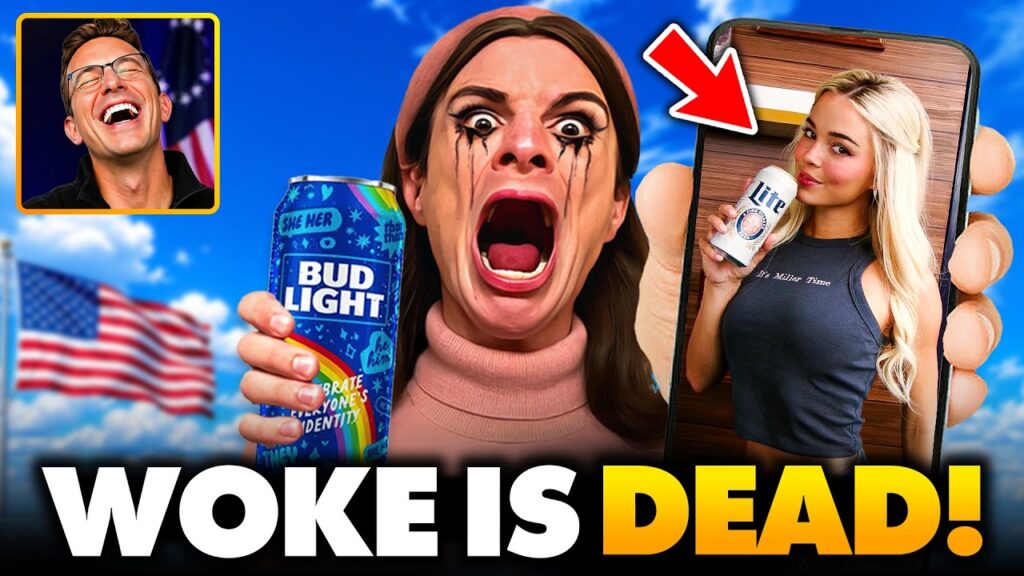
https://www.youtube.com/watch?v=zZLm4Zxnz98 Summary: Miller Lite's 'Anti-Woke' Pivot, Ads, Backlash, and Media Fallout
Miller Lite anti-woke is the frame driving Benny Johnson’s video, and that framing does most of the work before the evidence even arrives. In the original video on the Benny Johnson channel, the creator argues that Miller Lite has deliberately repositioned itself after the Bud Light-Dylan Mulvaney backlash, using a new campaign featuring Livvy Dunne to signal distance from earlier progressive messaging. He places the key turn between roughly 00:30–02:30 and 05:00–06:30, where the story hardens into a thesis: Bud Light stumbled, Miller watched, and then Miller changed course.
Three details matter right away. First, the video repeats the claim that Bud Light suffered about a 50% stock or market-value drop and lost roughly one-third of its drinkers after the boycott discourse, especially around 01:10–01:50. Second, Johnson resurrects Miller Lite’s earlier women’s-history ad, quoting the line about how women created beer and were later “put in bikinis” at around 03:00–03:45. Third, he points to the Livvy Dunne rollout around 05:10–05:50 as proof that the company now wants a very different visual language.
That is the argument. But arguments, especially in political commentary and digital media, have edges. Some are sharper than they look. In 2026, with brands navigating election-year sensitivities, fragmented audiences, and faster outrage cycles, the real question isn’t simply whether Miller Lite went anti-woke. It’s how much of this is ideology, how much is advertising strategy, and what brands should actually do next.
- Watch the original video: Benny Johnson
- Quick verdict for brands: test messaging before national rollout, track weekly sales against sentiment, and prepare rapid-response scripts before comments spiral.
- Best use of this article: treat it as a media analysis and fact-checking companion, not a transcript.

TL;DR — Key takeaways
The fastest way to read this story is also the most revealing. According to Benny Johnson, Miller Lite anti-woke branding is not a stray creative experiment; it is a response to the Bud Light fallout and a message to a culturally divided audience that still reads beer ads as identity signals. The video shows him building that case through contrast: Bud Light’s partnership with Dylan Mulvaney becomes the cautionary tale, while Miller Lite’s newer Livvy Dunne creative becomes the corrective.
As demonstrated in the video, three claims anchor the narrative. One, Bud Light’s controversy produced a massive business shock, described by Johnson as a near-50% collapse in value and the loss of about one-third of customers. Two, Miller Lite once ran a campaign criticizing the industry’s history of bikini-based beer advertising, with the line “Women were among the very first to brew beer… They put us in bikinis” highlighted around 03:05–03:20. Three, the new campaign featuring Livvy Dunne, shown around 05:10–05:50, is presented as a reversal so plain that viewers don’t need a press release to read it.
For readers, the useful lesson is practical, not tribal. When a brand appears to pivot:
- Compare old and new creative side by side.
- Track sales, search interest, and sentiment weekly for at least days.
- Prepare response language before critics define the campaign for you.
That final point matters. A brand rarely controls the first headline. It can still control the second and the third.
Why the Miller Lite anti-woke story matters: the bigger picture
The reason this story keeps traveling is simple: it isn’t really about beer. The creator explains, especially from 00:30–01:30, that ad campaigns now function as cultural sorting devices. A can, an influencer, a joke, a spokesperson’s wardrobe, even the choice of which comments to pin under a video—each becomes a shorthand for which public the brand believes it serves. In that sense, Miller Lite anti-woke coverage is less about one campaign than about what corporate signaling looks like when audiences expect politics to show up everywhere.
There is precedent for this, though the mood has changed. Beer advertising in the 1980s and 1990s relied on targeted identity cues too—masculinity, sports, flirtation, Americana—but those cues were sold as lifestyle, not ideology. The 2020s altered the math. After repeated controversies across consumer brands, marketers began to factor politics directly into ROI models: risk of boycott, press amplification, creator backlash velocity. Industry reporting over the last several years has repeatedly shown that PR crises can produce double-digit sales declines for legacy brands in the short term, while recovery often depends heavily on whether the public reads a company’s explanation as authentic rather than tactical.
That is where timing matters. In 2026, with political cycles tightening and consumer trust thinning, readers can evaluate future pivots with a simple checklist:
- Ad spend: Is the company backing the message with sustained placement, or only testing a viral clip?
- Spokesperson fit: Does the figure match the brand’s history and buyer base?
- Timing: Did the campaign land near an election, another brand scandal, or a social flashpoint?
- Consistency: Do packaging, social content, and PR statements tell the same story?
A pivot is rarely just what appears on camera. Often, the real signal is what changed behind the camera first.
What the video shows about Bud Light and the catalyst
Johnson’s video treats the Bud Light episode as the moment everything else became possible. As demonstrated in the video from 00:30–02:10, he calls it the watershed event and uses a line designed to stick: “Bud Light’s partnership with trans influencer sparked right-wing boycott. The single most successful boycott in the history of the world.” That quote, heard around 01:05–01:20, is less a neutral summary than a political framing device. It gives the audience a villain, a lesson, and a scoreboard.
Independent reporting supports part of the business-impact story, though not always in the same language. Reuters reported in and after that Bud Light experienced a significant U.S. sales slump following the controversy, with steep weekly declines tracked by industry data providers and pressure on parent-company market value. That is not the same as proving a permanent one-third loss of all drinkers forever, and it is worth separating those claims. Stock movement can reflect many things beyond a single campaign, and sales declines, while severe, do not by themselves answer how many customers never returned.
Johnson also points to viral TikToks mocking Bud Light around 01:50–02:20, and that detail matters because cultural damage rarely arrives through one ad alone. It travels through remixes, commentary clips, short-form jokes, and audience engagement loops that harden a narrative. Readers who want to verify such claims can do it in under twenty minutes:
- Search company statements and earnings commentary for admissions about customer loss.
- Check Reuters or WSJ summaries of week-by-week sales movement.
- Look at SEC filings for broader financial context, especially market-cap shifts.
- Compare the original ad to the commentary about it; don’t rely on excerpts alone.
What the video gets right is the size of the symbolic shock. What it leaves less examined is how complex the recovery math really is.
Miller Lite anti-woke strategy explained: Livvy Dunne, branding, and message reset
The heart of the video is contrast. According to Benny Johnson, Miller Lite anti-woke strategy becomes legible only when viewers place the old women’s-history ad beside the newer Livvy Dunne spots. Around 03:00–03:45, the video replays the earlier campaign with its now-famous line about women brewing beer first and the industry later putting them in bikinis. Then, around 05:10–05:50, it pivots to clips of Dunne, whose image and delivery signal youth, conventional attractiveness, and a lighter, less sermon-like tone.
The creator explains that this is a rejection of the earlier scolding mode. His interpretation is blunt: Miller once criticized the visual tradition of beer marketing and is now drawing from it again. He underlines the contradiction with the quote from the prior ad—“Women were among the very first to brew beer… They put us in bikinis”—before pointing to the new campaign imagery as an obvious reversal. The video shows this as a cultural course correction, not merely a change in talent.
But there is another reading, and brands ignore it at their peril. A marketing analyst could argue that this is not ideology replacing ideology. It may be a shift from issue-based signaling to low-friction lifestyle creative. Celebrity or influencer-led campaigns often lift ad recall by roughly 20% to 30% under favorable conditions, and youthful lifestyle ads can improve conversion intent when the brand is trying to recover from a stale or overdetermined identity. That does not make the campaign apolitical; it only means its politics may be in what it refuses to say.
For marketing teams, the practical checklist is straightforward:
- Map old message against new creative. Identify contradictions, not just differences.
- Run A/B tests with target and control audiences before national spend.
- Track short-term sales and long-term brand health: sell-through, sentiment, search volume, and NPS.
Brands are often tempted to call this instinct. Usually, it is just pattern recognition under pressure.
Ad analysis: old Miller Lite spot vs. new spots
At the creative level, the two campaigns are speaking different dialects. As demonstrated in the video from 03:00–04:00, the older Miller Lite ad leans on historical framing and moral correction. It invokes women brewers across centuries, then turns to repair language: “turn the bad into compost” and “donate to women brewers” around 03:20–03:40. The ad tries to convert archived sexist imagery into a performative act of restitution. It wants viewers to see conscience.
The newer Livvy Dunne creative, by contrast, trades in speed and mood. Around 05:10–05:50, the clips use casual lines, social-friendly pacing, and a polished but easygoing persona. Wardrobe, setting, and camera treatment all suggest what the older ad denied: aspiration, flirtation, and uncomplicated fun. That is why the contradiction reads so strongly to critics and supporters alike. The company once questioned the old beer-ad grammar, and now seems comfortable borrowing from it again.
To judge whether that contradiction is strategic or hollow, readers can use a five-point rubric:
- Authenticity: Does the new message fit the brand’s history, or does it feel panicked?
- Target fit: Is the creative designed for actual buyers, not just online spectators?
- Sales intent: Is there a clear path from attention to purchase?
- Media mix: Are TV, social, YouTube, and creator clips reinforcing the same idea?
- Crisis resilience: Can the campaign survive hostile edits and commentary uploads?
Industry norms suggest celebrity spokespeople can improve recall significantly, while lifestyle-led creative can improve conversion intent when overexplained campaigns have fatigued viewers. Yet the same simplicity that boosts ad performance can also make a campaign look opportunistic. A brand can be efficient and exposed at once.
Conservative media ecosystem and audience reaction
This story did not spread through one channel alone. Benny Johnson is part of a wider conservative media ecosystem that includes BlazeTV, Next News Network, One America News Network (OANN), and Sky News Australia, each of which often packages current events, political commentary, media analysis, and viral trends into high-velocity clips optimized for shareability. The creator speaks from that angle throughout the video, and that context matters because audience expectations shape what counts as proof.
Across these outlets, the framing tends to rhyme. A headline may declare that brands are “returning to normal,” that audiences are “healing,” or that progressive advertising has finally met market reality. The details vary, but the emotional structure is consistent: a fall, a punishment, a correction. This is where legacy figures like Bill O’Reilly still matter as touchstones. Even when he is not central to a particular story, his style of confident verdict-making survives in newer digital hosts, interviews, and livestream segments.
Virality is measurable, even when sincerity is not. Political reaction videos often generate unusually high comment rates because viewers arrive not only to watch but to declare belonging. On YouTube, comparable clips across conservative channels can post strong engagement ratios—likes and comments per 1,000 views—especially when a video taps into a grievance already familiar from cable, X, TikTok, or Facebook. Readers should cross-check any partisan take by doing three things:
- Watch the original ad or full source clip.
- Read one outlet outside the ecosystem.
- Scan comments for repeated phrasing that may suggest coordinated reactions rather than spontaneous audience sentiment.
Digital media rewards certainty. Truth, meanwhile, still asks for comparison.
Media analysis, misinformation, and fact-checking where the video goes too far
The video is effective because it is confident. It is also most vulnerable there. Claims such as “the single most successful boycott in the history of the world” or “they won’t ever return”, clustered around 01:05–02:00, are memorable precisely because they overreach. Strong language travels. Verification takes longer. That is why any serious media analysis has to separate what the creator asserts from what public reporting can support.
A clean fact-checking workflow helps. First, verify sales and market-value claims through wire coverage and corporate disclosures. Reuters is useful here because it often synthesizes company statements with industry sales data. Second, compare long-term category trends: did Bud Light fall only because of the controversy, or was some softening already underway in beer consumption patterns? Third, inspect original posts and campaign materials rather than screenshots passed around by commentary accounts. Reverse-image search catches recycled graphics; Archive.org can surface deleted or changed brand pages; official PR statements from Anheuser-Busch and Molson Coors help establish what companies actually said.
Readers can verify a viral claim quickly with this 20-minute method:
- Find the exact quote and note the timestamp.
- Locate one primary source: company statement, official ad, earnings comment.
- Locate one independent report: Reuters, major trade press, or broad news coverage.
- Check if the numbers match or have been rounded into something more dramatic.
- Look for what is missing: timeframe, comparison point, or denominator.
If this article were expanded into reported coverage, the strongest additions would be interviews with a marketing professor, an ad-industry analyst, and a digital media scholar who studies political content and audience engagement. That kind of triangulation doesn’t flatten disagreement. It simply keeps certainty from outrunning evidence.
Advertising strategy, YouTube algorithms, and audience engagement
Johnson’s video is also a case study in platform-native persuasion. It uses contrast clips, fast emotional labeling, and community interaction cues to keep viewers leaning forward. That matters because YouTube algorithms do not reward truth or falsehood directly; they reward signals such as click-through rate, watch time, retention, and comment activity. For short political commentary or current-events reaction videos, retention above 50% is often considered strong, especially when the first 10 seconds establish conflict immediately.
The eight-minute benchmark still matters too, because videos above that length can be more attractive from a monetization standpoint while giving creators room for multiple narrative turns: setup, outrage clip, comparison, punchline, call to comment. That architecture is visible here. The creator introduces historical stakes, shifts to Bud Light as a cautionary episode, then lands on the Miller Lite anti-woke contrast as payoff. Viral multiplier effects kick in when other outlets, including OANN-style digital clips, Sky News Australia segments, or BlazeTV commentary, echo the same framing and send viewers back into the loop.
For brands using video content, the playbook is plain:
- Hook fast. State the conflict in the first seconds.
- Optimize thumbnails and titles for curiosity without making claims you can’t support.
- Test variants by audience segment before scaling spend.
- Seed paid amplification to encourage organic pickup once engagement starts.
And when backlash comes? Monitor comments daily, pin clarifying responses, and publish a short FAQ video rather than hiding behind a press release. Silence looks strategic until it looks guilty.
Impact on U.S. politics, social issues, and public opinion
Near the end, around 06:10–06:30, Johnson declares that “the country is healing.” It is a neat ending. It is also a political claim disguised as a market observation. Ad wars now sit inside broader arguments about social issues, U.S. politics, and public opinion, and beer brands have become unlikely vessels for debates about gender, authenticity, elite messaging, and cultural permission. The question is not just what people drink. It is what they think drinking says.
Polling over the last several years has shown that a noticeable share of voters say they are willing to boycott brands for political reasons, though the intensity differs by ideology, age, and issue. Those reactions are not entirely new. The 2010s were full of consumer boycotts and pressure campaigns. What changed is the speed of amplification and the degree to which influencer culture now competes with, and often outruns, legacy hosts. Dylan Mulvaney became central to the Bud Light controversy because creator culture personalizes brand decisions. At the same time, figures such as Bill O’Reilly remain useful reference points for how conservative viewpoints once moved through cable before moving through YouTube, interviews, and cross-platform clips.
For civic-minded readers, a few habits help:
- Separate purchase decisions from sweeping political narratives.
- Look for ad-impact data before assuming a campaign changed national opinion.
- Ask companies for transparency through shareholder letters, consumer feedback channels, and public statements.
Public opinion is real. So is theater. The difficulty is that they often wear the same face for a while.
Recommendations for brands, creators, and commentators
The best lesson from this episode is not to become louder. It is to become more disciplined. Brands should assume that every campaign now has two launches: the official one and the commentary one. The first is shaped by creative teams. The second is shaped by critics, fans, rival networks, stitched clips, and algorithmic incentives. If that sounds exhausting, it is. Still, there are workable steps.
- Audit the creative and the archive. Compare new ads with older messaging so contradictions don’t surprise you later.
- Convene legal, comms, and social leads early. A campaign with political risk cannot be managed by marketing alone.
- Issue narrow factual statements. Don’t over-explain; correct what is false and document what is true.
- Deploy paid and earned-media corrections. If misinformation spreads in clips, answer in clips.
- Monitor outcomes for days. Track weekly sales, search volume, sentiment, and repeat-purchase signals.
Creators and political commentators have responsibilities too. According to Benny Johnson, the appeal of the story is obvious: a symbolic defeat for one style of corporate messaging and a symbolic return for another. But credibility lasts longer when commentators cite primary sources, include balanced expert voices, and resist hyperbole that weakens otherwise strong reporting. In 2026, short-form clips, AI moderation changes, and the monetization trade-offs of politically charged content will only intensify this pressure.
If there is a single recommendation that fits brands, networks, and audiences alike, it is this: slow down at the moment when certainty feels best. That is usually where the mistakes begin.
Frequently Asked Questions
These short answers tie back to the video’s themes—conservative media influence, YouTube mechanics, and viral audience behavior—while pointing readers toward primary sources when they need more than a slogan.
What is going on with Bill O'Reilly?
Bill O’Reilly is still active in conservative commentary through online video, radio, interviews, and his own digital platforms, even though he no longer holds the same cable-news position that made him a household name. In stories like this one, he serves as a bridge figure: a reminder of how older opinion media styles shaped newer digital commentators such as Benny Johnson and hosts across BlazeTV, OANN-adjacent programming, and similar outlets.
What is the minute rule on YouTube?
The minute rule refers to the common YouTube benchmark for videos that can qualify for mid-roll ad placement if a channel is eligible for monetization. For creators, it has practical consequences: many political commentary and reaction videos are structured to pass eight minutes while sustaining retention, which can increase revenue and encourage longer watch sessions. For policy details, check YouTube Creator documentation directly.
What is the #1 YouTube video?
As of 2026, the historically most-viewed YouTube video is still generally reported as Baby Shark Dance. It stays on top because it combines global appeal, repeat viewing, and very high retention—three mechanics that matter on YouTube far more than novelty alone.
What is the best content for YouTube right now?
The strongest YouTube content right now usually falls into three buckets: topical clips that tap current events, evergreen how-tos that solve a clear problem, and community-driven formats such as reactions, Q&As, and interviews. For brands, three useful examples are short commentary clips, creator-led product explainers, and rapid-response FAQ videos. The metrics to prioritize are CTR, audience retention, and engagement per 1,000 views.
Sources, further reading, and links
Primary video: Benny Johnson — Miller Lite Goes Full Anti-WOKE
- Benny Johnson channel
- Bill O’Reilly channel
- OANN videos
- Sky News Australia videos
- Next News Network videos
- BlazeTV videos
- Reuters coverage on Bud Light sales and market fallout
- YouTube Creator documentation
Readers who want deeper reporting should compare the original ads, public statements from Molson Coors and Anheuser-Busch, and independent news coverage before treating commentary as settled fact. That extra step takes a little time. It usually saves a lot of certainty.
Conclusion: what brands should do next
Miller Lite anti-woke commentary works because it tells a clean story in a messy era: one brand stumbled, another learned, the audience delivered a verdict, and the market corrected the culture. The video presents that version vividly, and at several moments persuasively. But as this article shows, the fuller picture is more useful. Some claims are well grounded. Others need firmer verification. Nearly all of them sit inside a media system that rewards speed, emotion, and symbolic victories.
For brands, the answer is not to avoid all risk. It is to prepare better. Test messaging in small audiences before national release. Compare sales with sentiment every week, not just after the loudest headline. Keep response scripts ready for creators, reporters, and customer-service teams. And above all, don’t let a campaign say one thing while the brand archive says another. Audiences have long memories when a contradiction is entertaining.
As demonstrated in the video, commentary can move faster than official communications. According to Benny Johnson, that speed is part of the point. For companies trying to survive 2026’s political cycles and digital-media pressure, the lesson is plain: if you don’t explain your pivot, someone else will explain it for you—and they may do it in a way that sticks.
Frequently Asked Questions
What is going on with Bill O'Reilly?
Bill O’Reilly remains active as a conservative media figure through commentary, interviews, radio, streaming appearances, and his own digital platforms rather than a return to his old cable-news role. In this article’s context, he matters less as a direct participant in the Miller Lite story than as a marker of how legacy conservative hosts shaped the tone that newer personalities like Benny Johnson, BlazeTV voices, and digital-first commentators now use online. Readers who want to track his current output can start with his official channels and recent news coverage of his media appearances.
What is the minute rule on YouTube?
The ‘8 minute rule’ on YouTube refers to the common benchmark that allows eligible creators to place mid-roll ads on videos that are at least eight minutes long. Practically, creators often structure political commentary and reaction videos to clear that threshold while also maximizing watch time, retention, and revenue. YouTube’s own creator guidance is the best place to confirm current monetization rules because platform policies do change.
What is the #1 YouTube video?
As of 2026, the historically most-viewed YouTube video is still widely reported as ‘Baby Shark Dance.’ That answer matters here because it shows a simple truth about platform mechanics: mass appeal, repeat viewing, and strong audience retention usually beat novelty alone. Viral political clips can surge fast, but they rarely match the durable, global repeat-play behavior of children’s music videos.
What is the best content for YouTube right now?
Right now, the best YouTube content usually combines three things: a sharp hook, a clear audience promise, and a format viewers already know how to share. For brands and creators, that often means short topical clips, debate-triggering commentary, evergreen how-tos, and community-driven formats such as reactions or Q&As. The metrics to watch first are click-through rate, audience retention, and engagement per 1,000 views.
Did Miller Lite really make a full anti-woke pivot?
No, the video does not prove that on its own. According to Benny Johnson, the creator frames the campaign as a decisive ideological reversal, but independent review should compare official campaign assets, prior Miller Lite messaging, timing, audience targeting, and sales performance before labeling it a full strategic pivot. A few clips can show direction, but not the whole media plan.
Key Takeaways
- Benny Johnson frames Miller Lite’s new campaign as a deliberate response to Bud Light’s backlash, using the Livvy Dunne rollout as evidence of a broader brand reset.
- The video’s strongest claims about Bud Light’s losses align partly with independent reporting, but readers should verify stock, sales, and customer-loss figures through primary statements and wire coverage.
- The contrast between Miller Lite’s older women’s-history ad and the newer lifestyle-led creative is real, but the meaning of that contrast may be strategic simplification rather than ideology alone.
- Brands facing politicized backlash should pre-test messaging, monitor weekly sales versus sentiment, and prepare rapid-response FAQ scripts before commentary ecosystems define the narrative.
- YouTube algorithms and conservative media amplification help turn ad campaigns into national political stories, so marketers need to plan for the commentary cycle as carefully as the ad buy itself.
