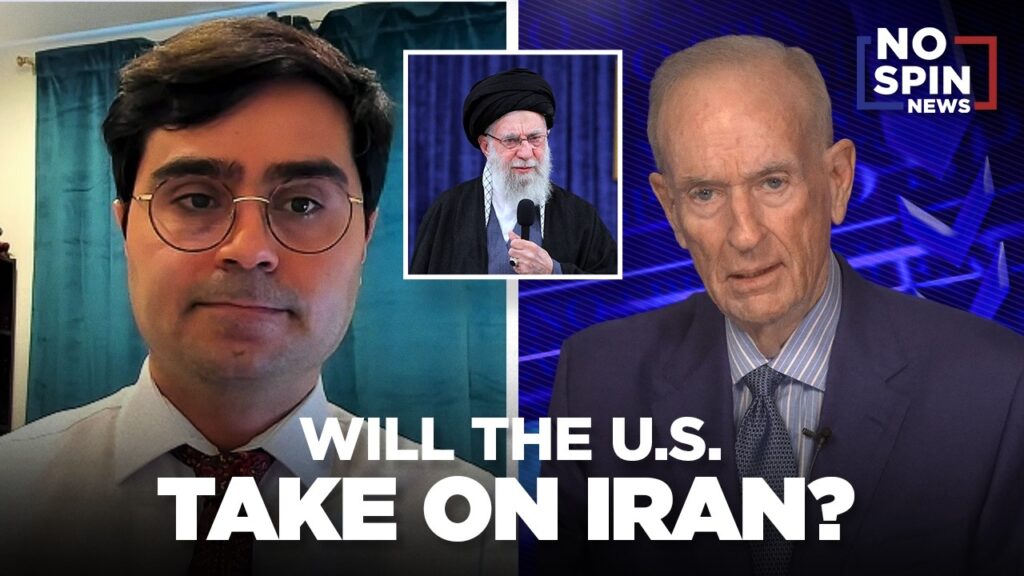
Bill O’Reilly and Sina Toossi on Iran’s Rising Tensions frames a calm, empathetic conversation about the recent escalation between the U.S. and Iran. They acknowledge the worries many feel and work to unpack the political, military, and historical factors driving the standoff.
The piece outlines likely U.S. responses, Tehran’s strategic calculations, and the risks for regional stability and global markets. Toossi’s policy expertise paired with O’Reilly’s commentary provides concise context and practical questions for viewers seeking clarity amid uncertainty.

Profiles of the Commentators
Bill O’Reilly’s background and media influence
He comes from a long career in broadcast journalism that made him a household name for millions of viewers. Bill O’Reilly projects the confidence of a seasoned commentator who knows how to frame a story so it feels immediate and personal: a looming threat, a clear choice, a moral dimension that demands a verdict. His voice carries the weight of decades on air and the habit of speaking to a broad audience that wants clarity, conviction, and decisive answers. That influence means his framing—urgent, simplified, often binary—shapes how many people understand the contours of a crisis and what they expect their leaders to do.
Sina Toossi’s credentials and policy expertise
He brings a different, quieter kind of authority: academic training and policy experience centered on the mechanics of diplomacy and conflict. As a senior fellow at a think tank, Sina Toossi speaks from a background of research, advisory work, and a patient attention to detail. His expertise orients toward institutional constraints, incentives, and the technical trade-offs of any policy choice. Where a broadcaster may ask “what should be done,” he asks instead “what would happen if”—and then traces the plausible consequences, the unintended costs, and the room for maneuver that decision-makers actually have.
How their perspectives reflect different audiences
Their tones mirror the needs of different publics. O’Reilly addresses an audience that seeks moral clarity and immediate reassurance; his words resonate with viewers who want a protector-figure in a chaotic world. Toossi addresses an audience that tolerates complexity: policy professionals, diplomats, and citizens who want to understand trade-offs and long-term effects. Both voices are necessary in a democratic conversation, yet they appeal to different anxieties—one stokes urgency and clear action, the other cultivates caution and strategic patience. Together, they reveal how public debate can oscillate between appetite for decisive force and hunger for informed restraint.
The significance of the No Spin News platform for framing debates
No Spin News, by design, promises plain-speaking analysis free of obfuscation. The platform amplifies voices that deliver strong narratives, and it rewards clarity—even if clarity sometimes trims nuance. In an empathic reading, its significance is that it offers viewers a way to feel less adrift: wars and crises are reframed into stories with protagonists and choices. That framing matters because it influences which options feel politically viable. When complex policy dilemmas are presented as urgent moral contests, the public’s tolerance for risk and for messy diplomatic work can narrow, making pragmatic, patient strategies harder to pursue.
Historical Context of U.S.-Iran Relations
Major turning points since the 1979 revolution
Since the Shah’s fall and the 1979 revolution, U.S.-Iran relations have been punctuated by ruptures that set long shadows. The hostage crisis of 1979–1981 cemented public distrust on both sides and transformed bilateral affairs into a theater for domestic politics. The Iran–Iraq War of the 1980s and the clandestine entanglements that followed created patterns of proxy engagement and mistrust. Each major episode—diplomatic breaks, economic sanctions, covert action—has reinforced a sense among Iranian leaders that the United States seeks to contain or change their regime, and among U.S. policymakers that Iran is a destabilizing actor in the region.
The impact of U.S. policy in the Gulf and Iraq wars
U.S. engagement in the Gulf and the wars in Iraq reshaped the strategic landscape. The 1990s sanctions and the post-2003 U.S. presence in Iraq created both pressure and opportunities for Iran to expand its regional influence through proxies and political networks. American interventions destabilized regional balances and created security vacuums in which militias and foreign-backed actors could grow. For many Iranians, the wars reinforced the logic of self-reliance and asymmetric defense; for American strategists, they exposed the limits of conventional power and the complexities of nation-building in a fractured region.
Nuclear program developments and international responses
Iran’s nuclear program evolved from a civilian energy ambition into the center of an international crisis. Suspicions about weaponization led to years of sanctions, inspections, and negotiation. The 2015 nuclear agreement—the Joint Comprehensive Plan of Action (JCPOA)—was a moment when diplomacy reduced immediate nuclear risks. The deal’s verification measures and phased sanctions relief created a temporary opening, but debates over scope and enforcement never fully dissipated. International responses have oscillated between engagement and containment, shaping Tehran’s calculations about the utility of nuclear hedging and the price of regional assertiveness.
How past patterns inform current decision-making
History teaches both capitals lessons that feel personal: miscalculation can spiral, and signals are often misread. Iranian leaders recall coercive measures and covert actions; U.S. leaders recall sudden escalations that cost lives and credibility. Those memories encourage layered strategies—torque between deterrence and diplomacy—where each side hedges against worst-case outcomes. Policymakers today are influenced as much by institutional memory as by contemporaneous pressures; that weight of precedent narrows choices and makes the default often one of cautious containment rather than bold reconciliation.
Recent Timeline of Rising Tensions
Key incidents precipitating escalation in the past decade
The past decade has seen episodes that steadily raised confrontational temperature: attacks on shipping in the Gulf, sabotage of infrastructure, exchanges of rocket fire in Syria and Iraq, and the pattern of arrests and assassinations that fed mutual suspicion. Each incident, taken alone, might have been containable; together, they created a sense of chronic crisis. Small, tit-for-tat actions—seizures of vessels, threats to commercial traffic, and covert reprisals—accumulated into a broader pattern that made large-scale miscalculation more likely.
Events around the 2015 JCPOA and U.S. withdrawal
The 2015 JCPOA represented a collective gamble: Iran accepted strict limits on its nuclear program for phased sanctions relief. In 2018, the U.S. withdrawal from the deal signaled to Tehran that international agreements could be fragile when domestic politics shifted. That decision intensified sanctions and pushed Iran to resume some nuclear activities as leverage. The withdrawal also eroded trust in the durability of diplomatic bargains, prompting both sides to prepare for worst-case scenarios and to rely more on defensive and coercive measures.
Attacks on ships, sanctions, and proxy incidents
Attacks on commercial shipping and energy infrastructure have been a consistent flashpoint, disrupting global commerce and raising insurance costs. Sanctions have remained a primary tool of pressure, designed to choke revenues and influence behavior, while proxy incidents—attacks by allied militias in Iraq, Syria, Lebanon, and Yemen—have become the preferred mode of asymmetric engagement. These tactics allow deniability, permit escalation below the threshold of full war, and complicate attribution, making diplomatic resolution harder and local actors more volatile.
High-profile escalations such as targeted strikes and arrests
High-profile actions, like targeted strikes and the detention of foreign nationals, punctuate quieter patterns and often trigger public outrage and calls for reprisal. The U.S. killing of an Iranian general in a targeted strike, the capture of tankers, and high-visibility arrests have forced publics and governments to confront choices about retaliation and restraint. Such moments can harden domestic audiences, constrain leaders’ flexibility, and make de-escalation politically costly.
Drivers of the Current Crisis
Iranian domestic politics and regime calculations
Iranian leaders balance internal pressures—economic pain, factional rivalries, and popular discontent—with external posture. Hardliners and the Revolutionary Guard view assertiveness as a way to consolidate legitimacy and push back against sanctions, while moderates sometimes argue for engagement to relieve economic hardship. The regime calculates that displays of resistance both deter foreign pressure and shore up domestic credibility, even as economic hardship erodes popular support. These internal dynamics make Tehran’s choices as much about survival at home as about strategy abroad.
U.S. strategic priorities and regional posture
The United States aims to deter threats to allies, secure maritime trade routes, and prevent nuclear proliferation, all while managing finite military and political resources. Its posture—forward-deployed forces, alliances with Gulf partners, and public threats of force—signals commitment but also constrains flexibility. Domestic politics and alliance politics shape what options are available, forcing policymakers to weigh immediate security needs against the costs of open-ended military engagement.
Proxy networks and asymmetric warfare dynamics
Proxy networks give Iran strategic depth and a cost-effective way to influence regional outcomes. Militias and allied political actors can project power without direct attribution, lowering Tehran’s near-term risk but raising the odds of miscalculation. Asymmetric tactics—ambulatory threats, cyberattacks, drone strikes, and proxy missile launches—complicate conventional deterrence and make escalation ladders less predictable. For the U.S. and its partners, countering these networks requires persistent intelligence, local partnerships, and calibrated responses that avoid sweeping retaliation.
Economic pressures and sanctions as escalatory tools
Sanctions are a double-edged sword: they are a nonmilitary means to impose costs, yet they also increase pressure for asymmetric responses. Economic squeeze can radicalize parts of a population or empower hardliners who argue that resistance is the only path. Sanctions can compel negotiation but can also entrench grievances that fuel long-term instability. Policymakers must therefore consider not only immediate coercive effects, but also how sanctions reshape political incentives inside Iran.
Iran’s Military and Strategic Capabilities
Conventional armed forces and force posture
Iran maintains conventional forces that are less about power projection and more about territorial defense and regional deterrence. Its navy and air forces are supplemented by the Islamic Revolutionary Guard Corps (IRGC), which operates with significant autonomy and focuses on asymmetric tactics. Iran’s force posture emphasizes coastal defense, area denial in the Gulf, and the ability to impose costs through limited strikes—capabilities designed to complicate an adversary’s calculations without inviting full-scale conflict.
Missile and unmanned aerial vehicle (UAV) capabilities
Ballistic and cruise missiles, along with increasingly sophisticated UAVs, are among Iran’s most consequential military assets. These capabilities give Tehran options for long-range strikes and for threatening regional infrastructure, shipping lanes, and allied forces. The proliferation of drones has lowered the threshold for attacks that can be plausibly deniable yet effective, presenting new challenges for missile defenses and escalation control.
Proxy forces and regional militia networks
Hezbollah in Lebanon, Iraqi militias, Houthi rebels in Yemen, and allied elements in Syria form a network that extends Iran’s reach. These groups enable Iran to influence local politics and to strike adversaries indirectly. Their autonomy and local grievances mean Tehran’s control is not absolute, creating risks of unintended escalation as local actors pursue their own aims that may draw international attention and provoke responses.
Nuclear infrastructure, breakout potential, and technical constraints
Iran has developed enrichment infrastructure that gives it leverage in negotiations and creates genuine proliferation concerns. Breakout potential depends on a mix of technical capacity, access to fissile material, and political will. While enrichment levels and centrifuge numbers can shorten timelines, technical constraints, detection risk through inspections, and the international consequences of a weapons decision still present significant deterrents. Any assessment must therefore account for both capability and the profound political costs of a weapons program.
U.S. Military and Diplomatic Options
Deterrence through forward-deployed forces and strike options
Forward-deployed forces and visible strike capabilities are central to deterrence: they promise rapid response and impose credibility on threats. But they also make escalation tempting when leaders feel compelled to demonstrate resolve. The presence of carrier groups, bases, and allied militaries deters some actions but also raises the stakes of miscalculation in a crowded theater.
Coercive diplomacy and multilateral pressure
Coercive diplomacy uses sanctions, international isolation, and the threat of force to change behavior without direct conflict. Multilateral pressure magnifies economic effects and lends legitimacy to punitive actions. Yet its effectiveness depends on allied cohesion and global willingness to comply—things that can fray under competing economic interests and geopolitical rivalries.
Limited strikes versus comprehensive campaigns
Limited strikes offer a calibrated response to specific provocations, aiming to degrade capabilities or deter future acts without triggering all-out war. Comprehensive campaigns seek regime change or long-term military domination but carry heavy costs and high uncertainty. History shows that limited strikes can satisfy domestic calls for action while avoiding catastrophic escalation, but they also risk insufficient deterrence if adversaries interpret restraint as weakness.
Risks, costs, and escalation management
Every option carries risks: unintended civilian harm, wider regional conflagration, disruptions to global markets, and long-term political blowback. Effective escalation management requires clear red lines, communication channels, and credible backstops to prevent misperception. Diplomacy must often run in parallel with deterrence to provide exit ramps from crisis moments.
Regional Actors and Their Interests
Israel’s strategic calculations and red lines
Israel perceives Iran’s nuclear program and regional proxies as existential threats. Its calculus favors preemption and high-intensity deterrence options, and it has demonstrated willingness to conduct covert operations and strikes to blunt perceived risks. Israel’s red lines—particularly around nuclear acquisition and major force projection—shape both U.S. policy and Tehran’s risk calculations, creating a pressure point that can pull external actors into localized conflicts.
Gulf Arab states’ security concerns and alignments
Gulf states, particularly Saudi Arabia and the UAE, worry about Iranian influence and the security of energy infrastructure. They have strengthened security ties with the U.S. and, in some cases, fostered covert or overt cooperation with other powers to counter Tehran. These states seek assurance that their security will not be sacrificed for larger geopolitical deals, and they often push for robust responses to Iranian provocations, even as some pursue cautious détente for economic and strategic reasons.
Turkey and Russia as regional influencers
Turkey and Russia play balancing roles that complicate simple narratives of a U.S.-Iran binary. Both states pursue their own regional interests, sometimes partnering with Tehran on specific issues and at other times opposing it. Their influence reduces the West’s ability to isolate Iran completely and creates alternative diplomatic and economic channels that Tehran can exploit. These dynamics make multilateral approaches both more necessary and more complex.
How regional balancing affects U.S.-Iran dynamics
Regional balancing means that any U.S.-Iran confrontation reverberates through a web of alliances and rivalries. Allies pressure Washington for protection; adversaries exploit openings to shift local power. The interdependence of regional security means that cautious diplomacy, coalition-building, and local partnerships are as important as military options in shaping the course of any crisis.
Economic Measures and Sanctions Strategy
Composition and intended effects of U.S. sanctions
U.S. sanctions typically target banking, energy exports, and individuals tied to the regime, aiming to reduce revenue streams and constrain military procurement. The intended effect is to make aggressive policies more costly and to create pressure for political change. But sanctions are blunt instruments: they affect populations, create economic hardship, and can entrench anti-American sentiment that regimes exploit.
Secondary sanctions and global compliance challenges
Secondary sanctions pressure third-party states and firms to comply, widening the chokehold on Iran’s economy. Yet enforcing them depends on the global economic architecture and the willingness of other states to bear political costs. Nations with deep trade ties to Iran or competing interests in the region may resist, creating uneven enforcement and loopholes that reduce efficacy.
Humanitarian exemptions and unintended consequences
Sanctions regimes often include humanitarian exemptions for food, medicine, and essential goods, but in practice financial institutions’ fear of penalties can restrict legitimate trade. The result is that ordinary people may suffer disproportionally, weakening moderates who favor engagement and strengthening those who argue that only resistance will relieve suffering. Policymakers must therefore calibrate sanctions to maximize political pressure while minimizing humanitarian harm.
Sanctions as bargaining chips in negotiations
Sanctions are negotiation currency: relief can be traded for concrete commitments, and the threat of additional measures can bring parties to the table. But if sanctions are perceived as irreversible or punitive beyond diplomacy’s reach, they reduce trust and make concessions politically costly. Effective bargaining requires credible offers and clear pathways for sanctions relief tied to verifiable compliance.
Legal and Normative Frameworks
International law on use of force and self-defense
International law permits the use of force in self-defense against an armed attack, but the threshold and proportionality standards are contested. States interpret these norms through the lens of national security, often stretching legal arguments to justify preventive or retaliatory actions. The normative framework matters because legality confers legitimacy and shapes allies’ willingness to support coercive measures.
Legality of targeted strikes and covert actions
Targeted strikes and covert actions exist in a legal gray zone where state practice, domestic law, and international norms intersect. The legality hinges on immediacy of threat, attribution, and proportionality. Transparent legal reasoning and robust oversight are essential to maintain international standing and to reduce the risk that covert operations spiral into open conflict.
United Nations role and Security Council dynamics
The United Nations can provide multilateral legitimacy for sanctions and resolutions, but Security Council politics—especially vetoes—often limit decisive collective action. When key powers are divided, the UN’s ability to mediate or enforce norms is constrained, pushing states toward unilateral measures that complicate legal and diplomatic landscapes.
Domestic legal constraints on executive action
Domestic laws like the War Powers Resolution, court scrutiny, and legislative oversight impose constraints on executive military action, though their effectiveness varies. Democracies must balance the need for swift response with accountability and lawfulness, and domestic legal debates shape leaders’ choices by framing what is politically and legally permissible.
Conclusion
Synthesis of O’Reilly and Toossi’s central arguments
He hears two complementary warnings: O’Reilly’s insists on clarity and action—hold threats to account, signal resolve, and ensure that aggression meets cost; Toossi insists on prudence and strategy—understand consequences, preserve diplomatic options, and calibrate coercion to policy goals. Together, their arguments sketch the tension at the heart of responsible policy: the need to deter and to protect, coupled with the need to avoid steps that make the very catastrophe one seeks to prevent more likely.
Most plausible near-term outcomes and their implications
The near-term is most likely to see continued friction: proxy skirmishes, maritime harassment, reciprocal sanctions, and episodic strikes calibrated to avoid all-out war. That scenario keeps markets jittery, civilians at risk, and diplomacy moving in fits and starts. The implication is a protracted, low-intensity crisis that imposes economic costs, human suffering, and political strain without resolving the core disputes that underlie the confrontation.
Policy priorities for reducing the risk of wider conflict
Reducing risk requires a mix of clear deterrence and active diplomacy: protect essential interests, shore up regional defenses, and maintain credible retaliatory options while keeping channels open for negotiation. Multilateral engagement to manage sanctions, cooperative mechanisms for maritime security, and confidence-building measures—such as verifiable steps on nuclear transparency—can create breathing room. Equally important is attention to humanitarian impact and the cultivation of political alternatives inside Iran that can credibly offer a nonconfrontational future.
Final reflections on media, expertise, and public understanding
In a world where headlines press for the simple answer, the patient labor of expertise matters. Media voices like O’Reilly translate fear into action; analysts like Toossi translate complexity into options. The public deserves both: the clarity to feel secure and the context to understand consequences. When discourse holds both urgency and nuance—when it listens with empathy to those who would suffer most—the chances of steering away from catastrophe and toward a steadier, more humane course grow.
Senior Fellow at the Center for International Policy, Sina Toossi joins Bill O’Reilly in the No Spin Zone to analyze Iran’s rising tensions between Tehran and the U.S.
Subscribe to never miss an episode of No Spin News with Bill O’Reilly: / @billoreilly
Watch full episodes of No Spin News here: • Bill O’Reilly’s No Spin News
Watch clips of No Spin News here: • No Spin News | Clips
Bill O’Reilly’s official YouTube channel – No Spin. Subscribe for No Spin News each night, exclusive clips, and a one-of-a-kind brand of news analysis each night.
Become an O’Reilly Premium Member:
Buy Bill’s New Book Available Now:
Visit Bill’s Website:
Follow Bill on Twitter: / billoreilly
Follow No Spin News on Twitter: / nospinnews
Like Bill on Facebook: / billoreillyofficial