


Bill O’Reilly frames the clash between Sam Darnold’s public persona and California’s notorious “jock tax” with the blunt prose he’s known for. He stitches sports drama, tax policy, and media spectacle into a brisk narrative that cuts straight to why this story matters beyond the locker room.
First, he unpacks Darnold’s recent performance and marketability, then traces the tax’s history, legal questions, and the financial stakes for athletes and franchises. Finally, he weighs fan reaction and political fallout, offering verdicts that mix legal analysis with cultural observation.

Bill O’Reilly’s No Spin News Segment Overview
Description of the episode and where the segment was published
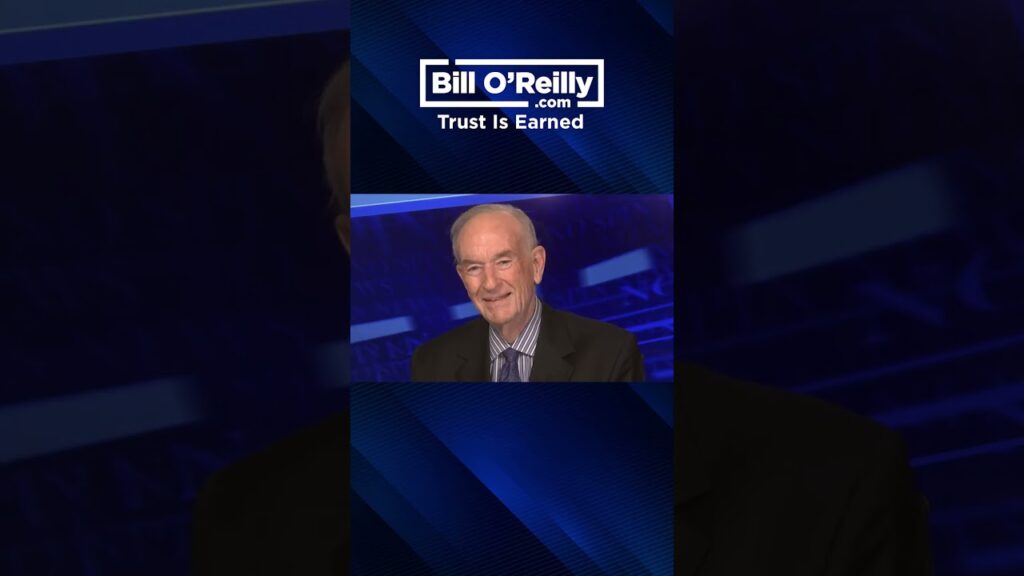
He opened the episode on his No Spin News channel with a clipped, deliberate cadence, the kind of voice that asks listeners to lean in. The segment appeared as a video installment on the Bill O’Reilly No Spin News platform and its social channels, framed as a short, opinion-driven take on a current controversy: Sam Darnold, California’s tax regimen, and what O’Reilly called the “jock tax.” He presented the item as both a specific grievance about a single athlete and a broader parable about government overreach, situating his remarks within the quick-turnaround commentary model that defines much of his output.
Summary of the main points O’Reilly raised about Sam Darnold and the jock tax
O’Reilly’s core claim was straightforward and rhetorically sharpened: an athlete — in this case Sam Darnold — is being penalized by California’s system of taxing nonresident earned income, a system popularly referred to as the “jock tax.” He argued that the application of state income tax to game-day earnings and other transient activities is unfair to visiting players and framed it as an example of an overreaching state extracting money from people who do not live there. O’Reilly emphasized notions of fairness and personal responsibility, pointed to the administrative complexity for players who must file in multiple states, and suggested that such taxation is emblematic of a larger problem with how certain jurisdictions raise revenue from mobile workers.
Tone and target audience of O’Reilly’s commentary
The tone was combative yet conversational, stitched together with moral certainties and populist cues. He addressed an audience that is skeptical of taxation and sympathetic to individual economic grievance — viewers who expect plainspoken outrage and a clear villain. The piece aimed to rally those who see taxation of celebrities and athletes as emblematic of government overreach, while also appealing to sports fans annoyed by perceived bureaucratic pettiness. His cadence and phrasing treated the issue as both a practical irritation and a symbolic affront to economic fairness.
Context within O’Reilly’s broader coverage of sports and taxation
This segment fits into a recurring theme in his broader commentary: the intersection of public policy and personal stories. He has often used high-profile individuals as illustrative cases to critique broader governmental practices. Here, sports — a cultural touchstone for many viewers — becomes a vehicle for a wider critique of taxation, administrative complexity, and the priorities of certain state governments. The story’s human face, Sam Darnold, served O’Reilly’s need for a concrete example while the tax issue enabled him to connect with long-standing conservative themes about limited government and taxpayer protection.
Who is Sam Darnold
Brief professional background and status as an NFL quarterback
Sam Darnold emerged as a high-profile college quarterback whose early NFL career promised the kind of storyline fans savor: a hometown talent with a strong arm and draft-day expectations. He spent time with multiple NFL franchises, navigating the precarious arc common to many quarterbacks — sudden elevation, scrutiny, injury, and the shifting calculus of team need. At the moment the segment aired, he was a visible figure in the league whose moves and earnings made him a plausible subject for public commentary.
Public profile and reasons he might be singled out in commentary
He is a recognizable, if polarizing, name in the NFL — enough of a public figure that a tax story involving him becomes a vehicle for debate. Athletes like him are often singled out because their incomes are large, their travel schedules are public, and their careers are closely followed by fans and media. In O’Reilly’s framing, Darnold served as a clear example: a person who could be easily understood as being squeezed by tax rules he did not choose, which makes for persuasive storytelling.
Typical income streams for an athlete in Darnold’s position
A player of his profile draws income from multiple sources: base salary and bonuses from the team, game-day and per diem allowances, signing incentives, and performance-based guarantees. Outside the league paycheck, endorsement deals, personal appearances, social media promotions, and occasional speaking engagements add to the total. These streams vary in their tax treatment depending on where services are performed and where the athlete is domiciled.
How player mobility and team assignments affect tax exposure
Player mobility — moving from team to team, playing home and away games across jurisdictions — dramatically complicates tax exposure. Each site where the athlete earns compensation can assert taxing authority over income earned within its borders. For a traveling NFL player, the season becomes a patchwork of tax jurisdictions, meaning compliance requires tracking days worked in each state, apportioning income accordingly, and filing returns in multiple states. The more transient the career and the broader the geography of games and appearances, the greater the tax filing burden.
What is the California Jock Tax
Definition and origin of the ‘jock tax’ concept
The “jock tax” is the popular name for a long-standing principle: states can tax nonresident athletes (and other performers) on the income they earn while physically working within those states. It is not a single, uniform law but rather the colloquial label applied to how state tax codes and administrative practices allocate taxable income to the state where services are performed. The phrase captures public frustration with perceived targeting of high earners who nevertheless do not claim residency.
How California implements income tax on nonresident athletes
California treats income earned within the state as subject to California income tax, even for nonresidents. For athletes, this typically means income from games, practices, and certain appearance-related work performed in California is apportioned and taxed by the state. California’s high top marginal rate and its detailed rules about nexus and allocation make it one of the more consequential places for visiting players to have taxable events.
Examples of taxable events: games, appearances, endorsements
Taxable events include compensation for games played in the state, any in-person endorsements or appearances that occur there, and other forms of income tied to services performed within California. Even a single day’s work — a practice, a media appearance, or a commercial shoot — can create a tax obligation. The state distinguishes between income earned by virtue of residency and income sourced to activities inside California.
Short history of the jock tax in California and notable cases
California’s enforcement of nonresident taxation has a long administrative history, punctuated by disputes over apportionment methods and credits for taxes paid to other states. High-profile cases have sometimes involved professional athletes challenging assessments or seeking credits to avoid double taxation, and over the years courts and tax boards have clarified how duties and days worked should be counted. The result is a patchwork of precedent, administrative memoranda, and legislative adjustments that continue to shape how the so-called jock tax operates.
How the Jock Tax Applies to NFL Players
Mechanics of withholding and filing for players who play in multiple states
Mechanically, when an NFL player performs in a state, that state may require withholding or expect the player to file a nonresident return allocating the portion of income earned there. Teams often withhold taxes for home-state obligations and sometimes for visiting state requirements; however, uniformity is lacking. Players will commonly file resident returns in their state of domicile and nonresident returns in states where they earned income, reconciling credits for taxes paid elsewhere to prevent double taxation where possible. The paperwork and timing can be onerous: multiple filings, different deadlines, and varied rules about what counts as taxable service.
Typical proportion of a player’s income affected by game-day taxes
Only a fraction of an NFL player’s income is typically attributable to a single game-day, but across a season the cumulative share can be meaningful. The apportionment often looks at “duty days” — days worked in the state relative to total work days — which makes game and practice days count. For many players, the portion of their total income subjected to out-of-state taxes may be modest in percentage terms, but because top states like California have higher tax rates, the absolute dollar impact can feel large. The calculation varies widely depending on the player’s residency, the number of games in high-tax states, and the composition of their overall compensation.
Role of team payroll, agents, and employers in tax compliance
Teams, agents, and sometimes leagues play a role in tax compliance. Teams may withhold state taxes for payroll processed in their home jurisdiction and sometimes assist with issuing the necessary wage statements. Agents and financial advisors often coordinate filings and seek tax-efficient structures. Nonetheless, the ultimate responsibility for accurate filing typically rests with the player; the collaborative effort among team payroll departments, agents, and accountants attempts to minimize errors and to claim credits for taxes paid in multiple states.
Common points of confusion for athletes and their financial teams
Common confusions arise around domicile versus residency, the definition of a “work day,” per diem treatment, the taxation of appearance fees versus endorsement income, and the treatment of bonuses. The treatment of out-of-state endorsements or work performed remotely adds new wrinkles in an era of virtual appearances. Differences in state law about what constitutes taxable sourced income, and the presence or absence of reciprocal agreements between states, further complicate matters.
Bill O’Reilly’s Arguments and Rhetorical Approach
Key claims O’Reilly made about fairness, responsibility, and taxation
O’Reilly anchored his argument in a sense of fairness: that visiting athletes should not be treated as permanent tax targets by states seeking revenue. He shifted responsibility toward government practices, suggesting that complexity and perceived arbitrariness in taxation are less about equitable revenue collection than about systemic extraction. He framed the situation as a moral and civic question: how much should states be allowed to reach into the pockets of transitory workers?
Use of anecdote, moral framing, and populist appeals in the segment
He relied on anecdote — Sam Darnold’s situation — as the humanizing element, turning dry tax law into a story about an individual. Moral framing followed: it was easier to sympathize with a person who travels to play a game and finds part of his paycheck taxed away. Populist appeals followed naturally: the segment suggested that ordinary people, not just athletes, would resent a system that taxes people where they briefly work, and so the outrage had democratic resonance.
How he connects an individual athlete’s story to broader political themes
O’Reilly used Darnold’s case as a springboard to broader themes about government size, fairness in taxation, and political priorities. He implied that the jock tax was not merely a fiscal policy but a political choice reflecting that particular states prioritize certain revenue streams — often to the frustration of nonresidents. In the telling, one athlete’s story illuminated a national debate about where power and taxation intersect in a mobile economy.
Potential strengths and weaknesses in his argumentation
The strength of his approach lies in the clarity and emotional resonance of the vignette; taxpayers respond to human stories more readily than to abstract doctrines. The weakness is the risk of oversimplification: tax law is complex, and the segment glossed over legal justifications, the rationale for source-based taxation, and the mechanisms states use to prevent double taxation. He also risked treating a systemic policy as an intentional slight rather than a consequence of long-standing jurisdictional rules.
Legal Foundations and Precedent
State taxing authority and the legal basis for taxing nonresidents
States derive taxing authority from their power to tax income earned within their borders, a power rooted in longstanding principles of source-based taxation. The legal basis rests on states’ interest in taxing income earned from economic activity within their territory and is constrained by constitutional limits — particularly the Commerce Clause and Due Process Clause — which require a sufficient nexus between the taxed activity and the state.
Significant court rulings that have shaped jock tax enforcement
A variety of rulings over decades have clarified when and how states can tax nonresidents, and courts have often been deferential when a clear nexus exists between the activity and the state. Decisions clarifying apportionment, the need to avoid undue burdens on interstate commerce, and protections against discriminatory tax schemes have shaped enforcement. Judicial guidance has emphasized that states can tax nonresidents for income from in-state services but must do so within constitutional limits and often recognize credits for taxes paid to other jurisdictions to avoid double taxation.
Interplay between federal tax law and state-level jock taxes
Federal tax law sets the overall framework and floor for income taxation, but states retain broad latitude to craft and enforce their own income taxes. The interplay arises most sharply in the area of double taxation relief and in federal preemption issues: federal rules do not generally displace state authority to tax nonresidents on sourced income, but federal constitutional principles constrain state practices. The result is a layered system where federal filing obligations coexist with multiple state filings for those with multi-jurisdictional earnings.
Potential legal challenges athletes have used or could use
Athletes and their advisors have challenged state assessments on grounds such as improper apportionment, misapplication of sourcing rules, or violation of constitutional protections against undue discrimination. Legal challenges can argue for clearer apportionment methods, credits for taxes paid elsewhere, or limits under the Commerce Clause. Success depends on the specific factual matrix and the ability to show either an absence of nexus or an unconstitutional burden.
Financial Impact on Players Like Sam Darnold
Estimate of direct costs: tax liabilities, filing fees, and compliance costs
Direct costs include the actual tax liability owed to multiple states, preparer and accountant fees for multi-state filings, and any withholding shortfalls that must be reconciled. For players earning substantial salaries, the aggregate tax paid to visiting high-rate states can run into tens of thousands of dollars in a season, though actual figures vary widely. Compliance costs — the hours and fees to prepare and file returns in multiple jurisdictions — are nontrivial and often require specialized sports tax accountants.
Indirect costs: lost endorsement opportunities and travel-related expenses
Indirect costs can include the friction of scheduling appearances when tax consequences are prohibitive, leading to lost endorsement or promotional income. Travel logistics may shift to reduce taxable exposure, and time-consuming compliance can distract from other income-generating activities. There is also opportunity cost: time spent on tax administration is time not spent training, recovering, or engaging in commercially valuable outreach.
How short careers and front-loaded contracts change the impact calculation
Because athletic careers are often short and front-loaded — with guaranteed money concentrated early — the relative burden of taxes and compliance is magnified. A single high-tax season can meaningfully reduce net lifetime earnings when careers are measured in a few productive years. Front-loaded guarantees may alleviate some uncertainty, but the temporal compression of earnings makes efficient tax planning more urgent.
Strategies teams and players use to mitigate the financial burden
Players and teams use a range of strategies: careful domicile planning to establish favorable state residency, engaging specialized multi-state tax advisors, negotiating endorsements with remote or residency-neutral terms, and documenting day logs to support apportionment. Some structure compensation in ways that are less susceptible to sourcing disputes, and teams sometimes assist with withholding and compliance to smooth the burden. None of these strategies eliminate the underlying complexity, but they can reduce surprise liabilities.
Public and Fan Reactions
How fans typically respond to debates about athlete taxation
Fans respond in mixed ways: some bristle at perceived unfairness toward players and see taxation of visiting athletes as petty, while others accept the principle that states should tax income earned within their borders, especially when state services and revenues support the local sporting economy. Emotional responses often hinge on broader views about taxation, government, and the athlete’s perceived character.
The role of social media in amplifying or criticizing O’Reilly’s take
Social media amplifies and accelerates these reactions. Clips and soundbites travel quickly; supporters amplify the framing of an athlete being unfairly targeted, while critics call out oversimplification or challenge factual assertions. Hashtags, rapid-fire commentary, and memes compress complex taxation discussions into bite-sized arguments that favor emotion over nuance.
Polarized reactions along political or regional lines
Reactions often cleave along political and regional lines. Conservative audiences may use the example to criticize state policies and praise the athlete as a symbol of the individual versus the state. Residents of high-tax states or fans supportive of progressive taxation may defend state prerogatives, arguing that visitors who profit from local markets should contribute to them. Regional loyalty to home teams also colors responses, making the debate simultaneously ideological and parochial.
Examples of public fundraising or backlash related to high-profile cases
High-profile tax stories have sometimes sparked public fundraising appeals or backlash, though more often the public theatrics take the form of partisan commentary. In extreme cases involving perceived injustices, crowdfunding or relief campaigns have emerged, but typically the financial disputes are resolved through legal and accounting channels rather than public charity. Still, vocal segments of the public may organize boycotts or social campaigns in response to perceived slights.
Media Coverage and Political Framing
How different outlets (sports, conservative, liberal) framed the story
Sports outlets tended to frame the issue as a practical matter of payroll, logistics, and the realities of athlete finance. Conservative outlets emphasized the narrative of government overreach and individual victimhood. Liberal outlets and policy-focused publications were more likely to put the conversation in the context of state revenue needs, fairness in taxation, and the legal basis for source taxation. Each framing highlighted different elements: human interest, principle, or policy.
The use of the issue by politicians or advocacy groups
Politicians and advocacy groups sometimes seize on such stories to advance broader agendas. Anti-tax advocates can use an athlete’s complaint as an example of unfair taxation, while organizations focused on state fiscal health may defend the policy. The story becomes a convenient rallying point for debates about tax reform, fiscal federalism, and the equitable distribution of tax burdens.
Differences between sensational segments and detailed investigative pieces
Sensational segments tend to highlight outrage, simplify causation, and seek immediate emotional responses. Detailed investigative pieces, by contrast, unpack the mechanics: how duty days are counted, how credits are applied, and how athletes’ overall tax burdens compare across scenarios. Both have roles in public discourse, but a careful reader will note that sensational takes prioritize resonance; investigative journalism prioritizes accuracy and context.
Long-term media narratives about athlete taxation and mobility
Long-term narratives cast athlete taxation as a recurring symptom of a mobile workforce confronting jurisdictional tax rules written for a less mobile past. The stories evolve as leagues expand travel, media appearances proliferate, and remote work reshapes sourcing rules. Media coverage tends to oscillate between human-interest snapshots and deeper policy examinations, reflecting public fascination with both celebrity and the intricacies of modern taxation.
Conclusion
Recap of the intersection between Bill O’Reilly’s commentary, Sam Darnold’s situation, and the jock tax issue
In O’Reilly’s telling, Sam Darnold’s brush with California’s jock tax became a story about fairness, governmental authority, and the friction between mobile professionals and state revenue systems. The segment condensed a complicated legal and fiscal landscape into a moral tableau: an individual versus a system. That compression made for compelling television — and for a debate that touches on law, economics, and culture.
Summary of legal, financial, and cultural dimensions highlighted in the outline
Legally, source-based taxation and state authority provide the foundation for jock taxes, constrained by constitutional principles and shaped by precedent. Financially, the impact on players combines direct tax liabilities with compliance costs and indirect effects on endorsements and scheduling. Culturally, the debate taps into broader fault lines about taxation, celebrity, and who bears the burdens of public finance in a mobile economy.
Potential pathways for reform and practical steps players can take
Potential reforms include clearer interstate agreements on apportionment, federal guidance to reduce double taxation, simplified withholding for touring professionals, and reciprocal state arrangements. Practically, athletes can mitigate burdens through careful domicile planning, hiring specialized tax advisors, meticulous recordkeeping of duty days, and contract language that anticipates multi-state tax consequences. Teams and leagues might also streamline withholding and education to reduce surprise liabilities.
Final reflection on how media framing influences public understanding and policy discussion
Media framing shapes which parts of the story stick: a succinct, emotionally charged frame like O’Reilly’s foregrounds perceived injustice and mobilizes sympathies, while longer-form analysis illuminates complexity and trade-offs. Both matter. The way the story is told influences public understanding, which in turn shapes political appetite for reform. In the end, the debate over the jock tax is as much about the stories people tell as it is about statutes on the books — and those stories will continue to shape how societies decide to tax mobility, fame, and the work that unfolds across state lines.
Subscribe to never miss an episode of No Spin News; he on Darnold Tax: / @billoreilly
Watch full episodes of No Spin News here: • His No Spin News on DarnoldTax:
Watch clips of No Spin News here: • DarnoldJockTax|Clips
His official YouTube channel – No Spin. Subscribe for No Spin News each night, exclusiveSamDarnold clips, and a California brand of news analysis CA. each night.
Become an O’Reilly Premium Member:
Buy his New Book Available Now:
Visit his Website:
Follow him on Twitter: / billoreilly
Follow No Spin News on Twitter: / nospinnews
Like him on Facebook: / billoreillyofficial
