The piece titled “Kid Rock and RFK’s Workout That Broke the Internet” contextualizes a viral Benny Johnson video in which Kid Rock and Robert F. Kennedy Jr. engage in a gym session and shared meal preceding a TPUSA halftime performance, framing the footage as an intersection of fitness culture and political spectacle. It situates the episode within contemporary media dynamics to assess how personalized behind-the-scenes content generates attention and shapes public perception.
Subsequent sections analyze the video’s production and distribution across social platforms, the patterns of audience reception, and the rhetorical strategies employed to convey authenticity. The author further evaluates the consequences for independent journalism, including fundraising appeals and the blurring of reportage with promotional activity.

Viral Moment Overview
Concise description of the workout video that broke the internet
The clip presented a compact sequence of a workout session in which a well-known musician and a high-profile political figure moved through a series of strength and conditioning drills in the same frame. The footage emphasized close physical proximity, light-hearted exchanges, and visible exertion; it juxtaposed the unexpected pairing of a celebrity performer and a controversial political candidate engaging in ordinary fitness behaviors. The camera captured a blend of deliberate training moments and candid interstitial interactions, producing a vignette that read less like a polished promotional piece and more like a moment of shared preparation.
Who posted it and where: Benny Johnson’s original upload and social platforms
The footage was published by Benny Johnson, a media personality and publisher noted for his active presence on multiple social platforms. He posted the original video to his primary channel, and it was subsequently redistributed across mainstream social sites, including video-sharing platforms and short-form content apps. His distribution amplified the clip through republishing on his personal accounts and through his newsletter and podcast references, which functioned as additional conduits for attention.
Context of the timing: connection to the TPUSA halftime show and event week
The timing of the upload coincided with an event week centered on a university-based conservative organization’s halftime performance, during which the musician was scheduled to appear. The workout footage was framed explicitly as preparatory activity for that performance, situating the clip within the logistics and heightened attention of the larger event. By aligning the video with the halftime show, the post leveraged contemporaneous political and cultural currents and amplified interpretive angles—fitness as preparation, celebrity as spectacle, and politics as backdrop—each shaped by the temporal proximity to the event.
Immediate engagement metrics: views, shares, comments, and pace of spread
Engagement escalated rapidly upon publication. Within hours the clip registered substantial view counts and was shared across multiple feeds, prompting thousands of reactions and hundreds of comments in an accelerated cycle. The pace of spread followed a classic viral curve: an initial spike among a narrowly interested audience, rapid amplification as influencers and partisan accounts reshared, and subsequent penetration into broader cultural streams where memes and commentary proliferated. Quantitatively, platform dashboards and secondary reporting indicated view and share counts in the tens to hundreds of thousands within the first day, with continued accrual as remixes and reposts extended its reach.
Why the clip captured attention: novelty, personalities, and unexpected pairing
The clip’s virality derived from a combination of factors. First, the novelty of seeing a prominent entertainer and a polarizing political figure working out together disrupted expectations about social circles and alliances. Second, the personalities involved carried distinct public personae—performative masculinity from the musician and activist-legal gravitas from the political figure—that created a dissonant but compelling pairing. Third, the visual simplicity and perceived authenticity of the footage made it easily consumable and memetic; viewers could quickly form narratives about camaraderie, campaign theater, or promotional crossovers. In sum, the clip functioned as a small cultural puzzle whose pieces invited interpretation and rapid sharing.
Key Participants
Kid Rock: background, public persona, and role in the clip
The musician who featured in the footage brought a layered public identity into view: a performer with roots in rock and country, a cultivated image of rustic masculinity, and a history of politically inflected performances. In the clip he served as both the subject preparing for a high-profile halftime appearance and as a figure whose physicality and stage-readiness were on display. His movements, attire, and brief interactions projected an effort to balance performative bravado with pragmatic preparation, and his presence anchored the piece for audiences familiar with his musical career and political associations.
Robert F. Kennedy Jr.: background, political profile, and involvement in the workout
The political figure visible in the session is known for an established career in environmental advocacy, a public profile shaped by both familial legacy and independent activism, and for a contentious position in recent political contests. In the footage he appeared as an active participant in the training sequence, engaging in partner elements and casual banter. His involvement complicated prevalent assumptions about his public role by presenting him in a quotidian, physically engaged context rather than a podiumed, rhetorical one. The scene thereby offered viewers a reframe of political identity through embodied action.
Benny Johnson: publisher, framing of the video, and platform influence
As the publisher of the clip, Benny Johnson curated the encounter for public consumption. His framing—through captioning, timing, and the choice to foreground certain moments—played a critical role in shaping audience interpretation. Johnson’s platform influence, rooted in a follower base attuned to political content, ensured that the footage arrived pre-encoded with particular interpretive affordances: it could function as evidence of political theater, as humanizing behind-the-scenes access, or as an insinuation of ideological alliance. The publisher’s role was therefore both distributive and editorial.
Trainers, crew, and secondary figures visible in the footage
Secondary figures—trainers, production crew, and organizers—appeared intermittently in the footage, performing practical roles and contributing to the scene’s authenticity. Trainers offered technique cues and adjusted equipment; crew members facilitated camera positioning and assisted with logistics; event organizers moved in and out of frame, occasionally gesturing to timing and scheduling matters. These figures lent the clip procedural verisimilitude, signaling that the session was part of a coordinated performance-preparation regimen rather than an impromptu encounter.
TPUSA and event organizers as contextual stakeholders
The university-affiliated political organization and associated event producers functioned as important contextual stakeholders. Their decision to include the musician in the halftime programming, their oversight of access and security, and their coordination of the rehearsal environment all informed the existence and tone of the footage. While not central on camera, these stakeholders shaped the parameters within which the session occurred and thus contributed to its interpretive possibilities—whether as a planned promotional moment, a campaign-adjacent engagement, or a convergence of cultural and political spectacle.
Preparation for the Halftime Show
Timeline of rehearsals and fitness prep leading up to the halftime performance
The run-up to the halftime performance involved a condensed timeline of rehearsals typical of live-event preparation. Rehearsals and fitness sessions were scheduled in the days immediately preceding the show, interleaving technical soundchecks with physical conditioning. The footage suggested that physical preparation was not an isolated activity but one element of an intensifying schedule in which performances, media appearances, and organizational briefings overlapped. This compressed timeline created a context in which short, targeted workouts were prioritized for immediate performance readiness.
Goals for Kid Rock’s performance fitness and endurance
Goals for the performer’s fitness centered on the specific demands of a halftime set: sustained vocal projection, upper-body endurance for instrument handling, dynamic stage movement, and the respiratory control necessary for live singing in a potentially noisy environment. Conditioning priorities thus emphasized cardiovascular readiness, core stability, and upper-body strength—attributes that support both the physical choreography of a performance and the stamina required to maintain presence and vocal quality under adrenaline and heat.
Coordination between artist, campaign figures, and event producers
Coordination involved a triad of interests: the artist’s management team, political figures with vested interests in appearances, and event producers responsible for show delivery. Scheduling, messaging, and on-site behavior were negotiated to align artistic expression, political optics, and logistical feasibility. These negotiations influenced who had access to rehearsals, what media could be present, and how interactions were presented publicly. The workout footage emerged within this negotiated space, reflecting compromises among creative autonomy, political association, and production constraints.
Logistics: scheduling, venue access, and security considerations
Logistical planning balanced rehearsal needs with venue protocols. Scheduling sought to minimize conflicts with other rehearsals; venue access was staged to protect performers and maintain production continuity; security considerations limited public exposure and controlled camera access. The session that produced the viral clip likely occurred in a designated warm-up area with restricted access, arranged to accommodate both privacy and efficiency. These logistical layers shaped the clip’s composition—what was visible, who could be present, and how moments were captured.
How the workout fit into broader performance readiness (soundchecks, stageblocking)
The workout was an integral component of a larger readiness routine that included soundchecks, stageblocking, costume fittings, and technical rehearsals. Physical conditioning supported the execution of stageblocking—ensuring that movement patterns were sustainable and that vocal performance could withstand the physical exertion of the set. The session therefore should be construed not as an isolated moment of vanity but as a practical rehearsal tactic embedded in a holistic approach to performance preparedness.
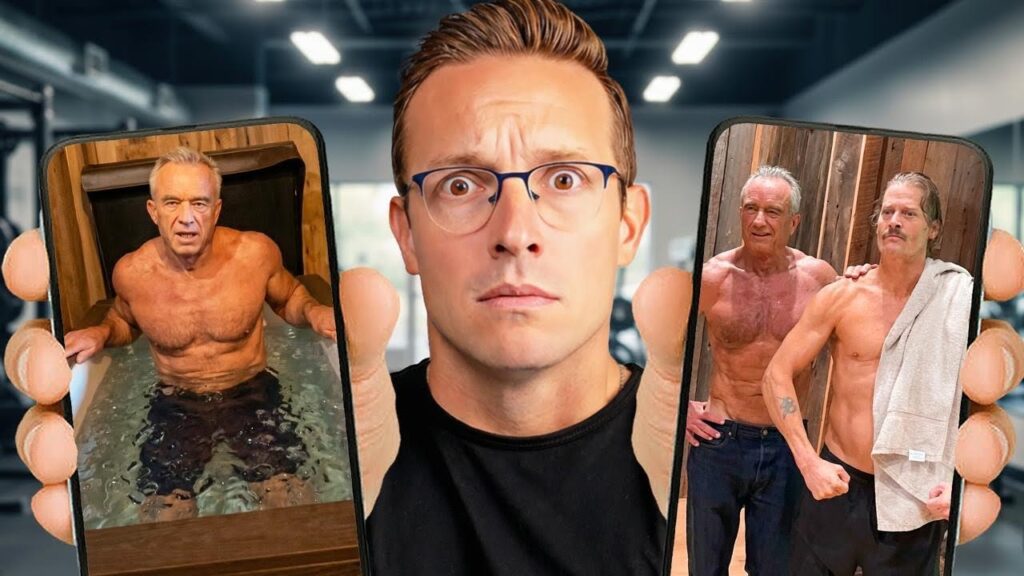
The Workout Session Details
Location and setting of the filmed workout
The session occurred in a utilitarian rehearsal space adjacent to the event venue—an area configured for warm-ups and technical adjustments rather than for polished production. The setting included sparse gym equipment, portable mats, and production paraphernalia. Lighting was functional rather than cinematic, and the background noise included intermittent technical activity and staff movements, which contributed to a documentary sensibility in the footage.
Session duration, pacing, and structure
The footage presented a concise segment of a longer preparation sequence, showing approximately twenty to forty minutes of active conditioning broken into shorter circuits. Pacing alternated between higher-intensity bursts and short recovery windows, suggesting an interval-style structure designed to optimize performance readiness within a limited timeframe. The structure balanced metabolic conditioning with specific movement rehearsals, aligning intensity with the immediate goal of stage performance.
Warm-up routines observed or reported
Warm-up elements emphasized joint mobility, dynamic stretching, and light cardiovascular activation intended to prepare the respiratory and musculoskeletal systems for both exertion and singing. Observed routines included arm circles, hip openers, light calisthenics, and movement patterns that mirrored stage actions. These warm-ups functioned to reduce injury risk and to prime neuromuscular patterns relevant to the upcoming performance.
Core and strength segments captured in the video
Core and strength segments placed attention on trunk stability and functional upper-body engagement—planks, resisted rotations, and bodyweight pushing and pulling patterns were visible. The exercises prioritized stabilization under load and the maintenance of posture during movement, consistent with the demands of guitar handling and extended vocal performance.
Cool-down and recovery elements that followed the session
Cool-down elements, when shown or described, included gentle stretching, breathing regulation, and hydration. These elements appeared brief but intentional, oriented to reduce muscle tension and to restore steadier cardiovascular levels before soundchecks and further rehearsals. Recovery also included short nutritional refueling—small, digestible items to support glycogen replenishment and to sustain energy across the day.
Exercise Breakdown and Technique
Specific strength moves shown and technique notes
The footage showcased compact strength moves such as push-ups, resistance-band rows, and weighted carries. Technique emphasized controlled ranges of motion and alignment: hands beneath shoulders for push-ups, neutral spine during carries, and scapular retraction during rows. The visible coaching cues prioritized safe mechanics over maximal loading, reflecting the pragmatic need to preserve readiness rather than seek hypertrophic gain.
Cardio and conditioning elements included in the session
Cardio components were executed as high-intensity intervals—short sprints in place, jump rope equivalents, and rapid step patterns—that elevated heart rate quickly before permitting brief recovery. These elements targeted performance-specific conditioning, improving the ability to recover breathing between songs and to maintain intensity during a condensed, high-adrenaline stage window.
Core and mobility work visible in the footage
Core and mobility work included anti-rotational drills, bird-dogs, hip flexor mobility sequences, and thoracic rotations. The mobility pieces targeted common tension points for performers—hips, shoulders, and the thoracic spine—while the core work focused on maintaining diaphragmatic control and postural stability. Together these elements supported both breathing mechanics and dynamic movement capacity.
Partner drills or collaborative exercises between participants
Partner drills featured resisted passes, assisted stretches, and timing-based exercises that mirrored the collaborative nature of stage performance. These drills fostered mutual support, provided proprioceptive feedback, and reinforced timing cues—elements that translated both physically and symbolically into a shared preparation narrative.
Form cues, common errors to avoid, and safe modifications
Form cues emphasized neutral spine, controlled eccentric phases, and steady breathing. Common errors to avoid included lumbar sag during core holds, uncontrolled momentum in plyometrics, and rounded shoulders during pressing movements. Safe modifications offered low-impact substitutions—elevated push-ups for decreased load, band-assisted movements for reduced resistance, and extended recovery intervals where breathing or vocal timbre required accommodation. These adaptations aligned with performance priorities and minimized injury risk.
Nutrition and the ‘Good Food’ Element
Reported pre-workout meals and timing for optimal performance
Reported pre-workout meals in the context of the session favored carbohydrate-lean protein combinations consumed one to three hours before activity. Examples included modest portions of whole grains with lean protein, fruit for quick glucose availability, and hydration. Timing aimed to balance satiety with freedom of movement and to ensure stable blood glucose for sustained energy during rehearsals.
On-the-day fueling strategies used before or after rehearsals
On the day of performance, fueling strategies mixed snackable, easily digestible items with hydration protocols. Small carbohydrate-protein snacks—yogurt, a banana with nut butter, or a lightly seasoned chicken wrap—were chosen for rapid energy replenishment without gastrointestinal discomfort. Electrolyte-containing fluids and water were prioritized to manage the dehydrating effect of stage lights and prolonged exertion.
Post-workout recovery nutrition and examples of ‘good food’ mentioned
Post-session recovery emphasized protein for muscle repair and carbohydrates for glycogen restoration, paired with micronutrient-rich foods to support immune function. Examples of “good food” included grilled lean protein with roasted vegetables, whole-grain rice bowls with legumes and greens, and smoothies combining whey or plant protein with fruit and leafy greens. These choices reflected a balance between practical recovery and palate appeal.
How nutrition choices supported energy levels for the halftime show
Nutrition choices supported sustained cognitive and physical performance by stabilizing blood glucose, replenishing glycogen, and preventing dehydration. The combination of timely carbohydrates and protein, along with electrolyte management, enabled performers to maintain vocal control, muscular endurance, and the mental focus necessary for cueing and stage timing. The strategy was pragmatic: small, frequent fuelings to avoid heavy gastric load while preserving energy.
Practical meal examples fans could try if they want to emulate the approach
Fans seeking to emulate the approach could adopt simple, accessible meals: a pre-event bowl of brown rice, grilled chicken, and steamed vegetables eaten two hours prior; a pre-performance snack of a banana and a handful of almonds forty-five minutes beforehand; and a post-performance recovery smoothie of yogurt, mixed berries, and a scoop of protein within the hour following exertion. These examples illustrate the principles of balance, timing, and digestibility appropriate to live-performance contexts.
Training Philosophy and Influences
Kid Rock’s publicly stated approach to fitness and discipline
The performer’s public statements on fitness foreground a practical, no-nonsense approach—discipline constructed around routine, resilience, and a preference for functional strength over aesthetic specialization. His persona channels an ethic of preparedness and performative vigor: fitness as both a means to maintain stagecraft and a component of public identity.
RFK Jr.’s perspective on physical activity and lifestyle, where applicable
The political figure’s public profile includes references to environmental stewardship and personal well-being; when discussing physical activity, he frames it as part of a holistic lifestyle rather than a competitive regime. In the context of the footage, his participation signaled that movement functions as a public, performative practice that intersects with broader narratives of discipline and vitality.
Trainer methodology: balance of strength, endurance, and functional work
The training methodology evidenced in the clip privileged a balanced approach: functional strength to support instrument handling and movement, endurance to sustain vocal and stage presence, and mobility to preserve joint health. Trainers appeared to apply conservative progressions, prioritizing movement quality and transferability to performance tasks rather than maximal lifts or purely aesthetic training.
Cultural influences: music, persona, and the role of performance fitness
Cultural influence operated as a background current: music demands shaped the physical regimen, persona informed the presentational aspects of fitness, and performance fitness functioned as a site where artistry and physicality intersect. The training therefore was not only physiological but also semiotic—fitness as performative preparation that communicates energy, credibility, and readiness to an audience.
How celebrity training philosophies differ from mainstream fitness advice
Celebrity training philosophies often prioritize immediate performance transfer, aesthetic branding, and time-efficient protocols adapted to demanding schedules. Mainstream fitness advice tends to emphasize long-term progression, individualized periodization, and sustainable behavior change. The celebrity approach in the footage skewed toward acute readiness and spectacle-readiness; it was pragmatic for the short-term demands of a high-profile event but less prescriptive as a lifelong fitness prescription for a general population.
Behind-the-Scenes Production
Filming setup: camera types, angles, and on-site production notes
Filming adopted an observational, hand-held style consistent with on-the-fly documentary capture. Angles favored medium and close shots to emphasize facial expressions and interpersonal dynamics, while occasional wider frames contextualized movement within the rehearsal space. Camera types appeared to include mobile devices and compact professional cameras, producing a texture of immediacy rather than cinematic polish.
Editing choices that shaped the viral narrative (music, cuts, captions)
Editing trimmed the session into a succinct narrative arc: establishing shots, moments of exertion, and brief interpersonal exchanges that could be read as emblematic. Cuts favored rhythm, juxtaposing effortful movement with smiling banter. Captions and on-screen text—applied by the publisher—framed the content with suggestive language that primed viewers toward particular interpretations, amplifying the clip’s capacity to function as a cultural and political sign.
Audio considerations and the role of soundtrack in amplification
Audio choices reinforced tenor: ambient sounds of breathing and staff chatter lent authenticity, while overlays or added musical cues in reposts increased dramatic or humorous effect. Where a soundtrack was applied, it served to synchronize movement and to heighten emotive resonance, shaping how viewers experienced the video’s tempo and affective thrust.
Permissions, releases, and how the shoot was authorized
Production behind the footage likely involved negotiated permissions among artist management, political staff, and event production teams. Releases for on-camera participation and distribution would have been necessary for authorized publication, and the footage’s public dissemination suggests that these clearances were secured or that the publisher operated within a permissive access environment. The authorization process thus shaped both what could be filmed and how it could subsequently be shared.
Production decisions that made the clip more shareable or sensational
Decisions that enhanced shareability included brevity, focus on interpersonal moments, and the inclusion of recognizable faces. The choice to present the footage as candid rather than staged increased its viral potential by inviting interpretive curiosity. Editorial emphasis on juxtaposition—music star and political figure training together—created a succinct, sensational framing that translated easily into headlines, memes, and short-form commentary.
Social Media Reaction and Memes
Platforms where the clip trended and relative engagement differences
The clip found traction across a constellation of platforms: short-form video apps, microblogging sites, mainstream social networks, and aggregator channels. Each platform mediated engagement differently—short-form apps favored remixes and sound overlays, microblogging amplified textual commentary and political framing, and video platforms supported longer-form reaction and contextualization. Engagement intensity varied accordingly, with rapid meme generation on one platform and deeper conversational threads on another.
Prominent memes, GIFs, and remix formats spun off the original video
Memetic iterations distilled recognizable beats from the footage—exaggerated reaction GIFs of exertion, juxtaposed image macros, and audio remixes that looped notable phrases or grunts. Creators extracted the most evocative micro-moments to produce easily shareable artifacts, which then propagated in threaded reposts and reaction compendia. These formats transformed a singular clip into a distributed set of cultural tokens.
Hashtags and viral language that emerged around the moment
Hashtags condensed interpretive frames into searchable signifiers, enabling audiences to cluster content under politically charged or humorous rubrics. Viral language foregrounded themes of “preparation,” “camaraderie,” and “spectacle,” and was often deployed in partisan contexts to signal approval, skepticism, or satire. The emergent lexicon functioned as shorthand for the clip’s multifaceted readings.
Influencers and accounts that amplified the footage and why
Influencers with political followings, entertainment commentators, and fitness personalities each amplified the footage for distinct reasons: political accounts sought to narrativize it within partisan debates, entertainment observers discussed cultural implications, and fitness creators critiqued or praised the technical aspects. Their collective amplification increased exposure and diversified interpretive frames, turning the clip into a cross-sectional cultural event.
Timeline of virality: initial spike, peak saturation, and decay
The clip’s trajectory followed a recognizable lifecycle: an initial spike driven by the publisher’s audience and early reshares; a peak in which remixing and commentary saturated feeds; and a gradual decay as subsequent news cycles and fresh content diverted attention. However, periodic resurgences occurred as new memes or commentary breathed renewed life into the material, demonstrating how viral artifacts can persist in cultural memory through iterative recontextualization.
Conclusion
Recap of the workout’s components and why it resonated widely
The footage combined compact functional training, visible camaraderie, and the unexpected co-presence of a musician and a political figure. Its resonance stemmed from the convergence of everyday physical preparation and high-profile persona, rendered in a candid visual register that invited immediate interpretation. Simple elements—warm-ups, core work, banter—became charged precisely because of who performed them and when.
Reflections on the intersection of celebrity, politics, and viral media
The moment illuminated how celebrity and politics increasingly interpenetrate through mediated performance. Fitness became a stage for political symbolism; rehearsal transformed into spectacle; authenticity and artifice blurred in short-form media. Viral circulation further compressed and amplified these dynamics, enabling small, ordinary moments to take on outsized cultural significance and to function as nodes in broader discursive ecosystems.
Practical fitness and media takeaways for readers
From a fitness standpoint, the session exemplified pragmatic, performance-oriented conditioning: prioritize mobility, core stability, and interval work to meet immediate tasks. From a media perspective, the clip demonstrated how editorial framing, platform selection, and timing shape public interpretation. Readers seeking to emulate either the fitness regimen or the communicative strategy should attend to specificity of goals, ethical framing, and the risks of overexposure.
Considerations for stakeholders moving forward and potential impacts
Stakeholders—artists, political organizations, media publishers—should account for how seemingly private preparatory moments can be repurposed as public messaging. Clearances, messaging strategies, and awareness of interpretive frames are essential. For artists and political figures, such moments can humanize or complicate public narratives; for media actors, responsible contextualization matters to avert misleading framings.
Suggestions for further reading, watching, or how to responsibly engage with similar content
Responsible engagement with similar content entails critical attention to source, context, and framing. Viewers should seek multiple perspectives, consider temporal proximity to events that might color interpretation, and evaluate the editorial choices that shape a clip’s narrative. Further exploration might encompass studies of political spectacle, media virality, and performance physiology to deepen understanding of why moments such as this both proliferate and persist.
How did Kid Rock prepare for his Viral TPUSA Halftime show? RFK Jr workout, plus good food viral
If one wants to help support indie journalism, become a Member:
/ @bennyjohnson
FOLLOW BENNY’S SOCIALS :
CHECK OUT HIS MERCH:
Sign up for The Benny Newsletter:
SUBSCRIBE TO HIS PODCAST