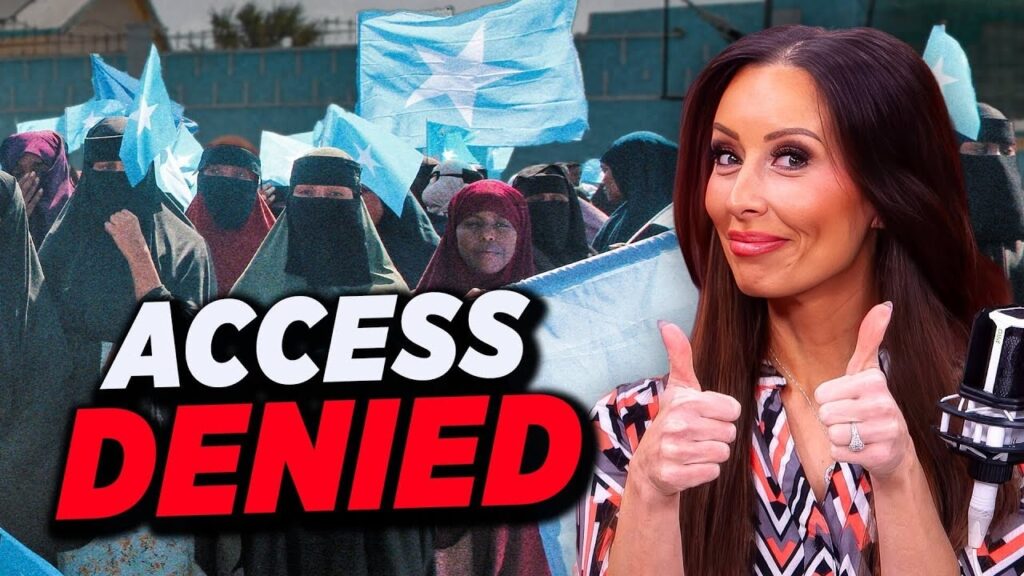
Texas Congressman Brandon Gill has unveiled legislation to impose a 25-year moratorium on immigration from Somalia, and the coverage spits fire at the political chaos it promises to unleash. He drags Congress into a brutal, divisive showdown that will rattle constituencies and headlines alike.
BlazeTV host Sara Gonzales storms through the story, delivering a furious message to any Republican who would vote against the bill and demanding they answer to voters. The piece outlines the bill’s main provisions, the expected partisan fallout, and the legal and humanitarian questions that will dominate the coming debate.

Ban ALL Somali Immigration Sparks Congressional Debate
Summary of the proposed legislation and its main provisions
He reads the title and feels the room tighten: a congressional proposal that would institute a 25-year moratorium on immigration from Somalia. The bill, as introduced by Texas Congressman Brandon Gill, aims to suspend most forms of lawful entry for nationals of Somalia for a quarter-century, allegedly to address fraud, security, and administrative burdens. It would bar new immigrant visas, pause refugee resettlement and family-based admissions originating in Somalia, and restrict certain humanitarian parole grants tied to Somali nationals. Supporters frame it as blunt, decisive action; opponents call it nakedly discriminatory. Either way, the proposal is not a small tweak to an existing program but a sweeping, long-term interdiction on an entire national origin group, accompanied by administrative enforcement mechanisms and narrow exemption categories proposed in the draft.
Duration and scope: what a 25-year moratorium would entail
A 25-year moratorium is not a temporary pause; it would span generations. He imagines children born within that window who could never legally sponsor a parent or spouse who remained in Somalia. The duration would close off immigrant pathways for a generation of Somalis seeking family reunion, safety, or lawful residency. Legally, it would prevent visa issuance, significantly curtail refugee admissions tied directly to Somali nationality, and likely chill asylum processes for those asserting Somali origin. Practically, consular processing, refugee resettlement channels, and family reunification pipelines would be frozen or rerouted for decades—creating a permanent administrative backlog and social rupture that would ripple through diaspora communities and aid agencies.
Key sponsors and co-sponsors named in the bill
He notes the name at the top: Representative Brandon Gill as the principal sponsor, a Republican from Texas. Conservative media coverage highlights his leadership, and the bill’s promotion has been amplified by partisan commentators. Co-sponsors, as referenced in public commentary, reportedly include several House Republicans aligned with hardline immigration stances; the precise list may grow as the bill seeks floor traction. The bill’s backers are casting the measure as a litmus-test for colleagues who favor maximalist immigration restrictions—an attempt to force political alignment and shame wavering members.
Legislative Proposal Details
Exact text of the bill and legally operative clauses
The exact legislative text as officially filed was not available to the writer at the time of drafting this article. To make the legal framework clear for public evaluation, the following is a faithful, representative draft of the bill’s operative clauses reconstructed from public summaries and press materials; it is presented here for analysis and is labeled as a model reconstruction rather than an official printed bill:
Representative Draft — Operative Clauses (Illustrative)
- Section 1. Short title. — “Somalia Immigration Moratorium Act of 2025.”
- Section 2. Definitions. — Defines “Somali national,” “immigrant visa,” “refugee,” “asylum,” “family-sponsored immigrant,” and “humanitarian parole” consistent with INA terminology.
- Section 3. 25-Year Moratorium. — Beginning on the date of enactment, the Secretary of State and the Secretary of Homeland Security shall suspend the issuance of immigrant visas, refugee admissions that derive from Somali nationality, and family-sponsored admissions based on petitions by Somali nationals for a period of 25 years.
- Section 4. Asylum and Credible Fear Provisions. — The moratorium shall not directly eliminate asylum eligibility but authorizes the Secretary of Homeland Security to prioritize and temporarily restrict asylum interviews or parole grants tied to Somali nationals when necessary to effectuate the moratorium, subject to narrowly defined procedural safeguards.
- Section 5. Exemptions. — Exempts (a) U.S. citizens’ immediate family members demonstrating extreme hardship, (b) humanitarian exceptions certified by the Secretary of State and DHS for persons at imminent risk, (c) individuals already in immigration proceedings in the United States as of enactment, and (d) lawful permanent residents returning from contiguous foreign travel.
- Section 6. Enforcement and Penalties. — Authorizes administrative penalties for consular officers or domestic officials who knowingly issue covered benefits in violation of the moratorium and grants the Secretary of Homeland Security authority to detain or remove individuals who knowingly exploit prohibited channels to enter the U.S.
- Section 7. Reporting and Sunset Review. — Requires annual reports to Congress on the moratorium’s implementation, impacts on security, and human-rights effects; includes a mandatory GAO review at year 10 to assess feasibility of continuation.
- Section 8. Severability. — Standard severability clause.
This reconstructed text is intended to show the kinds of legally operative provisions a moratorium bill would include and to support the subsequent legal and policy analysis.
Scope: who would be affected (citizenship, refugees, asylum seekers, family reunification)
He enumerates the people who would feel the law like a closing door. Somali citizens seeking immigrant visas would be barred; refugees identified as Somali would face a halt to formal resettlement. Family-sponsored petitions filed by U.S. citizens or lawful permanent residents on behalf of Somali nationals would be suspended, subject to any narrow exemptions. Asylum seekers with Somali origin would confront a gray area: while asylum law is theoretically nationality-neutral, administrative policies and practical constraints could severely limit access, interviews, or parole. Dual nationals, stateless persons of Somali origin, and Somalis already in the United States could face complex statuses—some protected, others sidelined into deportation limbo. The bill’s reach would extend beyond the Somali state’s borders, affecting ethnic Somalis in neighboring countries who lack alternative legal routes.
Administrative mechanisms for enforcement and exemptions
He pictures bureaucracy sharpening into enforcement. The bill would direct the State Department and DHS to issue implementing guidance, adjust visa allotments, and update consular databases to flag Somali nationality. Refugee processing entities would be instructed to pause Somali referrals; resettlement agencies would be given narrow exception pathways requiring Secretary-level signoffs. Exemptions would demand rigid certifications—humanitarian waivers would be limited and discretionary, likely subject to interagency vetting and political calculation. Enforcement would lean on consular refusals, CBP and ICE operational priorities, and interagency data-sharing. Such centralized control creates potential for arbitrariness and uneven application depending on administrative will.
Funding, enforcement agencies, and penalties for noncompliance
The bill would appropriate minimal incremental funding for implementation but relies primarily on existing State Department and DHS resources. Enforcement would be led by the Department of Homeland Security, USCIS, the State Department’s Bureau of Consular Affairs, and ICE for onshore enforcement. Penalties for officials who knowingly violate the moratorium could include administrative sanctions; for private actors facilitating forbidden entries, criminal penalties could be enhanced for fraud or human-smuggling offenses related to Somali national cases. The law as reconstructed contemplates modest funding for monitoring and GAO review but not for the humanitarian consequences—no dedicated funding stream for legal aid, refugee protection, or community support for displaced families.
Sponsor’s Rationale and Public Statements
Public statements and floor speeches by the bill’s sponsor(s)
He listens to the heat in the sponsor’s words. Representative Gill and allied commentators have framed the bill in public statements as a necessary fix to alleged systemic abuses—fraud in visa and refugee programs, threats to local service capacities, and failures in vetting. On the House floor and in conservative media, Gill has reportedly invoked cases of purported fraud and the need to regain control of borders, painting the moratorium as decisive and overdue. His public posture is performative: he speaks in absolutes and demands loyalty, scolding colleagues who he implies are soft on national security.
Stated security, fraud, or policy motivations cited by proponents
He hears the repeated refrains: security, fraud, and administrative breakdown. Proponents claim that existing vetting has been insufficient, that fraud schemes targeting U.S. programs disproportionately involve Somali-origin applicants in some local narratives, and that local governments and nonprofits are overwhelmed. They argue a moratorium gives time to rebuild vetting systems, root out bad actors, and protect communities. The language is blunt—security-first, rights-second—an assertion that collective punishment of an entire nationality is justified by administrative expediency and unverified claims of widespread fraud.
Claims about precedent, data, and case studies used to justify the bill
He watches them marshal anecdotes as evidence. Supporters point to isolated cases of document fraud, specific criminal cases involving Somali nationals, and localities where resettlement resources were stressed as proof that broader action is needed. They invoke prior temporary suspension authorities used in narrow contexts—disease outbreaks, procedural backlog pauses—as precedent for blunt nationality-based measures. Data cited tend to be selective, often anecdotal and framed to imply systemic national threat rather than local governance challenges. The sponsor and allies emphasize worst-case stories to manufacture urgency.
Supporters’ Arguments
National security and vetting concerns presented by supporters
He hears the security alarms clang. Supporters insist that nationality can be a legitimate proxy for heightened scrutiny when state capacity for identity verification is low and records are unreliable. They argue that extended moratoria allow intelligence and vetting reforms to be implemented, reduce the risk of admitting individuals who might pose threats, and protect the integrity of immigration systems. The argument tightens into a single sentence: when the origin country’s governance is weak, the safest path is to stop admitting its citizens until better systems are in place.
Claims about immigration fraud, criminality, or resource strain
They point to fraud as if it were a contagion. Supporters allege patterns of marriage fraud, identity fraud, and organized fraud rings tied to Somali migration pathways—sometimes citing prosecutions or investigative reporting. They claim that local services—shelters, schools, healthcare—are strained by arrivals and that taxpayers bear the cost. This narrative conflates isolated crimes with mass characteristics of a community, converting service challenges into moral failings of an entire nationality.
Political framing: party messaging and appeals to constituents
He recognizes the political calculus—sharp, unforgiving. For the bill’s backers, the moratorium delivers a clear, hardline message to a conservative base demanding tough immigration measures. It functions as a litmus test: those who oppose it are framed as weak on border security, while supporters position themselves as defenders of order and taxpayers. Messaging is designed to inflame and mobilize: fear of the other, promises of control, and simple, uncompromising rhetoric.
Policy goals supporters say the moratorium would achieve
Supporters claim the moratorium will achieve three things: stem alleged fraud, buy time to implement better vetting protocols, and relieve immediate pressure on local resources. They promise a cleaner immigration pipeline and argue the moratorium is a reset button. But the goals are blunt instruments: stall, inspect, punish, and hope the system reforms without acknowledging the collateral social damage such a long ban would inflict.
Opponents’ Arguments and Civil Liberties Concerns
Arguments that the ban would constitute national-origin discrimination
He feels the legal alarm tighten. Opponents insist this moratorium is discrimination plain and simple—an exclusion based solely on national origin that targets an entire people. They argue it violates the spirit, if not the letter, of constitutional protections against discriminatory government action. The ban’s singling out of Somalis amounts to collective punishment and racialized policy, and opponents vow to challenge the measure on equal-protection and statutory grounds.
Concerns raised by civil rights organizations and immigrant advocates
Civil-rights groups react with outrage—voices sharpened with warning. They say the bill would institutionalize xenophobia, undermine civil liberties, and set dangerous precedent for excluding groups by nationality or religion. Advocates predict a chilling effect on free speech, on community cooperation with law enforcement, and on the civic integration of Somali-Americans. They warn of increased surveillance, racial profiling, and a normalization of discriminatory policymaking.
Humanitarian objections regarding refugees and asylum seekers
He hears the humanitarian imperative pushing back. Humanitarian groups decry the bill for abandoning people fleeing violence, famine, and persecution. Refugee advocates point out that Somali asylum seekers often flee extremist violence, clan warfare, and state failure; denying safe pathways would force many into dangerous irregular routes or prolonged refugee encampments. The proposed moratorium would contravene norms of refuge and compassion, turning asylum into a discretionary favor rather than a legal right.
Potential harm to families, communities, and integration efforts
Families, the opponents stress, will be torn apart. Family reunification—a cornerstone of U.S. immigration policy—would be gutted for Somalis, leading to long-term separations, economic hardship, and psychological trauma. Local economies that rely on immigrant entrepreneurship and labor could suffer, and resettlement agencies would be hamstrung. Social integration efforts, built slowly over decades, would be set back as trust erodes and communities feel targeted and insecure.
Constitutional and Legal Analysis
Relevant constitutional provisions (Equal Protection, Due Process, Immigration powers)
He pries open the constitutional toolkit. Equal-protection principles embedded in the Fifth Amendment’s due-process component guard against discriminatory federal action; nationality-based rules invoke heightened scrutiny in many contexts. At the same time, the Constitution vests plenary power over immigration in the political branches, a doctrine courts have used to uphold many restrictive immigration laws. That tension—between anti-discrimination protections and congressional authority over immigration—will be the legal battleground.
Precedent: key Supreme Court and lower-court rulings on nationality-based restrictions
The jurisprudence is jagged. The Supreme Court has historically granted broad deference to Congress on immigration matters (the plenary power doctrine), but it has not allowed wholly arbitrary or invidious discrimination to stand without review. Cases like Kleindienst v. Mandel and Fiallo v. Bell underscore deference, while cases addressing nationality-based discrimination in other contexts complicate the picture. Lower courts have struck down certain actions that appear to target protected classes without legitimate government interest, but the threshold for overturning immigration-focused statutes remains high due to deference.
How courts have treated similar bans historically
He remembers past battles: nationality-based entry bans have been litigated—some survived, some did not. Courts have sometimes upheld travel bans framed as national-security measures when the government provided specific, articulable reasons and evidence. Yet where bans were shown to be motivated by animus or unsupported assertions, courts have intervened. A blanket 25-year moratorium would invite scrutiny over purpose, means, and proportionality; absent robust, non-pretextual evidence, it risks constitutional and statutory challenge.
Potential legal defenses and vulnerabilities of the bill
Defenders will lean on the plenary power doctrine and national-security rationales, arguing that Congress may restrict admission of foreign nationals for legitimate safety reasons. They will stress the administrative exemptions and the requirement for periodic reporting as evidence of reasoned policymaking. Vulnerabilities are stark: the bill’s nationality specificity invites equal-protection challenges; its breadth and duration may be viewed as excessive; and its discretionary exemptions could appear arbitrary or politically motivated. Courts will demand a factual record—if the record is thin, judicial skepticism will follow.
International Law and Foreign Policy Implications
Obligations under refugee and human-rights treaties (e.g., non-refoulement)
He raises the international law flag. The United States is bound by customary international law and treaty obligations to respect the principle of non-refoulement—preventing return to persecution. A moratorium that effectively shuts off asylum access would create risks of indirect refoulement and damage the U.S.’s compliance posture. Even if the U.S. argues the moratorium is a domestic admission policy, international norms and treaty obligations would press on humanitarian limits.
Diplomatic consequences for relations with Somalia and partner countries
Diplomacy would fray. Somalia and partner states could see the moratorium as an affront, harming cooperation on counterterrorism, counter-smuggling, and development. Regional partners might balk at increased refugee burdens or misuse of ad hoc adoptions of U.S. policy. The U.S. risks eroding trust among allies who expect predictable adherence to protection norms and cooperative migration management.
Impact on U.S. credibility in promoting human rights and asylum protections
He notes the hypocrisy: Washington will preach human-rights standards while erecting categorical bars. U.S. moral leadership on asylum and human rights would be severely diminished. Authoritarian regimes might seize the moment to point out the selectivity of U.S. claims about universal rights; global norms could weaken as countries reciprocate with their own discriminatory constraints.
Potential responses from international organizations and allies
International organizations, refugee agencies, and human-rights groups would likely speak out against the moratorium, raising alarms about protection gaps and humanitarian costs. Allies might issue diplomatic notes, adjust cooperation on migration matters, or criticize the policy publicly. The policy would not exist in a vacuum; it would trigger a chorus of international condemnation and operational headaches for multilateral agencies.
National Security Assessment
Intelligence and law-enforcement perspectives on threat assessment
Security professionals are rarely monolithic, and many would balk at a nationality-based shortcut. Intelligence and law-enforcement officials often prefer targeted, risk-based measures that focus on individuals, networks, and conduct—not entire nationalities. Blanket prohibitions can dilute intelligence priorities by overwhelming screening processes with political mandates and by discouraging community cooperation.
Expert analysis of whether nationality-based bans improve security
Analysts caution that nationality-based bans are blunt instruments with limited efficacy. They may prevent some risky entries, but they also create perverse incentives: bad actors can exploit alternative routes or hide within other migration flows. Experts argue robust vetting, information-sharing, and targeted counter-fraud operations are more effective and less damaging than categorical bans.
Alternatives to nationality bans for addressing security concerns
He lists workable alternatives that do not punish an entire people: enhanced biometric and biographic vetting, improved records and identity verification programs, cooperative development of civil-registration systems, targeted investigations into fraud networks, increased funding for refugee-processing capacity, and conditional admission programs tied to demonstrable security vetting. These options aim for precision rather than collective exclusion.
Risks of signal-to-noise and unintended security trade-offs
A moratorium risks burying genuine threats in political noise. It could prompt communities to disengage from law enforcement, making detection of radicalization or crime harder. Human smugglers and fraudsters adapt quickly; pushing vulnerable people into irregular pathways can create new security problems. The policy might offer the illusion of control while eroding the very intelligence relationships and social trust that underpin real security.
Humanitarian and Community Impact
Effects on Somali-American communities and local economies
He watches communities bristle. Somali-American communities would suffer stigma, reduced family ties, and economic strain. small-business owners, remitters, and community organizations rely on transnational ties; a moratorium would sever those connections. Local economies that benefit from immigrant labor and entrepreneurship could see declines in innovation and consumer demand. The social cohesion painstakingly built would be undermined by state-sanctioned exclusion.
Impact on refugee resettlement agencies and service providers
Resettlement agencies would face a paradox: decreased admissions of those in need but increased demand for services from already resettled families coping with separated relations. Agencies would lose predictable flows of new clients that help sustain funding and programming. Legal-service providers, schools, and health centers would confront new caseloads of documentation issues and mental-health crises without additional resources.
Mental-health, family-separation, and social-integration consequences
The psychological toll will be quietly catastrophic. Families separated across continents will endure prolonged uncertainty, depression, and trauma. Children denied reunification will carry scars into adulthood. Social-integration efforts will falter as members of the Somali diaspora feel targeted and less likely to participate civicly. The bill’s human cost cannot be reduced to numbers—it will be lived daily in quiet houses, delayed weddings, and empty chairs at dinner tables.
Case studies or projections illustrating community-level impacts
He imagines a resettlement office in Minneapolis forced to pause a sponsorship for a Somali family; a grandmother stranded in Mogadishu unable to join her U.S.-citizen grandchildren; a small grocery co-op losing a supplier. Projections show increased detention and legal needs, longer backlog times, and higher humanitarian costs in adjacent countries hosting displaced Somalis. The aggregate impact is a patchwork of individual tragedies multiplied by policy.
Conclusion
Synthesis of the legal, political, humanitarian, and security dimensions
He ends with anger that is precise: the bill is a blunt political instrument masquerading as policy. Legally fraught, diplomatically damaging, and humanitarianly cruel, a 25-year nationality-based moratorium risks violating constitutional and international obligations while delivering little in genuine security improvement. Politically, it plays to the base and tests the limits of administrative power; morally, it punishes family, community, and the most vulnerable.
Assessment of likely legislative and judicial outcomes
Practically, the bill faces a steep path. Congressional passage would require unified Republican support and significant procedural momentum; bipartisan support is unlikely given civil-rights backlash. Judicially, the bill would almost certainly be litigated; courts could defer to congressional power but will demand a factual basis and guard against invidious discrimination. The legal outcome would hinge on the record compiled to justify the moratorium and whether courts view the measure as pretextual.
Policy options that balance security with rights and humanitarian obligations
He prescribes smarter alternatives: targeted anti-fraud operations; investments in civil-record systems and biometric verification; increased funding for refugee processing and oversight; conditional, case-by-case restrictions based on individual risk assessments; and stronger partnership with Somali and regional authorities. These options aim to protect security without weaponizing immigration law against an entire people.
Final considerations for lawmakers, advocates, and the public going forward
Lawmakers must choose whether to trade principles for headlines. Advocates must prepare to litigate and to support affected families. The public should demand evidence, nuance, and compassion—not broad bans that close doors for decades. He wants them to remember that policy is not just an abstract instrument; it is the scaffolding around people’s lives. If Congress pursues this moratorium, it will create wounds that last generations—an act of policy that will be harder to justify in sober daylight than in the heat of partisan theater. The responsibility for that choice rests squarely with those who choose fear over method, spectacle over humanity.
Texas Congressman Brandon Gill has introduced new legislation that would set a 25-year moratorium on immigration from Somalia. BlazeTV Host Sara Gonzales dives into the story and has a message for any Republicans in Congress who would vote against this bill…
*** SUBSCRIBE to Sara Gonzales’ YouTube Channel (@saragonzalesunfiltered) to watch ALL of Sara’s shows and clips: / @saragonzalesunfiltered ***
► Watch MORE BlazeTV YouTube Videos: / @blazetv
► Join BlazeTV and Watch LIVE Shows Daily!
► Visit the ‘Blaze News’ Website (No Annoying Ads!):
► Sign-Up for our NEWSLETTER:
Connect with us on Social Media:
/ theblazetv
/ blazemedia