Bill O’Reilly talks about why many Americans are unhappy with some Democrats and with CNN’s far-left leanings. He explains the main complaints in simple words so children can understand the issue.
The piece points to short video clips from No Spin News and gives easy examples of what he calls bias and strong left views. It then describes how those ideas might change votes and trust in the news.
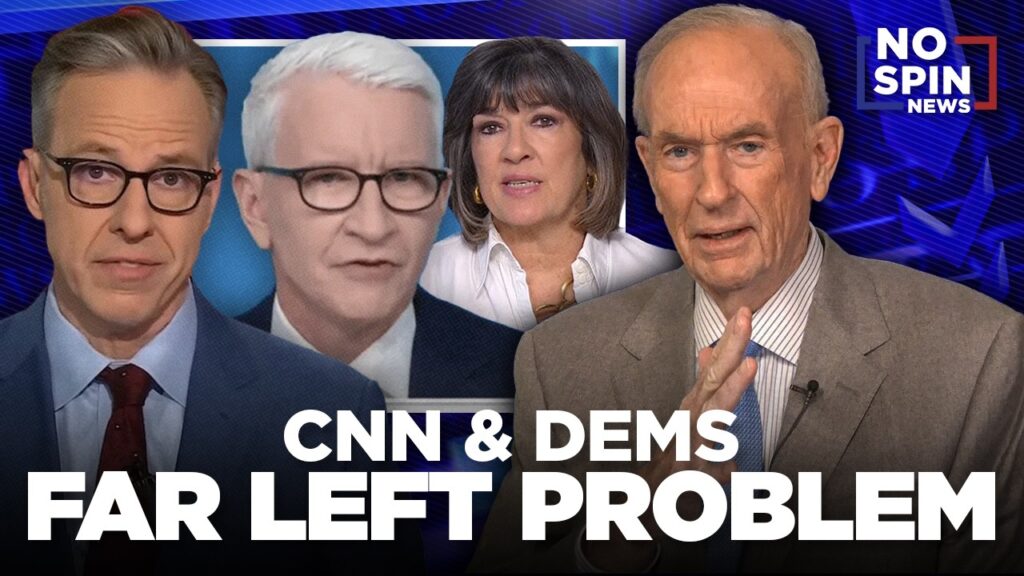

Bill O’Reilly’s thesis in the video
Concise summary of the main claims O’Reilly makes about CNN and the Democrats
He says that many Americans are unhappy because CNN and parts of the Democratic Party are moving too far to the left. He argues that CNN gives too much space and sympathetic coverage to left-leaning voices. He also says that some Democrats push ideas that most voters find too extreme. In his view, this combination makes ordinary people feel ignored and helps political opponents.
Rhetorical techniques used to make the argument persuasive
He uses short, clear sentences and repeats key phrases so they stick in the listener’s mind. He points to examples, names, and headlines to make the problem feel real. He appeals to emotion by talking about “average” people and their worries. He also contrasts what he calls common sense ideas with what he says are extreme ideas, which makes the argument feel like a simple choice between normal and radical.
Target audiences O’Reilly appears to address and why that matters
He speaks to people who already distrust big media and who worry about changes in politics. He also aims at viewers who lean conservative and at moderates who feel left out. Reaching these groups matters because they vote and talk to others. When he speaks to them, he shapes how they see the news and the parties.
Stated and implied conclusions O’Reilly expects viewers to draw
He wants viewers to conclude that CNN is biased toward the left and that Democrats risk losing support if they do not change. He implies that viewers should distrust CNN’s coverage and be wary of the Democratic Party’s more left-leaning ideas. He also suggests that political opponents could use this situation to gain advantage.
Context: political climate and media landscape
Overview of recent partisan polarization trends in U.S. politics
Politics in recent years has split into camps that trust different facts and different news sources. People often live in separate information bubbles. This makes disagreements louder and cooperation harder. Parties move in different directions on some issues, and the public often sees politics as a contest instead of a shared conversation.
The role of cable news networks in shaping political narratives
Cable news channels play a big role because people watch them for news and opinion. They choose which stories to cover and how to frame them. That selection helps shape what viewers think is important. When networks focus on certain angles, they can make a story feel like a bigger national crisis or a smaller disagreement.
Key events and stories preceding the video that inform O’Reilly’s critique
Before the video, there were big debates about policy, protests, and elections. Some Democratic politicians supported policies that some voters called radical. There were also headlines criticizing media coverage of protests and political leaders. These events fed arguments that media and party elites were out of touch with many voters.
Public trust in media and institutions as relevant background
Trust in news organizations and public institutions has fallen for many people. Some communities trust certain outlets and not others. When trust is low, claims of bias and conflict gain power. That background makes it easier for commentators to say a network or party is failing the public.
Background on Bill O’Reilly and No Spin News
Professional history and public profile of Bill O’Reilly
He is a longtime television host and commentator. He spent many years on a major cable news channel and then launched his own show, No Spin News. He is known for strong opinions and a clear on-camera presence. Many people recognize his voice and style from years of broadcasting.
Stylistic hallmarks of No Spin News and O’Reilly’s commentary approach
His show aims to be direct and blunt. He calls out people and ideas he disagrees with. He uses short, forceful lines and repeats main points for emphasis. He often mixes facts with interpretation, and he frames stories through moral language—what is right or wrong.
Typical audience demographics and reach of O’Reilly’s platform
His audience tends to include older viewers and people who lean conservative. Some listeners follow him online for clips and commentary. While not as large as major cable networks, his platform reaches a devoted audience that listens regularly and shares his commentary.
Past themes and consistency in O’Reilly’s critiques of media and Democrats
He has often criticized mainstream media for bias and for being liberal. He has also long warned that parts of the Democratic Party move too far from mainstream opinion. These themes recur in his work and shape how he interprets new events.
Defining the claim: what is the Democrats’ ‘far-left’ problem?
Clarifying what ‘far-left’ means in current U.S. political discourse
“Far-left” is a label used to describe political ideas that seem much more radical than the center. It can mean support for major changes to taxes, government programs, or social systems. People use the term differently. For some, it means progressive reform; for others, it signals ideas that break with long-standing political compromises.
Specific policy positions or rhetoric commonly labeled ‘far-left’
Policies labeled “far-left” often include very high taxes on the wealthy, large new government programs, defunding or significantly changing police, and bold climate or economic plans. Rhetoric that calls for sweeping systemic change or criticizes moderate leaders can also be called far-left.
Differences between progressive, left, and far-left labels
“Progressive” often describes people who want change within a democratic system. “Left” is broader and includes many shades of opinion. “Far-left” usually suggests ideas that are more extreme or further from the center. The labels can be messy and overlap depending on who is speaking.
How intra-party factions contribute to perceptions of a ‘problem’
When a party has strong internal disagreements, outsiders see division. If a visible faction pushes bold ideas, critics may call that the party’s direction. Intra-party fights make messaging harder and give opponents material to claim the whole party is out of step with mainstream voters.
CNN’s coverage and editorial choices under scrutiny
Examples highlighted by O’Reilly of alleged CNN bias or tilt
He points to interviews, guest lineups, and how stories are framed as evidence. He highlights moments when CNN gave platforms to left-leaning commentators without enough challenge, or when headlines and segments emphasized perspectives that align with progressive viewpoints. These examples are used to show a pattern of sympathetic coverage.
Patterns in guest selection, topic emphasis, and framing that critics point to
Critics say choosing similar guests and focusing on certain themes—like identity, climate urgency, or systemic critiques—can create a sense of one-sided coverage. Repeating the same angles and highlighting certain voices can make a network look like it favors a political side.
Production and headline choices that can signal ideological slant
Short headlines, emphatic words, and selective visuals can influence how a viewer feels about a story. The choice of footage, the order of topics, and the tone of anchors can also suggest a slant. When such elements lean consistently one way, critics say it is evidence of bias.
Organizational and commercial pressures that shape editorial decisions
Networks worry about ratings, advertising, and their brand identity. They tailor coverage to attract viewers and keep them watching. That commercial pressure can push newsrooms toward emotional or polarizing stories. Organizational culture and leadership choices also affect how editors decide what makes the air.
Public opinion and polling evidence cited
National polls on approval and trust in the Democratic Party
Polls sometimes show lower approval for the party among groups that worry about economic or cultural change. Polling can vary a lot over time and by question. O’Reilly cites polls that show dips in support when voters say they think the party is too liberal or out of touch.
Polling on perceptions of CNN and major cable news networks
Surveys regularly find partisan splits in trust of cable networks. Some people rate CNN favorably, while others see it as biased. Trust numbers often follow party lines: those who agree with a network’s perspective tend to trust it more.
Demographic splits that reveal where ‘far-left’ concerns resonate
Older voters, rural voters, and some suburban voters often express more concern about far-left ideas. Younger and urban voters sometimes support more progressive policies. These splits matter because they show where messaging problems might cost votes.
Trends over time that support or challenge O’Reilly’s claims
Trends can both support and challenge his claims. At times, centrist voters move away from Democrats on certain issues, which supports his view. Other times, polls show growing support for specific progressive policies, which challenges the idea that the party’s leftward ideas are broadly unpopular. The pattern is mixed and depends on the issue and timing.
Methodologies for assessing media bias
Defining objective metrics for bias versus perception-based claims
Objective measures look at what topics get covered, how much time goes to each side, and how facts are presented. Perception-based claims come from how people feel about the outlet. Both matter: factual imbalance shows what happened, while perception shows how audiences react.
Common research methods used in media-bias studies
Researchers use content analysis to count stories, guests, and words used for different sides. They study headline language, framing, and guest diversity. Surveys and experiments test how audiences perceive coverage. Together, these methods build a picture of bias or balance.
Limitations of anecdotal examples versus systematic analysis
A powerful video clip or headline can feel convincing but may not represent typical coverage. Anecdotes can mislead if they are rare or cherry-picked. Systematic analysis is slower but gives a fairer view. It counts many examples and checks patterns over time.
How to evaluate whether coverage reflects editorial stance or news values
One can look at the balance of voices, how often opposing views are given time, and whether facts are checked. It helps to compare coverage across outlets and over time. Editorial stance shows in consistent tilt; news values show in choices like breaking news or human interest. Distinguishing them needs careful study.
Political consequences for the Democratic Party
Electoral risks in competitive districts and nationwide contests
If voters see a party as extreme, centrist or swing voters may switch or stay home. This can cost close races in suburbs and swing states. The risk is higher where elections are tight and messages matter.
Impact on swing voters, independents, and moderate Democrats
Swing voters and independents often prefer moderate messages. If those voters feel alienated, the party can lose critical margins. Moderate Democrats might worry the party is moving away from practical policies and this can cause internal tension.
Effects on primary politics, fundraising, and grassroots mobilization
Strong left-leaning candidates can win primaries by energizing activists but may face challenges in general elections. Fundraising can shift toward candidates who energize donors. Grassroots energy can increase turnout among core supporters, but it can also narrow appeal to broader electorates.
Potential long-term party realignment or policy moderation pressures
If electoral losses persist, the party might move back toward the center to win votes. Alternatively, it could double down on progressive change and try to reshape the electorate. Long-term, these tensions can change who the party attracts and what policies it champions.
Conservative media and political amplification
How conservative outlets use critiques like O’Reilly’s to shape narratives
Conservative media repeat and expand critiques to reach wider audiences. They frame stories to emphasize conflict and danger. By doing this, they make the idea of a “far-left problem” feel bigger and more certain.
Role of social media in amplifying perceived CNN or Democratic extremism
Short clips and headlines travel fast on social platforms. People share content that stirs strong emotion. This spreads claims widely and makes them seem common, even if they come from isolated moments.
Tactical benefits for Republicans in highlighting intra-Democratic tensions
Pointing to division helps opponents present themselves as stable and sensible. It also helps Republican candidates appeal to moderates who worry about change. Highlighting disagreements can split Democratic votes or lower enthusiasm.
Feedback loop between partisan outlets and audience expectations
When audiences expect a certain narrative, outlets provide it to keep attention. That expectation then reinforces the narrative. Over time, media and audiences shape each other so that coverage becomes more predictable and partisan.
Conclusion
Recap of the strongest evidence supporting and opposing O’Reilly’s argument
Supporting evidence includes visible moments where CNN aired sympathetic left-leaning voices, polls showing distrust among some voter groups, and examples of Democratic primary fights that highlight bold ideas. Opposing evidence includes polls that show support for specific progressive policies, the mixed nature of long-term trends, and the fact that single examples do not prove a consistent network bias.
Balanced assessment of the seriousness and causes of the Democrats’ internal tensions
The tensions are real and can matter in close races. They come from genuine differences in values, changing public priorities, and the push-and-pull between energizing the base and attracting moderates. The seriousness depends on timing, the issues, and the political map in any given year.
Key takeaways for readers, media consumers, and political actors
Readers should know that single clips or headlines do not tell the whole story. Media consumers can look for patterns over time and compare multiple sources. Political actors should balance speaking to their base with reaching swing voters. Honest debate about policy and clear communication help people decide.
Open questions and areas for further reporting or research
How consistent is CNN’s coverage over months and years? Which specific policies hurt or help Democrats in general elections? How do demographic changes affect what voters consider “far-left”? Future research should count coverage systematically, test voter reactions to policies, and study how media ecosystems shape opinions. These questions matter for understanding what will happen next.
Bill O’Reilly on CNN and Democrats far-left problem: Americans dislike both; he analyzes.
Subscribe so viewers never miss No Spin News with Bill O’Reilly: / @billoreilly
Full No Spin News episodes here: • Bill O’Reilly’s No Spin News
Clips from No Spin News here: • No Spin News | Clips
Bill O’Reilly’s official YouTube channel – No Spin. Viewers can subscribe for nightly No Spin News, exclusive clips, and a unique brand of news analysis. tonight.
O’Reilly Premium Membership:
Bill’s new book is available now:
Visit Bill’s Website:
Follow Bill on Twitter: / billoreilly
Follow No Spin News on Twitter: / nospinnews
Like Bill on Facebook: / billoreillyofficial