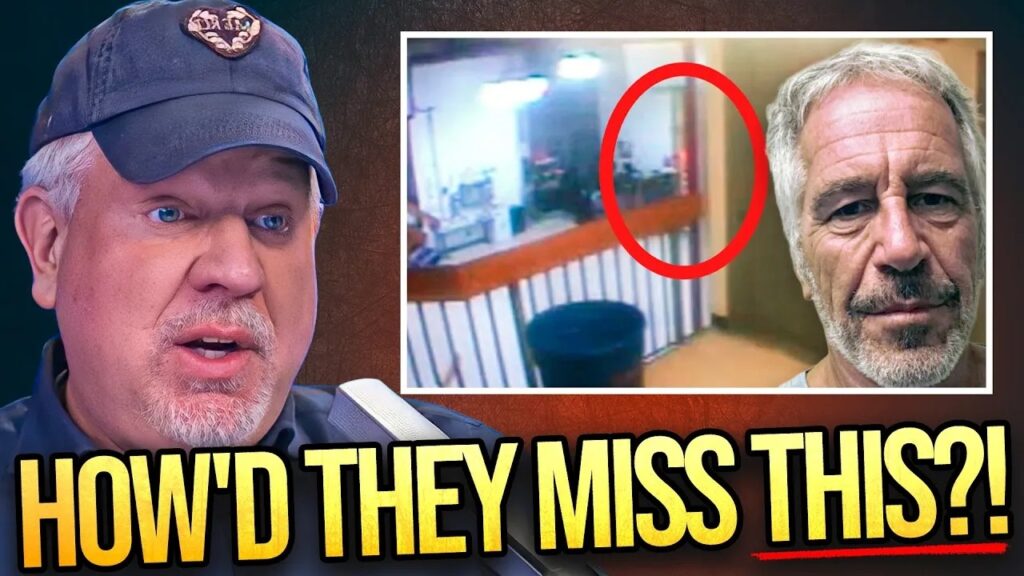
A new piece titled “What Happened to the Noose? Inside the New Epstein Prison Report” reads like a true-crime cliffhanger scripted by someone who likes dramatic lighting. CBS News spotted security footage of “an orange-colored shape” moving in Jeffrey Epstein’s cell when no one else should have been there, and Glenn Beck fusses about how official reports missed it.
It surveys the footage frame by frame, weighs Beck’s complaints, and teases the other revelation outlets are calling even crazier, all with a wink at the absurdity of it all. The article then maps timelines, security lapses, and loose ends, leaving readers amused, suspicious, and oddly eager for more.

Overview of the New Epstein Prison Report
Scope and origin of the report
The new report arrives like a long-forgotten attic box shoved under a mattress: dust-tipped, full of things people thought had been thrown away, and somehow, inexplicably, still telling stories. It purports to cover the events surrounding Jeffrey Epstein’s death at the Metropolitan Correctional Center (MCC) with a level of detail that goes beyond the original public accounts—delving into surveillance footage, forensic findings, staffing logs, and internal communications. The origin, in the telling that accompanies the report, is murky: it appears to be either an internal compilation from sources within the detention system or a leaked dossier assembled by investigative journalists piecing together official records and whistleblower statements. Either way, the report’s provenance matters—a lot—because it determines what can be verified, what must be treated as allegation, and how skeptically readers should squint at the margins.
Key revelations highlighted by the report
The report’s standout claims are the kinds of details that make people tilt their heads: an “orange-colored shape” moving in Epstein’s cell at a critical time when no authorized person should have been there; questions about the condition and origin of the ligature found in the cell; discrepancies between autopsy findings and Bureau of Prisons’ descriptions; unaccounted-for gaps in camera footage; and a patchwork of guard logs that don’t line up with each other. Each finding, presented independently, might be explainable; taken together, they read like a mystery in which the furniture of official narrative keeps mysterious new drawers popping open.
How this report differs from prior official accounts
Where earlier official documents and statements were brisk, formal, and sometimes contradictory in the manner of badly edited memos, this new report luxuriates in connective tissue: it links timestamps to footage, physical descriptions to photos, and personnel memos to maintenance logs. Instead of a single tidy conclusion—death by suicide—the report raises numerous forensic and procedural questions and highlights anomalies that were either absent from or downplayed in earlier accounts. It broadens the frame from “what happened” to “what wasn’t reported” and treats omission as potentially meaningful, not merely clerical.
Who commissioned or leaked the report
The report feels less like something commissioned with the imprimatur of a federal agency and more like the fruit of a messy collaboration among investigators, journalists, and insiders. Publicly, no single authoritative agency has claimed to be the report’s originator; instead, it surfaced through media outlets and leaked documents, with sources described variably as whistleblowers, agency insiders, or investigative journalists with access to internal records. That ambiguity matters: if a report is leaked, it may capture candid assessments officials didn’t want public; if it is assembled by external investigators, it may be a reconstruction built from fragments and inference.
Immediate reactions from investigators and officials
The first reactions were predictably bifurcated. Some investigators—particularly independent forensic experts and skeptical journalists—greeted the report like a puzzle finally handed to them upside down: an opportunity to test assumptions. Officials at the Bureau of Prisons and the Department of Justice responded with defensive clarifications, reiterating earlier findings and cautioning against drawing firm conclusions from unverified or out-of-context materials. Politicians and commentators performed their expected gyrations: some seized upon the report as proof of malfeasance, others dismissed it as the latest in a long line of conspiracy fodder. Across the board, officials promised reviews, inquiries, or nothing at all—the familiar choreography of damage control and promise.
The Noose: Physical Evidence and Forensic Findings
Description of the ligature material and its condition
The report offers meticulous detail about the ligature material found in Epstein’s cell—a knotted piece described as cloth-like, frayed at the edges, and inconsistent with standard-issue prison bedding in certain respects. Where official accounts had referred to a “bedsheet” tautly tied, this report notes peculiarities: the weave pattern, the presence of fibers not commonly issued in that housing unit, and ambiguous burnishing or compression marks around the knot area. To the lay reader, these read like grocery-list specifics. To a forensic textile analyst, they are potential clues: origin, age, and handling.
Forensic analysis of the knot, placement, and tension
Forensic reviewers cited in the report examine the knot with the clinical interest of a person watching a badly coordinated ballet. They note the knot’s configuration, the manner of hitches, and the angle at which it appears secured to the cell’s top fixture. Some experts argue the knot is consistent with self-tying scenarios under certain conditions; others say aspects of placement and tension might be more plausibly produced with assistance. The report is careful to present differing expert opinions, but the juxtaposition of interpretations invites readers to imagine scenarios where either explanation fits—depending on how generous or skeptical one chooses to be.
Autopsy conclusions related to neck injuries and asphyxiation
The autopsy conducted and released earlier concluded that neck injuries were consistent with hanging and that death resulted from asphyxiation. The new report revisits those conclusions, citing autopsy photos and notes that some independent pathologists interpret additional neck and facial injuries as potentially compatible with homicidal strangulation—findings that would produce different microscopic signatures and tissue trauma patterns. The report does not, and cannot without new evidence, overturn the formal autopsy, but it does lay out the anatomical observations in a way that highlights contested readings.
Discrepancies between physical evidence and official descriptions
Where official descriptions were short and declarative—”suicide by hanging”—the report catalogs small mismatches: measurements that don’t align, photographic angles that omit certain features, and descriptions that differ in the placement of objects near the body. These discrepancies are like tiny fissures in a plaster wall; none alone necessarily means structural collapse, but together they breed doubt. The report raises the question of whether these mismatches arose from sloppy reporting, genuine confusion in a chaotic scene, or deliberate minimization.
Independent forensic reviews and their assessments
Independent forensic reviewers cited by the report offer a range of assessments, from agreement with the official autopsy to candid skepticism. Some experts say the ligature marks and tissue damage are within the known variability for manual or self-inflicted hanging under unusual conditions. Others point to strangulation indicators or alterations inconsistent with a domestic-style bedsheet hanging. The report thus becomes an arena for expert debate—less a courtroom verdict than a series of carefully argued briefs—and it underscores how forensic interpretation is rarely as binary as headlines might prefer.
Security Footage and the “Orange-Colored Shape”
Summary of the new footage revelations as reported by CBS and others
The footage revelations—pushed into public consciousness by outlets like CBS—act as the report’s cinematic flourish. Clips described in the report show an “orange-colored shape” moving within Epstein’s cell at times when no authorized personnel were logged as present. The color, the timing, and the movement all raise eyebrows: orange is, of course, the hue of prison jumpsuits, but the shape’s outline and behavior apparently don’t match a human silhouette in any tidy way. Reporters and investigators who reviewed the footage say it introduces an unaccounted variable into the timeline.
Detailed description of the “orange-colored shape” and its movement
The “orange-colored shape” is described with almost reverential attention to the small details: a blotch of color roughly the size of a human torso, moving with a slow, ambiguous drift across the frame, sometimes curling near the bed, sometimes retreating. On paused frames, the shape is amorphous—like a spilled sweater caught on camera—yet its intermittent shifts suggest deliberate motion rather than a static object. Witnesses to the footage describe an uncanny quality: recognition without clarity, as if the footage remembers something the official reports forgot.
Technical assessment: camera angles, quality, timestamps, and gaps
Technically, the footage is far from high-definition surveillance cinema. Grain, compression artifacts, and limited frame rates complicate interpretation. Camera angles often slice scenes at oblique perspectives that mask detail. The report emphasizes timestamp irregularities—moments when clocks jump or pixels go dark—and documents gaps where footage was missing or overwritten. These technical failings do not prove wrongdoing, but they transform the footage from evidentiary certainty to tantalizing puzzle pieces: if the timestamps are right, the shape should be explained; if not, it might be a camera flaw.
Possible explanations for the shape: clothing, object, imaging artifact
Analysts in the report offer a menu of possible identities for the orange shape: a discarded prison garment shifting with airflow, a piece of bedding caught and fluttering, a camera imaging artifact caused by compression or light bloom, or, more provocatively, an unauthorized person in the cell wearing an orange uniform. Each explanation has its own plausibility profile: clothing and artifacts are mundane and easy to imagine; an extra person, less so. The report does not settle the question but catalogues the evidentiary strengths and weaknesses of each possibility, like a judge patiently listing jury options.
Implications of the footage for the official timeline and narrative
If the shape represents a person or an action not accounted for, the implications are seismic: it would mean the official timeline omitted a presence in the cell and that key elements of the incident were either missed or mischaracterized. If it is an artifact or harmless object, the footage remains interesting but not world-shaking. The report treats both possibilities as consequential precisely because the stakes are not merely academic—a prisoner of high profile died, and if the chain of custody of evidence, surveillance integrity, and personnel accountability are in doubt, public trust frays. The footage thus becomes less about the shape itself than about what it reveals of a system’s opacity.
Timeline of Events on the Day of Death
Recorded timeline from cameras, logs, and guard reports
The report pieces together a timeline that reads like a detective’s rough draft: camera timestamps, cell check logs, control-room notes, phone calls, and guard shift records stitched together into a sequence. The day is chronicled minute-by-minute in places and with frustrating silence in others. There are routine movements—the intake of another inmate, scheduled checks—that overlay the core event, making the timeline both busy and brittle. Where accounts align, they do so in bland consensus; where they diverge, the discrepancies become focal points.
Noted gaps and unexplained intervals in the timeline
The report zeroes in on several gaps: minutes when cameras went offline or recordings stopped; periods when guard logs show no entry despite policy requiring frequent checks; and intervals where timestamps seem out of sync with facility clocks. These gaps are not merely clerical inconveniences; they are functional lacunae that permit alternative narratives to take root. The report underscores that in environments governed by strict documentation, an unexplained silence on a log is not neutral—it is suspicious to those trained to read omission as signal.
Reported actions of cellmates, staff, and response teams
Cellmates—who in many accounts were not present or were moved shortly before the death—figure in the report as both witnesses and enigmas. Staff actions are documented: a guard’s patrol, a control-room operator’s checklist, emergency response timelines once the body was discovered. The report highlights moments where staff actions appear delayed or inconsistent with training—response times that stretch beyond policy norms, calls logged without clear follow-up, and a cascade of hurried decisions that may have degraded the preservation of the scene.
Comparisons between original and new timelines presented in the report
Comparing the original official timeline and the revised or expanded timeline in this report feels like comparing two drafts of a will that use some of the same words but rearrange key clauses. The new version inserts previously unreported camera activity, notes recalibrated timestamps, and pauses to reconsider the timing of checks and calls. Where earlier accounts were linear and definitive, the new timeline is revisionist and layered: it doesn’t necessarily contradict every earlier fact, but it reframes them, making prior certainties look provisional.
How timeline inconsistencies affect conclusions about cause of death
Timeline inconsistencies do more than inconvenience those who prefer tidy narratives; they change plausible causal paths. If a guard’s round was missed, or if footage shows an unexplained presence, then explanations that rely on an unobserved period suddenly gain traction. Conversely, if gaps are accounted for by technical glitches, arguments for foul play weaken. The report makes clear: the more uncertain the timeline, the less confident anyone can be in definitive conclusions about cause and manner of death.
Prison Infrastructure and Camera Coverage
Overview of Metropolitan Correctional Center (MCC) layout relevant to the case
The MCC is described in the report as a vertical maze of cells, corridors, and observation points—a building that favors bureaucracy over comfort. Epstein’s unit is on an upper tier with narrow walkways and a control room intended to monitor multiple pods. The report’s diagrams emphasize sightlines, the distances between control consoles and housing units, and the physical fixtures—hooks, railing, and beds—to clarify where and how the alleged events could have unfolded.
Camera placement, blind spots, and maintenance records
Camera placement, the report notes with the weary meticulousness of someone cataloguing the plant variety in a neglected greenhouse, leaves blind spots. Some cameras look down at beds from oblique angles that conceal details; others focus on doors rather than interiors. Maintenance records show routine checks but also indicate periods of deferred upkeep. Those records, when matched to footage quality, raise questions: were cameras functional but poorly positioned, or were they nominally active while failing to capture critical details?
Known outages, footage deletions, or overwritten recordings
The report catalogues outages and overwritten footage with the specificity of a supply clerk subtracting from inventory: certain camera reels were missing, some files appear to have been overwritten due to tape rotation or storage limits, and access logs show deletions or edits without clear authorization. Whether these lapses were benign consequences of antiquated systems or intentional purging is central to the report’s tension.
Standard surveillance procedures and whether they were followed
Surveillance protocols at the MCC are laid out in the report like an instruction manual for a very tense board game: regular checks, redundant backups, and rapid escalation for abnormalities. The report assesses where procedures were followed and where they were not. It finds both compliance and neglect—routine checks done on some shifts, logs left incomplete on others, and an uneven culture of adherence that allowed gaps to persist.
Assessment of whether the environment allowed for undisclosed access
Taken together—layout, camera blind spots, outages—the environment, the report argues, had vulnerabilities that could theoretically allow undisclosed access to a cell. Whether such access occurred is the question, but the report is insistent that the physical and technical conditions were not flawless; they were instead porous, creating opportunities for unrecorded activity. That porousness is the structural problem the report highlights, and in doing so, it argues that institutional weakness—not necessarily maliciousness—can produce outcomes with grave consequences.
Guard Conduct, Staffing and Protocol Adherence
Staffing levels, overtime, and scheduling on the relevant shift
The report paints the relevant shift as understaffed and overworked: mandatory overtime, compressed rosters, and a culture that normalizes fatigue. On the night in question, staffing levels reportedly fell below policy recommendations, and guards were stretched across duties. The bureaucratic pressure to cover shifts without adequate personnel becomes a recurring motif—an explanation for human error and a context for procedural lapses.
Logs of rounds, checks, and reported irregularities by guards
Guard logs included in the report show routine check-ins alongside entries that are vague or missing. Some guards reported irregularities—equipment problems, missing inmate movement forms, or confusion about assignments—that night; others logged nothing unusual. The report flags this inconsistency: when some actors report anomalies and others do not, it muddies the picture and raises questions about training, morale, and the accuracy of post hoc recall.
Alleged procedural breaches and failure to follow protocols
Specific procedural breaches are catalogued: missed 30-minute checks, improperly handled watch rotations, and incomplete incident reports. The report suggests these breaches were not solitary aberrations but signs of systemic slippage. Each breach is framed not as an isolated sin but as part of a pattern that, cumulatively, could alter the plausibility of various explanations for what occurred in the cell.
Disciplinary histories and statements from involved personnel
The report includes summaries of disciplinary histories for involved personnel—past infractions, retraining episodes, commendations, and character statements. These human details complicate the narrative: a guard with prior lapses may not be malevolent; a seasoned officer with a spotless record can be tired or inattentive. Statements from staff range from defensive to incredulous, and the report includes both to show that personnel behavior cannot be reduced to simple caricatures.
How guard conduct influenced initial findings and later scrutiny
Guard conduct shaped the initial narrative in two ways: it created the immediate context that investigators accepted, and it later provided a focal point for scrutiny. If rounds were missed, or logs altered, investigators had reason to re-examine the scene and preserve skepticism. The report argues that the way guards performed—or failed to perform—their duties both influenced the official conclusion and invited further investigation, because procedural failings are precisely the cracks through which alternate explanations gain traction.
Official Investigations, Reports, and Statements
Summary of DOJ, FBI, and Bureau of Prisons investigations to date
The Department of Justice, the Federal Bureau of Investigation, and the Bureau of Prisons each conducted inquiries with varying emphases: the DOJ on legal liability and systemic oversight, the FBI on potential criminal acts, and the BOP on operational lapses. Their public reports concluded, in broad strokes, that Epstein’s death was a suicide and noted several procedural lapses and disciplinary failures. The new report revisits these findings, assembling materials that the agencies previously summarized or omitted.
Key findings and conclusions from the official reports
Official reports converged on a few key points: the manner of death was hanging; there were procedural violations by staff; and the facility’s shortcomings needed attention. They recommended policy changes and disciplinary reviews. These conclusions, while crisp on paper, are complicated in practice by the new report’s additional documentary layers and contested interpretations.
Responses from agencies to the new report’s revelations
Agencies responded with a mix of reiteration and cautious distancing. Some spokespeople emphasized the integrity of official investigations, asserting that new material would be reviewed but was unlikely to change core findings. Others promised internal audits or referred inquiries to existing oversight mechanisms. The tone was predictably institutional: measured, defensive, and open-ended—no dramatic admissions, only promises of procedural follow-up.
Differences between internal memos, public statements, and leaked documents
The report calls attention to tension between internal memos—sometimes candid, sometimes blunt—and polished public statements that were more circumspect. Internal documents reveal concerns about staffing and camera reliability that were absent from public summaries. Leaked documents, the report argues, expose a gap between operational realities and the narratives presented to the public, which fuels suspicion about transparency.
Transparency issues and access to original evidence for journalists and investigators
Transparency is the report’s leitmotif: restricted access to raw footage, redacted memos, and contested chain-of-custody records limit independent verification. Journalists and investigators seeking original evidence face bureaucratic hurdles, compliance delays, and partial releases. The report frames these obstacles as obstacles to public accountability, arguing that fuller access could either confirm or conclusively refute the report’s more startling findings.
Contradictions, Omissions and Possible Cover-Up Indicators
Instances where official accounts changed or omitted details
The report aggregates instances where official accounts were revised: timelines adjusted, descriptions altered, and earlier omissions later acknowledged. Such changes are not unusual in complex investigations, but the report flags them as patterns rather than anomalies—creating a narrative of evolving explanation rather than steady clarity.
Evidence that suggests deliberate tampering or suppression
Direct evidence of intentional tampering is hard to produce and the report duly cautions against leaping from anomaly to conspiracy. Still, it lists suspicious entries—deleted surveillance clips, unlogged access to evidence rooms, inconsistent file-naming protocols—that, while not proof of a cover-up, could be interpreted as such. The report stresses the difference between suggestive indicators and provable conspiracy, remaining careful not to assert criminal intent without corroboration.
Analysis of motives for minimizing or obscuring facts
The report offers a spectrum of motives for minimizing facts: institutional self-preservation, fear of public backlash, protection of personnel, and the desire to avoid headaches in an already overburdened system. It also acknowledges political incentives—high-profile detainees invite scrutiny, and agencies sometimes manage narratives to control fallout. The analysis is less accusatory than literary: it suggests motives as weather conditions—forces that shape but don’t fully determine events.
Role of institutional self-protection versus individual malfeasance
Distinguishing institutional self-protection from individual wrongdoing is one of the report’s central tensions. The former explains systematic omissions and defensive postures; the latter implies intentional criminal acts. The report modestly leans toward institutional explanations for many anomalies—sloppiness, incompetence, bureaucratic inertia—while noting that individual malfeasance remains possible and would require stronger evidence.
How legal privilege, classification, or national security claims have been used
Legal privilege, classification, and national-security rhetoric appear in the report as tools that can limit disclosure. Agencies sometimes assert these doctrines legitimately, but the report suggests they can also be invoked to shield embarrassing details from public view. The effect is a throttling of transparency: arguments for secrecy may be defensible in part, but they also feed suspicion when invoked repeatedly in high-profile cases.
Alternative Theories and Conspiracy Claims
Overview of dominant alternative explanations circulating in media
The media ecosystem has birthed a menagerie of alternative theories: accidental death, staged suicide, coordinated cover-up, and even more baroque claims involving powerful outsiders. The report catalogues these competing narratives and the evidence each camp marshals—some substantive, much speculative. The variety underscores how a single event can become a mirror reflecting different cultural anxieties.
Evaluation of the evidentiary basis for common conspiracy claims
When the report evaluates these claims, it plays a minimalist role: many theories are built on ambiguous facts, circumstantial connections, and interpretive leaps. Some claims gain modest support from the report’s highlighted anomalies; most, however, remain speculative because they depend on proving intent or access that the report does not demonstrably establish. The report calls for caution: a hypothesis needs evidence proportional to its extraordinary claim.
How the new report is being used to bolster or debunk theories
Partisans use the report as one uses a magnifying glass—either to ignite a bonfire of suspicion or to singe the edges of conspiracy. Advocates of foul play point to unaccounted footage and procedural lapses as proof of malintent; skeptics say the report simply fills in errors and reiterates that the most likely explanation remains suicide. The report itself does not adjudicate the fight so much as supply new ammunition for both sides.
Distinguishing plausible investigative leads from speculation
The report attempts to separate actionable leads—unreviewed footage, inconsistent time logs, and unexplained physical evidence—from speculative leaps about motive or identity of perpetrators. Plausible leads are things that can be investigated with forensic rigor; speculation is the storytelling that fills in gaps without evidence. The report urges a disciplined approach: follow the leads that can be tested, and treat speculation as something to be held in abeyance.
The impact of conspiratorial framing on public trust and policy
Conspiratorial framing corrodes public trust in institutions already fragile from other strains. The report notes that when official opacity meets real procedural failings, conspiratorial narratives flourish. That erosion has policy consequences: it pressures agencies to be more transparent (sometimes rightly), or to retrench and tighten secrecy (sometimes less helpfully), and it shapes public appetite for oversight reforms that may or may not address root causes.
Conclusion
Synthesis of what the new report plausibly establishes and what remains speculative
The new report plausibly establishes that there were procedural lapses, technical anomalies in surveillance coverage, and forensic ambiguities worth re-examining. It establishes that timelines are imperfect and that evidence handling was uneven. What remains speculative are assertions of deliberate foul play without direct corroboration, and definitive identifications of the “orange-colored shape.” In short, the report widens the aperture but does not close the case.
The stakes for justice, institutional credibility, and public trust
The stakes are high: justice for a detainee, no matter how reviled, is a test of institutional integrity; credibility of correctional systems is essential to rule of law; and public trust is both fragile and foundational. The report reframes these stakes as not merely symbolic but practical: weak procedures and opaque practices invite mistrust and weaken the moral authority of institutions that must be trusted to be impartial.
Immediate takeaways for policymakers, investigators, and the public
Immediate takeaways are pragmatic: policymakers should fund better surveillance infrastructure and independent oversight; investigators should seek full, unredacted access to raw footage and logs, and subject forensic findings to independent peer review; the public should demand transparency while resisting the temptation to convert ambiguity into certitude. The report asks for better systems rather than martyrdom of individual scapegoats.
How the case reshapes discussion about detainee safety and transparency
This case becomes a cautionary tale: high-profile detainees magnify system flaws and demand higher standards. It reshapes the conversation about detainee safety, reminding stakeholders that routine lapses can have outsized consequences. It also challenges agencies to embrace transparency as preventative medicine rather than punitive exposure.
Final thoughts on the path forward and expected developments
The path forward is predictably messy: more reviews, perhaps new footage disclosures, and ongoing journalistic inquiry. The report is unlikely to be the last word; instead, it functions as a nudge—insistent, uncomfortable—to close procedural gaps and to subject official narratives to rigorous scrutiny. If one thing is clear, it is this: the questions raised are not so much about a single “noose” as about the tangled seam between institutional weakness and public expectation. And like all good mysteries, it will keep people looking until someone finds a sturdier flashlight.
In “What Happened to the Noose? Inside the New Epstein Prison Report,” CBS News recently reported on security footage of “an orange-colored shape” moving around in Jeffrey Epstein’s cell around the time of his death when no one else should have been there. How did the official reports miss this, Glenn Beck asks. But there’s one other recent revelation that’s even CRAZIER!
*** Watch Glenn Beck’s FULL 3-Hour Daily Radio Show on the BlazeTV Website \u0026 App HERE: ***
► Watch MORE BlazeTV YouTube Videos: / @blazetv
► Join BlazeTV and Watch LIVE Shows Daily!
► Visit the ‘Blaze News’ Website (No Annoying Ads!):
► Sign-Up for our NEWSLETTER:
Connect with us on Social Media:
/ theblazetv
/ blazemedia