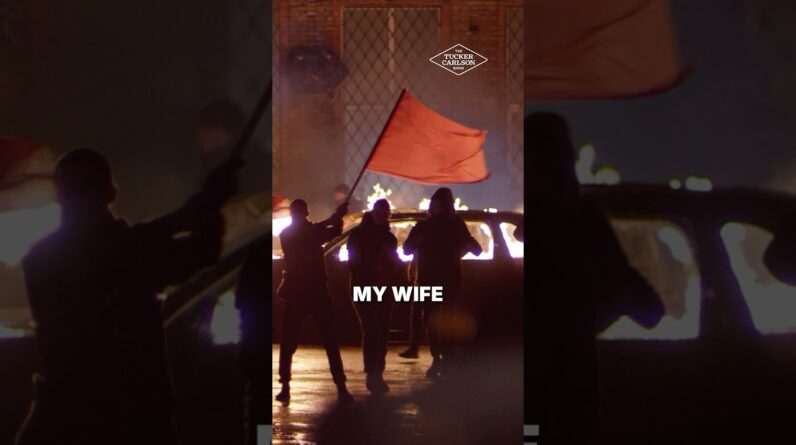
The article spotlights Tucker Carlson’s video claiming that the United Kingdom is moving to curb free speech, capturing the segment’s tone and the social media attention it attracted. It frames the controversy and lays out the central questions about how British free expression might be changing.
It then summarizes Carlson’s main assertions, surveys reactions across British media and online platforms, and touches on legal and cultural angles that shape the debate. The piece also notes how hashtags and commentary amplified the story and points viewers to the original video for full context.

Context and headline framing
Explanation of the article’s focus on the Tucker Carlson video titled The UK: No More Free Speech for You!
He remembers the clip not as an isolated rant but as a frame: a half-hour argument presented as urgent evidence that Britain has abandoned free speech. The article focuses squarely on that video, titled The UK: No More Free Speech for You!, because it blends media spectacle with legal claims and moral alarm in a way that reverberates far beyond the original posting. The goal is not to re-watch the footage line by line but to examine what Carlson claims, how he builds his narrative, and what that narrative does to the public understanding of law and culture in the United Kingdom.
Description of where the video was published and its reach on platforms and hashtags
The video was published under Tucker Carlson’s social distribution channels, identified in the clip’s caption as / @tuckercarlson and promoted with hashtags such as #tuckercarlson, #freespeech, #freespeechdebate, #unitedkingdom, and #britain. It was shared across major social platforms where Carlson has a presence and where clips of his commentary are commonly reposted — platforms that amplify short, resonant moments and reward engagement. Hashtags helped the clip travel through networks that are already predisposed to debating censorship and cultural change, increasing its visibility among viewers who care about free speech debates.
Why this framing matters: media framing, attention economy, and viral rhetoric
He sees the framing mattering for three reasons. First, media framing shapes what counts as a crisis; by calling Britain’s situation a wholesale collapse of free speech, the video turns discrete incidents into evidence of a systemic emergency. Second, the attention economy rewards bold claims and emotional cues; outrage travels faster than nuance, and that creates incentives to conflate isolated incidents with national policy. Third, viral rhetoric compresses complex legal and cultural distinctions into a few easily repeatable lines — and those lines get quoted, reposted, and weaponized across borders. Understanding how those mechanics work is essential to evaluating both the argument and its real-world impact.
Intended audience for the analysis and potential biases to clarify
This analysis is meant for readers who want to understand the facts behind the theatrics: journalists, students of media and law, concerned citizens, and anyone trying to separate legal reality from rhetorical flourish. It does not assume the reader shares Carlson’s politics, but it does assume an interest in fairness and precision. The writer acknowledges their own vantage: they read British and American media, are attuned to how narratives circulate in English-language ecosystems, and approach claims about “no more free speech” with skepticism. That skepticism reflects a commitment to evidentiary standards rather than political partisanship.
Background on Tucker Carlson and his platform
Brief biography and career trajectory of Tucker Carlson
He knows Tucker Carlson as a figure shaped by American cable news and the online attention economy. Carlson rose through conservative commentary outlets, worked as a pundit on cable news, and became a familiar face on prime-time television before moving his brand into independent digital platforms after leaving mainstream television. His career arc reflects a broader shift in media: personalities who once depended on network structures now cultivate direct relationships with audiences online, where distribution algorithms and audience donations replace advertising-driven gatekeepers.
Overview of Carlson’s media style, political orientation, and rhetorical strategies
Carlson’s style is intimate but combative; he speaks as if confiding a revelation to each viewer while also bellowing certainty. His political orientation is broadly national-conservative and populist, skeptical of elites and institutions that he portrays as out of touch. Rhetorically, he relies on patterns that resonate: anecdote, simplification, moral framing, and a recurring presentation of his opponents as either naïve or malicious. He often repeats themes — chaos pushed by liberal elites, cultural decay, threats to traditional liberties — which makes his commentary coherent to a devoted audience.
Previous controversies and topics Carlson has spotlighted relating to free speech
He has, repeatedly, focused on stories that concern speech and censorship: social media moderation, deplatforming of public figures, and controversies over what can be said about race, gender, and religion. Those topics have led to high-profile disputes, advertiser boycotts, and regulatory scrutiny, making him both a lightning rod and a barometer for broader debates about expression in the digital era. His interventions often amplify cases where individuals feel unfairly penalized for speech, turning them into larger narratives about systematic suppression.
Influence of Carlson’s audience and distribution channels in the US and internationally
He speaks to a substantial, engaged audience that amplifies his content. That audience is multi-platform and transnational in reach: clips live on short-form social media, long-form versions exist on alternative hosting sites, and snippets are discussed on partisan networks. The combination of a devoted following and cross-platform distribution means a single video can shape perceptions not just in the United States but in other English-speaking countries that follow American cultural debates closely, including parts of the United Kingdom itself.
Summary of the video’s claims and narrative
Key claims made in the video about the United Kingdom and free speech
He says Britain no longer tolerates dissent; that legal and regulatory changes, together with prosecutions and broadcaster enforcement, have effectively ended free speech in the UK. The video frames a series of incidents — arrests, investigations, fines, and public condemnations — as cumulative proof that ordinary people and journalists cannot speak freely without risking legal or social punishment.
Central examples or incidents cited by Carlson
The video strings together anecdotes: examples of people allegedly investigated or sanctioned for social media posts, broadcasters criticized by regulators, and legislative proposals framed as tools of censorship. Carlson uses these episodes as representative, rather than isolated, and treats them as symptoms of a coordinated crackdown on dissent.
Tone, emotional appeals, and recurring motifs in the video
He adopts an alarmed, conspiratorial tone, using rhetorical contrast — freedom versus authoritarianism — to sharpen the stakes. Emotional appeals run through the piece: indignation on behalf of those censured, fear about what comes next, and scorn for elites who purportedly orchestrate the suppression. Recurrent motifs include the idea of British institutions betraying their liberal heritage and the comparison of contemporary Britain to authoritarian regimes.
Explicit calls to action or implied conclusions for viewers
The video’s explicit call is to recognize and resist what it frames as creeping censorship; viewers are urged to view British developments as a warning and to be vigilant in the United States and elsewhere. Implicitly, it encourages support for political actors and media practices that oppose regulatory interventions and cultural moderation.

Defining free speech: legal and cultural distinctions
Difference between legal free speech protections and cultural norms around speech
He appreciates that “free speech” means different things to different people. Legally, freedom of speech refers to protections against government suppression or punishment; culturally, it refers to the social conditions that allow ideas to be expressed without fear of ostracism. The two overlap but are not identical: someone can face career repercussions or social condemnation for speech without the state prosecuting them, and conversely a law can criminalize certain expressions even if social norms tolerate them.
Contrast between the US First Amendment framework and UK approaches to speech regulation
In the United States, the First Amendment sets a very high bar against government restriction of speech, especially for political expression. The UK lacks a single codified constitutional protection equivalent to the First Amendment; its speech framework is a mix of statutes, common law, and human-rights commitments derived from membership in European human-rights instruments and domestic human-rights law. That leads to a more regulatory approach in some areas, particularly around hate speech and public order, where the balance between liberty and other social goods is drawn differently than in American jurisprudence.
How concepts like hate speech, incitement, and public order fit into the UK context
In the UK, laws against stirring up racial, religious, or sexual-orientation hatred and provisions addressing incitement to violence or disorder shape the limits of acceptable public expression. These concepts are weighed not only as abstract rights but as mechanisms to protect vulnerable groups and maintain public order. The legal threshold for criminalizing speech typically requires elements such as intent, likelihood of causing harm, or the potential to provoke disorder.
The role of media ethics, broadcaster regulations, and community standards
Beyond criminal law, free expression in the UK is mediated by institutions: broadcasting is regulated by a public authority with standards designed to protect audiences from harm and ensure fairness; media outlets operate under self-regulatory codes and professional ethics; platforms adopt community standards. These non-criminal constraints can result in penalties, apologies, or deplatforming that are not the same as criminal sanctions but still significantly affect what is heard and amplified in the public sphere.
UK legal framework affecting speech
Key statutes and doctrines: Public Order Act, Communications Act, Equality Act, and related criminal offences
He points to several statutory pillars. The Public Order Act contains offences related to stirring up hatred and causing harassment, alarm, or distress in public. The Communications Act includes provisions penalizing the sending of grossly offensive or menacing messages via public communications networks. The Equality Act prohibits discrimination and informs public bodies’ policies, while various criminal statutes address threats, harassment, and incitement to violence. Together, these laws create boundaries intended to protect individuals and communities from harm, even as they limit some forms of expression.
Regulatory bodies and instruments: Ofcom, police guidance, and Crown Prosecution Service guidance
Ofcom regulates broadcast and on-demand services and has statutory responsibilities for enforcement, including the power to investigate, impose fines, or require broadcasters to issue corrections. Police forces operate with guidance on when to investigate online harms or offensive remarks, and the Crown Prosecution Service provides legal guidance on when prosecutions for speech-related offences are in the public interest. These institutions interpret and apply laws in concrete situations, and their guidance documents shape enforcement priorities.
Recent or pending legislation with speech implications, such as the Online Safety Bill and its provisions
In recent years, the UK moved to strengthen online safety regulation. The Online Safety Bill, which passed into law as the Online Safety Act, aimed to require platforms to address illegal content and harmful content, particularly where children are affected, and to set duties of care for user safety. The law expanded regulatory oversight over major tech platforms and increased the obligations on companies to moderate content—measures intended to protect users but criticized by some as risking over-removal of lawful speech.
How defamation/libel law and privacy law shape media reporting and commentary
The UK’s defamation and privacy regimes historically favored plaintiffs more than in many other jurisdictions. Reforms have tempered that somewhat, but libel and privacy claims can still constrain media reporting and commentary, especially for outlets wary of expensive litigation. The practical effect is a media environment where legal risk factors into editorial decisions, which in turn affects the range of discourse available in public debate.
High-profile UK incidents and precedent cases referenced or relevant
Examples of prosecutions, investigations, or sanctions that are often cited in free speech debates
He notes that debates often invoke cases where individuals were investigated or prosecuted for social-media posts deemed threatening, racially abusive, or likely to cause harassment. Similarly, broadcasters and newspapers have been investigated or sanctioned for breaches of broadcasting codes or for publishing content judged harmful. These examples are used to illustrate enforcement in practice, though each case has its own factual and legal context.
Notable Ofcom rulings, broadcasting sanctions, and their rationales
Ofcom has issued rulings finding that broadcasters breached standards on fairness, accuracy, or harm in various instances. Sanctions have ranged from requirements to broadcast corrections to fines in severe cases. Ofcom’s rationale typically centers on protecting audiences from harm and ensuring impartiality and accuracy where required, especially in news and current affairs programming.
Court cases or public inquiries that clarify the limits of permissible speech
Court judgments and public inquiries have clarified how laws apply in specific circumstances, distinguishing between protected political speech and unlawful incitement; between satire and criminal harassment; and between investigative journalism and actionable invasion of privacy. These legal precedents illustrate that limits on speech are often context-specific and result from balancing competing rights and societal interests.
Contextual differences between criminal sanctions and regulatory penalties
He emphasizes that criminal prosecution and regulatory enforcement are different in kind. Criminal sanctions carry the weight of criminal records, potential imprisonment, and the highest standards of proof. Regulatory penalties—fines, sanctions on broadcasters, content removal—are administrative or civil and are designed to uphold standards rather than to punish crime. Conflating the two fuels misunderstandings about how strictly a state polices expression.
Assessment of factual accuracy in the video
Identification of specific factual claims that can be independently verified
The video asserts that the UK has passed laws or imposed penalties that effectively make ordinary political speech illegal, and it cites arrests, Ofcom decisions, and legislative changes as proof. Each of those claims is the kind that can be checked against statutes, official regulatory rulings, police statements, and court records.
Methodology for checking claims against primary sources: statutes, court decisions, official statements
He suggests a clear method: compare Carlson’s claims to the language of statutes like the Public Order Act and the Communications Act; examine Ofcom’s published decisions and reasoning; review CPS guidance to understand prosecution thresholds; and read court judgments where available. For legislative change, one checks the final text of laws such as the Online Safety Act and the explanatory materials that accompany them. This approach distinguishes legal fact from rhetorical amplification.
Examples of claims that are accurate, partially accurate, or misleading
Some claims in the video are accurate in the broad sense that the UK does have laws criminalizing certain forms of speech (hate speech and incitement) and that the Online Safety Act expanded platform obligations. Those are factual and verifiable. Other claims are partially accurate: there have been high-profile investigations and Ofcom rulings that resulted in sanctions, but those decisions often involve narrow factual contexts and do not amount to blanket suppression of political dissent. Many claims are misleading when they conflate regulatory enforcement or social consequences with state censorship; suggesting that the UK has abolished free speech is an overstatement. Anecdotes are sometimes presented as representative evidence of systemic, intentional censorship, which is a rhetorical leap rather than a legal conclusion.
Common rhetorical devices used to conflate isolated incidents with systemic trends
He notices a few predictable devices: amplification of the most dramatic incidents, omission of context (such as the legal tests that must be met for prosecution), slippery-slope arguments that infer totalitarian intent from discrete enforcement decisions, and selective sourcing that highlights specific complaints while ignoring contrary examples where speech was protected. These devices make it easier to claim systemic collapse even when the aggregate evidence points to a more complex, contested landscape.
Political and media reactions in the United Kingdom
Responses from UK politicians across the spectrum to the video’s claims
He observes that UK political reactions split along familiar lines. Some politicians, particularly on the right, welcomed the airing of concerns and used the video to criticize regulatory overreach or political correctness; others, especially those in the political center and left, pushed back, arguing that the video mischaracterized the law and ignored legitimate protections for vulnerable communities. Establishment politicians often sought to correct factual inaccuracies while acknowledging the importance of robust debate about platform regulation and policing priorities.
Statements from UK media outlets and journalist bodies about free speech concerns
UK media outlets and press bodies have responded in different ways: some saw the video as an example of American sensationalism misreading British law, while others took its alarm as an opportunity to debate whether current regulations unduly chill journalism. Journalistic organizations underscore the need to defend press freedom while also engaging with questions about ethical reporting, misinformation, and the responsibilities of platform companies.
How public opinion in the UK has reacted based on polls, commentary, and social media
Public opinion is mixed — many people worry about harmful speech online and support measures to curb it, while others fear overreach that stifles debate. Social-media discourse reflects polarized views: some users amplify examples of alleged censorship; others highlight instances of protected speech or push back against hyperbolic portrayals. Polls and commentary show that concerns about free expression coexist with concerns about safety and cohesion.
Differences in reaction between establishment institutions and grassroots movements
He notes a pragmatic divide: establishment institutions tend to emphasize legal limits and procedural nuance, often defending measured regulation; grassroots movements, particularly those on the political extremes, use media moments to mobilize supporters and frame grievances in stark terms. That difference matters because it shapes which narratives gain traction and which policy responses become politically feasible.
Reactions in the United States and international implications
How US media and political figures have amplified or contested the video’s message
In the United States, the video found receptive audiences among conservative media and political figures who framed Britain as a cautionary tale. Some commentators used the clip to argue against platform regulation or to warn about cultural trends. Others — including some civil-liberties advocates and mainstream outlets — contested the claim that Britain had abandoned free speech, urging a more differentiated understanding of law and practice.
Potential effects on US-UK diplomatic or cultural relations and bilateral perceptions
While unlikely to cause formal diplomatic rifts, dramatic portrayals of UK law can shape public perceptions in ways that matter. They may harden cultural stereotypes, affect tourism of ideas, and inject suspicion into transatlantic conversations about regulation, privacy, and the tech industry. Mischaracterizations can also complicate cooperative efforts between the two countries on issues like online harms, law enforcement, and platform governance.
Role of transatlantic media ecosystems in shaping cross-border narratives about censorship
Transatlantic media ecosystems amplify stories that resonate with existing narratives on both sides of the Atlantic. American commentators often project American standards onto British law; British audiences may see American debates reflected back as distortions. That reciprocity makes it easier for alarmist claims to cross borders: a viral American clip can shape British conversations, and vice versa, creating feedback loops that simplify complex legal realities into moral tales.
How global audiences interpret the UK example as a precedent for their own countries
Global audiences tend to read the UK example through local lenses: some see it as a warning about creeping regulation, others as a model for stronger protections against online harms. The video’s broad claim — that free speech is under siege — becomes a template for debates in countries weighing their own laws. This translatability is why accurate framing matters: oversimplified stories can lead to ill-suited policy prescriptions elsewhere.
Conclusion
Concise synthesis of the main analytical findings from the article outline
He concludes that the Carlson video mixes true elements with exaggeration. The United Kingdom does have laws and regulatory regimes that limit certain kinds of speech — hate speech, incitement, and some categories deemed harmful online — and platforms and broadcasters face increased duties. But the claim that Britain has categorically ended free speech collapses important legal and contextual distinctions and elevates anecdote into an image of systemic censorship.
Clear statement about what the Tucker Carlson video reveals and what it overstates
The video reveals anxieties about how modern democracies balance liberty and safety: it highlights real tension points where law, technology, and social norms intersect. What it overstates is the scale and intent of suppression. It presents a complex set of rules and institutional decisions as evidence of a unified, authoritarian project, which misreads the law’s nuance and the unevenness of enforcement.
Final observations on balancing free expression with public safety and social cohesion
He reflects that societies must continually negotiate the edges of permissible speech. Protecting individuals and communities from harm does not require abandoning the principle of open discourse, but it does require carefully drawn laws, transparent enforcement, and robust public reasoning. The task is to preserve space for vigorous debate while preventing speech that intentionally and directly causes harm — a delicate balance that requires both legal clarity and civic courage.
Calls to continued scrutiny, nuanced public conversation, and evidence-based policy making
He urges continued scrutiny of both law and rhetoric: scrutiny of statutes and enforcement actions, and scrutiny of media claims that conflate isolated incidents with systematic suppression. The public conversation should be nuanced, grounded in primary sources and context, and attentive to both rights and responsibilities. Evidence-based policy making — informed by legal clarity, empirical data, and democratic deliberation — offers the best path forward for protecting speech without sacrificing safety or dignity.